
Cart
2026 Best Surface Mounted LED Lights for Global Buyers
Choosing the right Surface Mounted LED Lights in 2026 requires more than comparing wattage and price. Global buyers must examine efficiency, glare control, heat management, certifications, warranty terms, and supply reliability. A bright fitting is not automatically a good fitting.
The International Energy Agency reports that lighting uses roughly 15% of global electricity consumption. This figure explains why efficient commercial and residential luminaires remain important for energy planning. The U.S. Department of Energy’s Solid-State Lighting reports also show that LED technology continues to improve in efficacy, color quality, and lifetime performance. However, laboratory results do not always represent real installations. Dust, high ceilings, poor ventilation, and unstable voltage can reduce practical performance.
Real projects reveal the difference.
This guide evaluates the 2026 best Surface Mounted LED Lights for global buyers through measurable criteria. These include delivered lumens, system efficacy, color rendering, beam distribution, flicker performance, ingress protection, and thermal design. It also considers regional voltage ranges, installation methods, replacement access, and documented safety compliance. ENERGY STAR, IEC standards, and regional conformity requirements can support purchasing decisions, but buyers should verify current certificates with manufacturers.
Market claims still need careful checking. Some product pages promise 50,000 hours, yet provide limited information about operating temperature or lumen maintenance. That gap deserves attention. Experienced buyers should request test reports, LM-80 or equivalent LED data, photometric files, and clear warranty conditions before placing large orders. The following overview compares practical options for offices, retail spaces, hotels, warehouses, and homes, while recognizing that the cheapest fixture may create higher costs later.
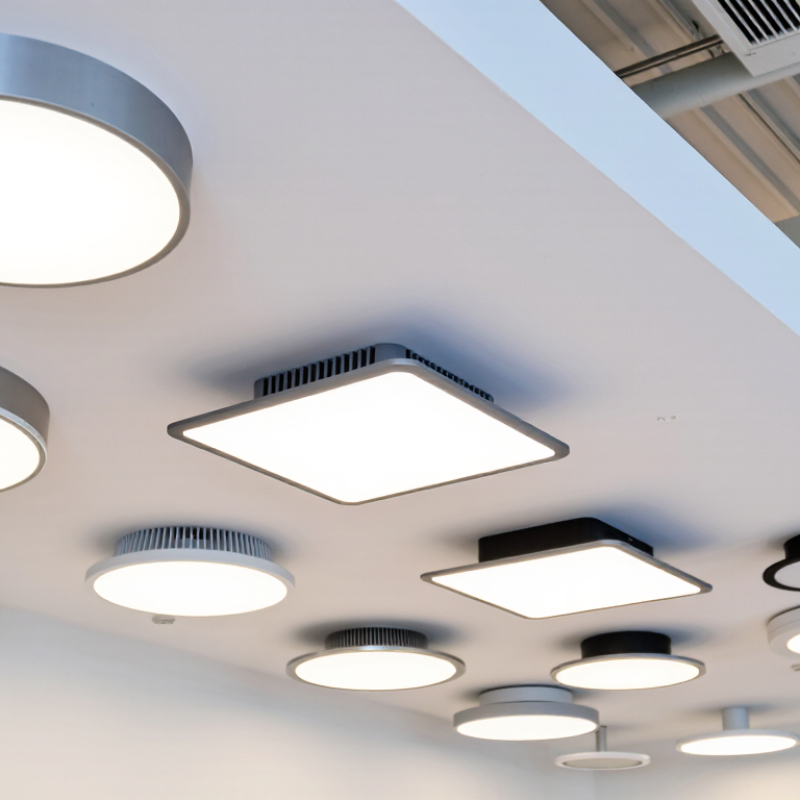
What Are Surface Mounted LED Lights?
Surface mounted LED lights are fixtures installed directly onto a ceiling or wall. They do not need a deep recessed cavity. A typical unit includes an LED board, heat sink, driver, housing, and diffuser. This structure suits concrete ceilings, shallow spaces, corridors, offices, kitchens, and retail areas.
Installation is practical. Technicians usually secure a mounting plate, connect the wiring, and attach the fixture. The diffuser spreads light across the room, reducing harsh shadows when designed well. According to the U.S. Department of Energy, LED lighting can use at least 75% less energy and last up to 25 times longer than incandescent lighting. The International Energy Agency has also reported that lighting uses roughly 15% of global electricity demand. These figures explain why efficient surface fixtures attract global buyers.
Performance still depends on details. A 24-watt fixture is not automatically efficient. Check delivered lumens, efficacy, color rendering, beam distribution, and driver quality. A crowded diffuser can create glare. A weak heat path may shorten service life. In my experience, installers often focus on wattage first, which is a mistake. The room may look bright but feel uncomfortable. Buyers should review test reports, rated lifetime, operating temperature, and electrical compliance for the target market. Certification labels help, but they are not perfect. Real projects need measured results.
Key Types and Features for Different Indoor and Outdoor Applications
Surface mounted LED lights suit projects where recessed installation is impractical.
Slim round and square fixtures work well in bedrooms, corridors, offices, and retail ceilings. Their shallow bodies leave more headroom and simplify replacement work. Select a high color rendering index for kitchens, clinics, and display areas. Neutral white light often balances comfort and visual clarity.
Outdoor applications need different protection.
Weatherproof bulkhead lights suit entrances, balconies, car parks, and covered walkways. Check the IP rating against rain, dust, and cleaning conditions. A higher rating is not automatically better for every location. Aluminum housing and a well-designed heat path can reduce heat buildup during long operating hours. Motion sensors can save energy in storage areas, but poor positioning may cause annoying switching.
For damp interiors, sealed surface fixtures are practical near bathrooms and utility rooms.
Choose selectable color temperature only when users can control or understand it. Otherwise, settings may become inconsistent across rooms. Diffusers should limit glare, especially in low ceilings above desks or dining tables. I have seen attractive fixtures perform poorly because installers ignored ceiling color and beam spread. Measure the mounting height, viewing angle, and circuit capacity before ordering. Product sheets help, but a small site test is still worthwhile. Light output can feel different after dark.
How to Evaluate Brightness, Color, Efficiency, and Lifespan
Choosing a surface mounted LED light starts with the room, not the package. Check lumens for total brightness and lux for light reaching the working surface. A hallway may need less light than a workshop, even with similar floor areas. I recommend testing a sample under the actual ceiling height. Specifications can look impressive. Real spaces often disagree.
Color quality affects comfort and accurate visual work. Choose a suitable color temperature, such as warm white for hospitality areas or neutral white for offices. Check CRI, especially when people inspect products, food, fabrics, or artwork. For efficiency, compare lumens per watt rather than wattage alone. Also examine driver quality, heat management, and standby behavior. A cool housing usually suggests better thermal control, but this is not proof.
Tips: Request photometric data, tested lifetime, and operating-temperature limits. Look for L70 ratings, which indicate when output may fall to 70 percent. Ask whether the lifetime was tested at realistic temperatures. Some claims seem optimistic. Verify warranty terms, electrical certifications, ingress protection, and voltage compatibility for the destination market. In humid locations, sealed construction matters. In large projects, consistent color between batches matters too. I would not judge a fixture from brightness alone. A bright light with glare can make a room uncomfortable. Test before ordering in volume.
Global Safety Standards, Certifications, and Installation Requirements
For global buyers, surface-mounted LED lights should meet the safety rules of the destination market, not only the seller’s claims. Look for testing against IEC 60598-1 and the relevant fixed-luminaire requirements. EMC testing, electrical insulation, earthing, and temperature limits also matter. A CE, UKCA, or other national mark may be required, but the correct mark depends on the importing country. Ask for current test reports, declarations of conformity, and traceable product samples.
Installation conditions deserve equal attention. Confirm the input voltage and frequency before ordering. The ceiling must support the fixture, its driver, and long-term vibration. Installers should isolate the power supply, connect protective earth where required, and use suitable junction boxes and fasteners. In humid areas, check the IP rating carefully. An IP44 fixture is not automatically suitable for direct water exposure. Leave space around the driver for heat release. Poor ventilation can shorten service life.
Tips: Check the label on every carton. Match the certificate to the exact model. Use a qualified electrician. Photograph the wiring before closing the ceiling. Small details prevent expensive rework.
One practical lesson is easy to miss: a certificate alone does not prove safe installation. I have seen compliant fixtures fail after loose terminals, weak anchors, or incorrect dimmers were used. Product documents can also become outdated. Recheck them before shipment, because requirements and market interpretations sometimes change. Safety should be verified on paper and on site.
How to Select Reliable Suppliers for 2026 International Purchases
Selecting reliable suppliers matters more than finding the lowest quote for 2026 surface mounted LED lights. A dependable supplier should provide clear specifications, consistent samples, and traceable production records. Check housing materials, LED efficiency, color temperature tolerance, driver quality, and heat dissipation. Ask for test reports that match the exact model, not a similar product.
Request a pre-production sample before placing a large international order. Inspect screw points, diffuser clarity, wiring, and surface finish. Confirm packaging strength with a drop-test plan. Review factory capacity, quality-control procedures, export experience, lead times, warranty terms, and replacement policies. Independent inspections can reveal problems that polished presentations hide.
Tips: Compare at least three suppliers using the same technical sheet. Verify certificates through recognized testing organizations. Ask who controls incoming components and final testing. Use a small trial order when possible. A low price may conceal weaker drivers or unstable materials. Also, do not trust perfect promises. A supplier can appear reliable and still miss a delivery window. Written records, inspection checkpoints, and realistic deadlines reduce that risk. Recheck regional electrical and safety requirements before shipment, because one document may not satisfy every destination. Keep communication specific: model code, voltage range, beam angle, color rendering, carton size, and acceptable defect limits should appear in the purchase agreement.
