
Cart
2026 Top Automatic Diverter Suppliers for Global Buyers?
Global distribution is becoming faster, denser, and less forgiving of handling errors. Pitney Bowes’ Parcel Shipping Index reported approximately 161 billion parcels worldwide in 2023, reinforcing the need for dependable sorting infrastructure. Meanwhile, MHI’s 2024 Annual Industry Report found that many supply-chain organizations are increasing investment in automation, robotics, and warehouse intelligence. These trends make Automatic Diverter systems important for parcel hubs, fulfillment centers, airports, and manufacturing lines.
Yet, choosing among the 2026 Top Automatic Diverter Suppliers for Global Buyers requires more than comparing catalog prices. A reliable evaluation should examine throughput, product dimensions, divert accuracy, noise levels, control-system compatibility, and maintenance access. The system must handle real cartons, not only ideal test packages. ISO 12100-based risk assessment, documented safety functions, and regional technical support also deserve close attention. Interact Analysis continues to identify warehouse automation as a growing technology market, but growth alone does not prove supplier quality.
Details matter.
A practical buyer should request verified performance data, factory references, spare-parts lead times, and commissioning records. A supplier with strong engineering may still struggle with local service coverage. Another may offer attractive pricing but limited software integration. That weakness can become expensive later. This comparison therefore considers supplier experience, manufacturing capability, global support, customization, and total ownership cost. The ranking cannot fit every operation perfectly, and that limitation deserves honesty. A compact e-commerce site, a high-volume parcel hub, and a food-processing facility may need very different diverter designs. The best choice is the supplier that matches measurable operating conditions, not the loudest marketing claim.
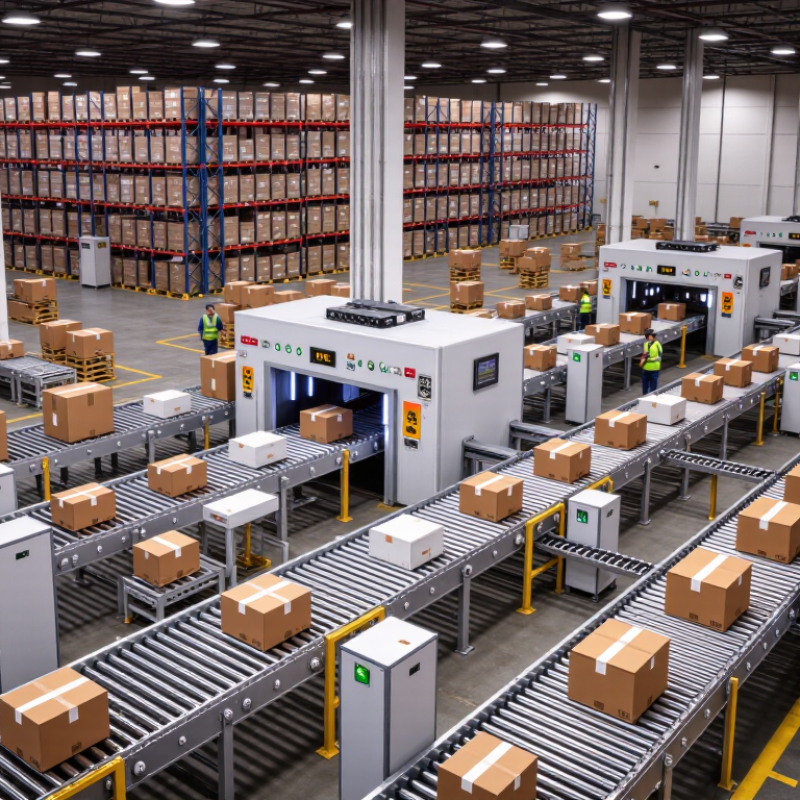
What Is an Automatic Diverter and How Does It Work?
An automatic diverter is a conveyor device that redirects products toward different destinations without manual handling. It is common in warehouses, parcel centers, distribution facilities, and production lines. The equipment may use pop-up wheels, angled rollers, sliding shoes, or a mechanical arm.
The working process is precise but easy to understand. Sensors detect an item’s arrival, size, position, and sometimes its barcode. A control system compares this information with the routing order. An electric actuator or pneumatic mechanism then moves the product onto another conveyor or lane. The timing must match belt speed closely. A small delay can cause a carton to miss its target.
In practical installations, accurate sensor placement matters as much as the diverter itself. Dust, glossy labels, uneven cartons, and damaged packaging can confuse detection. I have seen stable systems perform poorly after operators changed conveyor speed without updating the control settings. That detail is easy to overlook. Global buyers should examine throughput, product dimensions, noise levels, maintenance access, guarding, and emergency-stop design. They should also request testing with real cartons, not only standard samples. A reliable supplier should explain failure alerts, spare-part availability, installation support, and integration with warehouse software. No automatic diverter is flawless. Careful commissioning still makes the largest difference.
Key Types of Automatic Diverters for Different Industrial Uses
2026 Top Automatic Diverter Suppliers for Global Buyers
Key Types of Automatic Diverters for Different Industrial Uses
Automatic diverters redirect products without stopping the main line. Their design depends on material, speed, temperature, and cleaning needs. Flap diverters suit cartons, parcels, and boxed goods on conveyor systems. They use a hinged plate to guide items into another lane. Rotary diverters handle repeated routing with steady movement. They work well in packaging, warehousing, and distribution facilities.
Pneumatic diverters offer fast switching for high-throughput lines. Compressed air moves a blade, arm, or gate within seconds. They need clean air and regular seal checks. Belt diverters gently transfer irregular packages and fragile containers. They reduce impact marks on glass jars and lightweight cartons. Gravity diverters are simpler and often fit low-speed material handling. They depend on correct slope and consistent product weight.
Food, pharmaceutical, and chemical plants may require sanitary diverters. Stainless steel surfaces, sealed bearings, and tool-free access simplify cleaning. High-temperature applications need heat-resistant seals and protected sensors. In field evaluations, poor sensor placement often causes false routing. A few millimeters can matter. Buyers should test actual products, not only review catalog drawings. Noise, dust, washdown pressure, and emergency stopping also deserve practical inspection. No design is perfect. A reliable supplier explains these limits clearly and provides test records, spare parts, and service support.
2026 Automatic Diverter Types for Global Industrial Applications
The chart compares representative maximum operating temperatures commonly specified for major automatic diverter configurations. Actual limits depend on materials, seals, actuator selection, pressure, and process conditions.
Typical engineering reference values: pneumatic flap diverters are widely used for powder and granule routing, rotary diverters for continuous material handling, motorized flap diverters for packaged goods, slide-gate diverters for heavy-duty bulk solids, and tube diverters for hygienic or enclosed conveying systems.
How to Evaluate Automatic Diverter Suppliers Worldwide
Selecting an automatic diverter supplier requires more than comparing prices. Start with your material, line speed, product size, and required diversion accuracy. A supplier should explain how its mechanism handles cartons, parcels, or fragile goods. Ask for test data from a setup resembling your conveyor. General claims are not enough.
Review the supplier’s engineering experience carefully. Check drawings, load calculations, control-system compatibility, and maintenance access. Confirm the diverter’s cycle rating, noise level, operating temperature, and protection rating. Request factory acceptance testing with measurable pass criteria. A short video helps, but live testing reveals more. It may expose vibration or delayed sensor responses.
Reliability also depends on support after delivery. Ask about spare-part availability, remote diagnostics, technician response times, and installation training across time zones. Examine references from facilities with similar throughput and working conditions. Verify quality records, export documents, and applicable safety certifications through independent evidence. A polished factory tour can mislead. A detailed service agreement matters more. No supplier is perfect, and small omissions can appear during commissioning. Leave room for corrective changes, budgeted downtime, and a second technical review before signing.
2026 Top Automatic Diverter Suppliers for Global Buyers? – How to Evaluate Automatic Diverter Suppliers Worldwide
| Evaluation Dimension | What Global Buyers Should Verify | Practical Benchmark or Evidence | Weight | Score (1–5) |
|---|---|---|---|---|
| Application Compatibility | Confirm whether the diverter is designed for dry bulk solids, liquids, powders, granules, packages, or conveyor applications. | Supplier provides a written compatibility statement, flow diagram, and application references for the intended material and duty cycle. | 15% | ___ |
| Flow Capacity and Port Size | Compare nominal port diameter, flow rate, pressure drop, and allowable product velocity. | Technical datasheet includes dimensional drawings, flow coefficient or capacity data, and operating limits for each available size. | 10% | ___ |
| Pressure and Temperature Range | Check maximum working pressure, design pressure, operating temperature, and any vacuum rating. | For industrial designs, request pressure-temperature tables rather than relying only on a single headline rating. | 10% | ___ |
| Actuation and Switching Performance | Evaluate pneumatic, electric, hydraulic, or manual override options, including response time and cycle life. | Request tested switching time, rated cycles, actuator torque or force, fail position, and emergency manual operation details. | 10% | ___ |
| Materials and Wear Resistance | Match body, rotor, seals, liners, and fasteners to corrosion, abrasion, hygiene, and temperature requirements. | Common verification items include stainless steel grade, elastomer type, surface finish, replaceable liners, and documented material certificates. | 10% | ___ |
| Leakage, Sealing, and Containment | Review internal leakage, external sealing, dust containment, cross-contamination risk, and cleaning requirements. | Require the applicable leakage test method, seal specification, inspection record, and maintenance procedure. | 10% | ___ |
| Automation and Control Integration | Confirm compatibility with PLCs, sensors, control valves, remote I/O, limit switches, and plant communication protocols. | Preferred documentation includes wiring diagrams, I/O lists, feedback signals, solenoid specifications, and available communication interfaces. | 10% | ___ |
| Safety and Regulatory Documentation | Determine which legal and safety requirements apply in the destination market and industry. | Check risk assessment, declaration of conformity where applicable, machinery safety documentation, electrical files, and hazardous-area certificates when required. | 10% | ___ |
| Quality Management and Traceability | Assess process control, inspection procedures, nonconformance handling, and component traceability. | ISO 9001 certification is useful evidence, but buyers should also request inspection plans, test reports, serial-number records, and audit rights. | 8% | ___ |
| Customization and Engineering Support | Evaluate the supplier’s ability to adapt dimensions, connections, materials, controls, and installation requirements. | Ask for certified drawings, 3D models, interface schedules, sample calculations, and a defined technical approval process. | 7% | ___ |
| Lead Time and Production Capacity | Compare engineering lead time, manufacturing lead time, inspection time, and spare-parts availability. | Obtain a written schedule with milestones, capacity assumptions, incoterms, packaging method, and delay-management procedures. | 5% | ___ |
| Lifecycle Cost and Serviceability | Compare purchase price, utilities, wear parts, maintenance labor, downtime exposure, and expected service intervals. | Request a recommended spare-parts list, maintenance schedule, warranty terms, service contacts, and total-cost-of-ownership estimate. | 5% | ___ |
| Total Weighted Evaluation Score | 100% | ____ / 5.00 | ||
Recommended Supplier Qualification Thresholds
| Qualification Level | Weighted Score | Buyer Interpretation |
|---|---|---|
| Preferred Candidate | 4.25–5.00 | Strong technical fit, complete documentation, acceptable lifecycle risk, and verified production capability. |
| Conditionally Qualified | 3.50–4.24 | Suitable subject to clarification, sample testing, corrective actions, or commercial negotiation. |
| High-Risk Candidate | Below 3.50 | Insufficient evidence, unresolved technical gaps, or elevated delivery and support risk. |
2026 Market Trends and Leading Supplier Selection Criteria
Automatic diverter sourcing is becoming more technical in 2026. Buyers now assess throughput, controls, maintenance, and integration together.
Grand View Research estimated the global warehouse automation market at USD 23.61 billion in 2023. Its report projects a 15.3% compound annual growth rate through 2030. The MHI 2024 Annual Industry Report found that 83% of supply-chain professionals planned to increase technology investment. These figures support stronger demand for reliable diverter systems, but they do not guarantee equal supplier quality.
Selection should begin with verified operating data. Ask suppliers for tested throughput at your actual carton sizes, weights, speeds, and accumulation spacing. A realistic site trial is more useful than a polished brochure. Check motor duty ratings, sensor redundancy, emergency access, spare-part availability, and remote diagnostic capability. Confirm communication support for common warehouse control systems. Cybersecurity documentation also matters when equipment connects to cloud platforms.
Total cost deserves careful review. Compare energy use, wear components, installation labor, training, and five-year service response. Request references from facilities with similar dust, temperature, and shift patterns. Some suppliers quote impressive peak rates that rarely appear during mixed-product operation. I would treat that gap as a warning, not a minor detail. Standards compliance, documented factory testing, and transparent warranty limits strengthen supplier credibility. Still, published market reports often use different definitions, so buyers should validate every number against site measurements.
Global Purchasing, Compliance, Installation, and Support Considerations
In 2026, global buyers should assess automatic diverter suppliers beyond price and catalog claims. A reliable supplier explains throughput, product dimensions, belt speed, and switching accuracy with tested data. Ask for application records from similar industries. Factory experience matters when cartons arrive unevenly or product spacing changes.
COMPLIANCE Compliance must match the destination market and application. Request electrical safety documents, material declarations, risk assessments, and machine manuals in suitable languages. For food or pharmaceutical handling, verify cleanability, contact-material suitability, and traceability. Certificates alone are not enough. Check issuing bodies, test scope, and document dates. Import duties, packaging rules, spare-part availability, and local service capacity also affect the real purchase cost.
Installation planning deserves equal attention. Confirm conveyor interfaces, sensor positions, power requirements, network protocols, and guarding before shipment. Clear drawings can prevent expensive site modifications. Remote commissioning is useful, but it cannot replace every on-site check. Train operators on jam recovery, inspection points, and safe isolation procedures. Response times should be written into the support agreement, including escalation contacts and replacement-part delivery. One weakness remains common: buyers often approve a system before testing their most difficult products. A small pilot run may reveal unstable spacing, noise, or slower-than-promised changeovers. That lesson is inconvenient, but valuable.
