Top 10 Benefits of Using Round Steel Pipes for Projects?
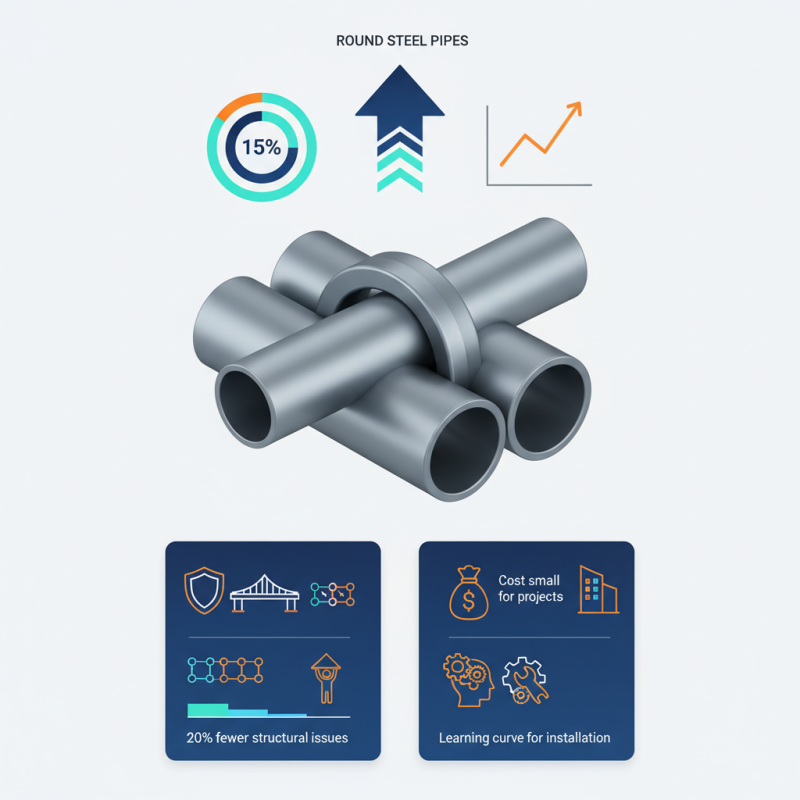
In recent years, the construction industry has increasingly recognized the merits of using Round Steel Pipes. These pipes offer unique advantages that enhance project efficiency and durability. According to a market analysis by the Global Steel Pipe Association, Round Steel Pipes have seen a 15% growth in demand over the past five years, indicating their rising popularity. Industry expert Dr. Emily Hart, a leading researcher in structural materials, states, "Round Steel Pipes are a game changer, providing superior strength and versatility."
One significant benefit of Round Steel Pipes is their seamless structure. This design improves load-bearing capacity and reduces the risk of failure. Moreover, their round shape is inherently strong, with a higher resistance to bending and buckling compared to other shapes. This makes them crucial for heavy-duty applications. Various reports show that projects utilizing Round Steel Pipes often experience 20% fewer structural issues during their lifespan.
While Round Steel Pipes boast many benefits, they also pose challenges. Cost considerations may arise, particularly for smaller projects. Engineers must weigh budget constraints against the advantages of these pipes. The learning curve associated with installation techniques is another area requiring attention. Industry experts continue to study these dynamics, emphasizing the importance of making informed decisions based on project requirements and material properties.
Key Strength and Durability of Round Steel Pipes in Construction
Round steel pipes offer exceptional strength and durability, making them a favored choice in construction. Their circular shape distributes stress evenly, allowing them to withstand high pressures. This property is essential for various applications, such as structural supports and framework. Tasked with heavy loads, these pipes provide reliability over time, reducing the need for frequent replacements.
The durability of round steel pipes is further enhanced by their ability to resist corrosion. Many projects involve exposure to harsh environments, where moisture and chemicals can lead to deterioration. Using galvanized or coated steel can significantly prolong the life of these pipes. Contractors often overlook the importance of protective measures, which can cost more in the long run if neglected.
Despite their strengths, challenges exist. The initial weight of steel pipes can create logistical issues during transport and installation. Additionally, welding and connections require skilled labor, which can complicate project timelines. Reflecting on these aspects emphasizes the need for careful planning when integrating round steel pipes into construction projects. Ultimately, their benefits are profound, but a thoughtful approach is essential for optimal use.
Versatility in Design Applications for Round Steel Pipes
Round steel pipes offer exceptional versatility in design applications across various industries. Their uniform shape and strength make them suitable for structural, mechanical, and fluid transportation purposes. According to the American Institute of Steel Construction, round pipes can efficiently bear weight and withstand environmental factors, making them ideal for bridges and buildings. The ability to customize sizes and thicknesses further enhances their adaptability.
The aesthetics of round steel pipes also contribute to their widespread use. They provide clean lines and a contemporary look, adding visual appeal to architectural designs. Reports indicate that incorporating round shapes can improve the overall design quality by providing balance and harmony. Additionally, they can be easier to install in complex structures, although precise calculations are necessary to avoid alignment issues.
However, challenges exist. The manufacturing process of round steel pipes can generate waste if not optimized. Engineers must consider the potential for corrosion and ensure adequate protective coatings. Balancing durability with environmental impact is essential. As industries evolve, continuous research on improving steel formulations is necessary to enhance performance while being mindful of sustainability. The ongoing advancements in technology can provide innovative solutions to these challenges, ensuring that round steel pipes remain a staple in design projects.
Corrosion Resistance Properties Enhancing Longevity
Round steel pipes are a popular choice in construction due to their excellent corrosion resistance properties. This feature significantly extends their lifespan. According to a report from the American Institute of Steel Construction, galvanized steel pipes can have a lifespan exceeding 50 years in corrosive environments when properly maintained. This longevity reduces replacement costs and enhances project sustainability.
Corrosion resistance is crucial. Poor material selection can lead to structural failures. A study by the National Association of Corrosion Engineers indicates that corrosion costs the U.S. economy over $300 billion annually. Using round steel pipes can mitigate these losses effectively. The protective coatings and treatments applied to these pipes further enhance their durability, making them ideal for various applications.
Tip: Regular inspection of steel infrastructure can identify early signs of corrosion. This proactive measure helps in maintaining integrity. Always consider environmental factors when selecting materials for your projects. Choosing the right pipe is not just about strength; it is about sustainability and cost-effectiveness.
Cost-Effectiveness and Efficiency in Project Budgeting
When planning a project, maintaining a strict budget is crucial. Round steel pipes offer significant cost-effectiveness, helping to keep expenses low. These pipes are durable and require less maintenance over time. This reduced upkeep translates to substantial savings in the long run.
Using round steel pipes can streamline project execution. Their uniform shape allows for easy handling and installation. This efficiency means fewer labor hours, reducing overall costs. Additionally, round pipes often require fewer resources for production than other shapes, contributing to budget-friendly options.
However, it's essential to consider that project specifications may vary. Sometimes, custom solutions may introduce unexpected expenses.
While round steel pipes have clear advantages, they might not be suitable for every project. Specific applications may demand alternative materials or shapes. Consulting with professionals can clarify these needs. An informed decision comes from weighing the benefits against project requirements. It's always wise to assess whether round pipes align with long-term goals.
Ease of Installation and Maintenance of Round Steel Pipes
Round steel pipes are preferred in many construction projects due to their ease of installation. Their uniform shape allows for quick alignment and secure connections. Workers appreciate how these pipes fit easily into existing frameworks. The process is often less labor-intensive compared to other materials. This simplicity can lead to significant time savings during project execution.
Maintenance is also straightforward with round steel pipes. Their smooth surfaces resist buildup and are easy to clean. Inspecting them for wear or damage is simple due to their visibility and accessibility. However, occasional rust or corrosion may occur if not treated properly. It's essential to evaluate environmental factors that may accelerate wear. Regular checks can prolong the lifespan of the pipes and ensure safety, but this requires a commitment to upkeep.
As with any material, challenges arise. Finding the right tools for installation is critical. If the wrong equipment is used, installation may become inefficient. Training workers to understand best practices prevents potential mishaps during setup and maintenance. While round steel pipes can streamline projects, careful planning is necessary to maximize their benefits.
Top 10 Benefits of Using Round Steel Pipes for Projects
| Benefit | Description | Impact |
| Ease of Installation | Round steel pipes can be easily maneuvered and fitted into tight spaces, making installation faster. | Reduced labor time and costs. |
| Durability | These pipes are resistant to corrosion and wear, ensuring a long lifespan. | Lower replacement costs over time. |
| Versatility | Round steel pipes can be used in various applications, including structural, plumbing, and automotive. | Wider range of project applications. |
| Low Maintenance | Round pipes require minimal upkeep compared to other materials. | Saves time and maintenance costs. |
| High Strength-to-Weight Ratio | These pipes offer significant strength while being lightweight. | Easier handling and transportation. |
| Safety | Round steel pipes are robust and capable of withstanding high pressure, adding a layer of safety. | Increases project reliability. |
| Cost-Effective | They are generally affordable compared to other similar materials. | Budget-friendly for large projects. |
| Recyclable | Steel is recyclable and can be reused without quality loss. | Environmentally friendly practice. |
| Aesthetic Appeal | Round steel pipes can enhance the visual appeal of structures. | Improved design versatility. |
| Temperature Resistance | They can withstand extreme temperatures without deforming. | Suitable for diverse environmental conditions. |