What Is the Best Place Machine to Buy in 2026?
Choosing the best Place Machine in 2026 depends less on a headline speed figure and more on the work it must do every day. A small electronics workshop placing prototypes has different needs from a production line assembling thousands of boards. Before comparing models, define your typical board size, component range, expected output, and available floor space. These details help narrow the field. Quickly.
A machine’s advertised placement rate is useful, but it does not tell the whole story. Ask how performance changes with fine-pitch parts, frequent product changeovers, or mixed component sizes. Check feeder compatibility, programming tools, operator training, spare-part access, and local technical support. A showroom demonstration can help, though it may not reflect your actual boards or workflow. Request a trial using representative components when possible, and confirm what the quoted price includes, such as installation and software updates.
Budget for ownership, not just purchase. Maintenance, calibration, consumables, and downtime can shape the real cost over several years. Verify specifications with the manufacturer, then compare them with feedback from users who operate similar equipment. No single model is best for every buyer. Even a detailed comparison can miss the small frustrations of daily use. Treat this guide as a starting point, and match each machine’s documented capabilities to your production needs before deciding.
What a Pick-and-Place Machine Does and Where It Is Used
What Is the Best Place Machine to Buy in 2026?
What a Pick-and-Place Machine Does and Where It Is Used
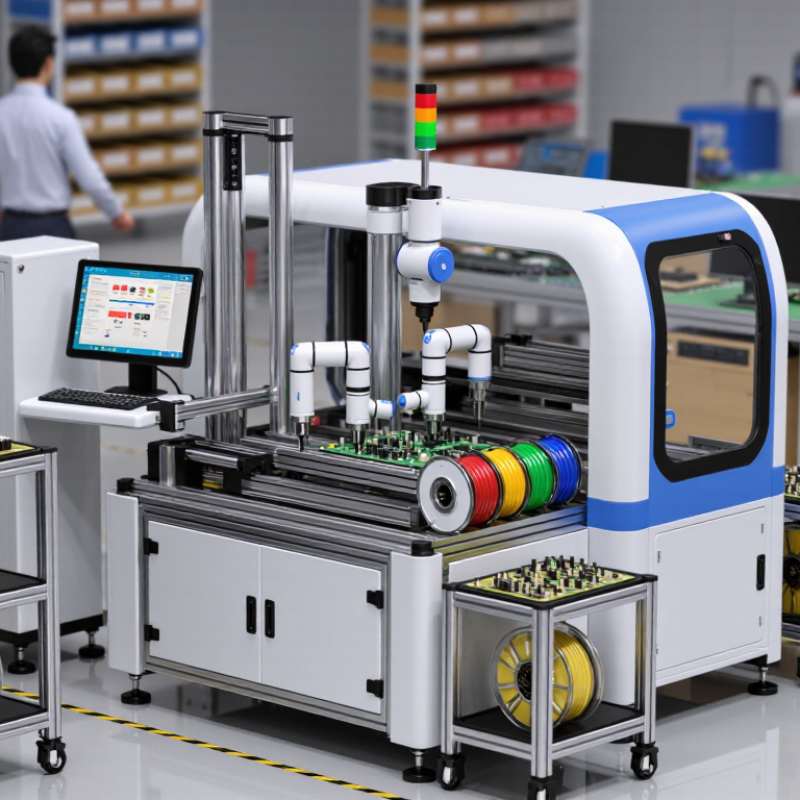
A pick-and-place machine positions components on a printed circuit board before soldering. Its feeder presents each part, while a camera checks orientation and a nozzle lifts and places it. On a production line, the machine may handle tiny resistors, chips, and connectors at high speed. These systems are common in electronics manufacturing, from consumer devices to automotive control modules. They can also support small-batch assembly, though setup and feeder changes may take time.
Automation is expanding, but broad robotics figures should not be mistaken for pick-and-place sales. The International Federation of Robotics reported more than 541,000 industrial robots installed worldwide in 2023, in World Robotics 2024. That signals wider investment in factory automation, not a guarantee that every line needs the same placement equipment. Board size, component range, required throughput, and changeover frequency all matter. A fast machine can still be the wrong fit. And speed is not everything.
Tips: Before choosing a machine, list the smallest and largest components you use, then check placement accuracy and feeder capacity against your actual boards. Ask for a trial using a representative design. Measure setup time, placement defects, and operator workload—not just advertised speed. One easy-to-miss detail: floor space around feeders affects how smoothly people can reload them. Industry data offers useful context, but your own production samples reveal the real constraints.
Main Types of Pick-and-Place Machines and Their Capabilities
A pick-and-place machine places electronic components onto a printed circuit board before soldering. In 2026, the right choice still depends on board volume, component range, and production targets. Manual machines suit prototypes and occasional repairs. Operators position parts with a microscope or camera, so setup is simple, but output depends heavily on skill. Small runs differ.
Semi-automatic machines add guided alignment and programmable placement. They can help small manufacturers repeat jobs more consistently without the cost or footprint of a full production line. Automatic machines use feeders, vision systems, and conveyor handling to place components across larger batches. High-speed models prioritize common, small parts; flexible systems handle more varied components, often at a slower pace. That trade-off matters.
Compare more than advertised placements per hour. Check supported component sizes, feeder capacity, nozzle options, board dimensions, and how quickly a job can be changed over. Vision correction can compensate for slight shifts in a board or component, but it cannot fix poor setup or unsuitable materials. Not always. A capable machine may still be the wrong fit if its software is difficult to use or maintenance interrupts production. Test it with representative boards and parts where possible, and ask how measured throughput was calculated.
Key Features to Compare When Choosing a 2026 Model
Choosing a pick-and-place machine in 2026 starts with the boards you actually build, not the fastest number in a brochure. A quoted placement rate may assume ideal components and a simple layout. Compare rated speed with placement accuracy, repeatability, and performance on your smallest parts. Ask how the vision system handles rotated components, reflective surfaces, and fine-pitch leads. Tiny details matter. Check the usable board size, component range, nozzle options, and feeder capacity against your current and planned work.
Software and changeover time deserve equal attention. A machine that switches jobs quickly can be more useful than one with a higher headline speed. Request a trial using representative boards, feeders, and components; record placement errors, setup time, and usable output. Watch an operator load a job and recover from a mis-pick. Support matters. Verify training, spare-part availability, maintenance requirements, and software update terms in writing. There is no perfect scorecard, and a tidy demonstration can still hide awkward daily steps. I might give too much weight to speed at first; actual trial data is a better guide. Check the full installation cost, including utilities, tooling, and integration, before comparing models.
Best Pick-and-Place Machines to Consider in 2026
In 2026, the best pick-and-place machine is not automatically the fastest one. For prototypes and short runs, a compact tabletop unit can be the smarter buy. Look for stable placement, simple feeder setup, and software that makes corrections visible. Camera-assisted alignment helps with fine-pitch parts, but it cannot fix poor board support. Small details matter.
For mixed or growing production, consider a mid-range machine with flexible feeder capacity and quick job changeover. Ask for a live demonstration using your own boards and components, not just a polished sample. Check how it handles tiny passives, awkward connectors, and the reels you already use. Confirm training, spare-part access, and service response times in writing. These costs add up.
High-volume lines may benefit from greater placement speed and multiple heads, provided inspection and upstream processes can keep pace. Compare useful throughput, not headline placements per hour; feeder loading and changeovers can slow real output. Before buying, run a timed trial and inspect a completed board under magnification. One successful demonstration does not prove long-term reliability. The right choice depends on board mix, operator skill, and realistic production targets.
How to Choose a Machine for Your Budget and Production Needs
Choosing the best pick-and-place machine in 2026 starts with your actual production plan, not the largest speed claim. List the boards you build, their dimensions, and the smallest components you place. A compact shop running short batches may benefit more from quick changeovers than maximum placement speed. Measure your available floor space, too. Every millimeter counts.
Set a budget that includes more than the purchase price. Add feeders, nozzles, software, installation, training, and routine maintenance. Ask how easily the machine handles your existing component reels and file formats. Then request a demonstration using a representative board, not a specially prepared sample. Watch for misfeeds, alignment corrections, and how long setup takes. Small delays add up.
Match capacity to realistic demand. If orders vary, check whether the machine can switch between product runs without extensive manual work. Confirm placement accuracy for your component range, and ask what service response times look like. A used machine can stretch a limited budget, but worn feeders or unavailable parts may erase the savings. I would leave room in the budget for an unexpected repair; that estimate is easy to get wrong. The best fit is the machine your operators can set up reliably and your workload can keep productively occupied.
What Is the Best Pick-and-Place Machine to Buy in 2026?
Compare indicative upfront budgets with typical rated placement speeds. Actual prices and throughput vary with machine configuration, component mix, board complexity, and supplier.
How to use this chart: Match the machine tier to your expected production volume, then compare quotes and test throughput using your own boards and components. Rated placements per hour are not the same as real production output.