
Cart
Which PVC Coated Wire Mesh Is Best for 2026?
Choosing the best pvc coated wire mesh for 2026 starts with the job, not the catalog. Garden fencing, animal enclosures, and coastal installations place different demands on wire. Look beyond color. Check the core wire, coating thickness, aperture size, weld quality, and roll dimensions before comparing prices. A smooth green finish may look durable. Appearance alone cannot show how it handles scratches, moisture, or repeated contact. Ask suppliers for clear specifications and sample material when practical. Small details matter. Near salt spray, ask whether coating and base-wire data support the intended use. Do not assume every PVC layer performs alike.
This guide compares mesh options by corrosion resistance, strength, flexibility, installation needs, and long-term value. It explains how wire diameter, mesh opening, and coating coverage can affect performance in real settings. Match the mesh to its exposure and workload. The thickest or cheapest option is not automatically best. Coating quality varies, and product labels do not always make comparisons easy. That uncertainty deserves attention. Where specifications are incomplete, treat durability claims cautiously and verify details before purchase. Installation and maintenance matter, too. Even well-made mesh can disappoint when cut edges remain exposed or supports are poorly spaced. Some recommendations may need adjustment after inspecting the actual site.
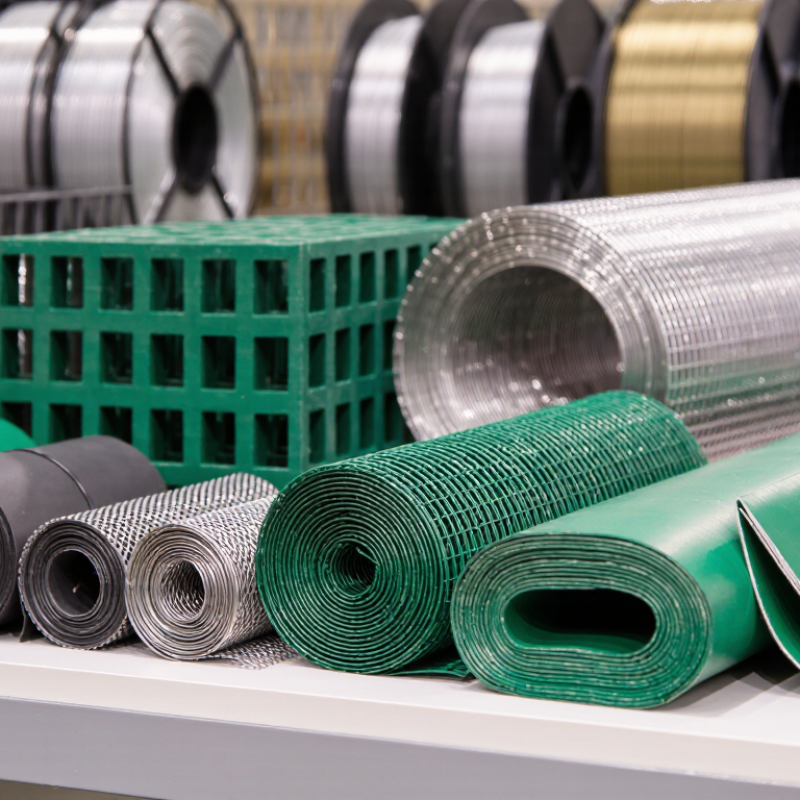
How PVC-Coated Wire Mesh Is Made and Classified
PVC-coated wire mesh begins with a steel wire core, often low-carbon steel or galvanized steel. The wire is cleaned to help the coating adhere. Some products receive zinc protection before PVC, adding a barrier beneath the outer layer. Mesh may be welded into square openings or woven into a flexible pattern. Depending on the product, PVC is applied to individual wires before assembly or to the finished mesh. These routes are not interchangeable: welding can affect a coating, so the manufacturing sequence matters.
Classification usually depends on core protection, mesh construction, wire diameter, opening size, and coating thickness. A welded mesh has firm, regular intersections; woven mesh can flex more easily. Color is visible, but it tells little about service life by itself. Small details matter. Check whether stated wire measurements refer to the bare core or finished, coated diameter. For outdoor use, inspect cut edges and sample joints, where thin or damaged coating may expose metal. There is no single best specification for 2026: a rigid garden panel and a flexible enclosure have different needs. I would compare actual dimensions and coating coverage, not rely on a broad “heavy-duty” label.
Which Technical Properties Determine Mesh Performance
Which PVC Coated Wire Mesh Is Best for 2026?
Which Technical Properties Determine Mesh Performance
A reliable choice starts with the job, not the calendar year. Wire diameter and mesh opening affect stiffness, visibility, airflow, and resistance to pushing loads. Smaller openings can contain finer objects, but they may add weight and collect debris. Check finished dimensions, not just nominal sizing.
Coating quality matters just as much. Ask about PVC thickness, coverage consistency, and adhesion around welds and bends. A galvanized steel core can provide added corrosion protection beneath the polymer coating. Still, cut edges and damaged areas deserve attention. They are common weak points. For outdoor use, consider UV exposure, temperature swings, moisture, and chemical contact. Performance depends on the actual environment.
Mechanical data should include tensile strength and weld integrity, with test methods clearly stated. A glossy surface proves little by itself. Request samples and inspect a cut edge, a welded joint, and the coating after gentle flexing. Sounds basic. It helps. Suppliers may use different measurement methods, so compare like with like. There is no universal “best” mesh: a light garden screen and a livestock enclosure need different balances. Even careful selection cannot remove every installation risk; supports, tension, and handling affect real-world results.
How Mesh Types Suit Different Applications
The best PVC-coated wire mesh depends on what it must contain, support, or protect. For garden beds and small animal runs, welded mesh offers a firm grid that holds its shape when attached to posts. Its regular openings make it easier to estimate coverage and spot damage. Choose an aperture small enough for the animals or pests involved, and check the core wire diameter as well as the finished coating.
Hexagonal mesh bends around curved frames and works well for lightweight poultry enclosures or temporary plant guards. It is easier to shape than welded mesh, but it can sag if the supports are widely spaced. Not every roll feels equally sturdy. Test a sample by gently pulling the wires; loose twists may need closer support.
For long boundaries, PVC-coated chain-link mesh handles uneven ground more readily than rigid panels. It suits larger runs and property dividers, though gates and corners need careful fitting to avoid gaps. In damp areas, inspect cut ends and contact points, where the underlying wire may become exposed. Small details matter. Compare mesh opening, wire gauge, coating condition, and installation method before choosing; a thicker coating alone does not guarantee a longer service life.
How Climate and Maintenance Affect Mesh Selection
Which PVC Coated Wire Mesh Is Best for 2026?
How Climate and Maintenance Affect Mesh Selection
Climate should guide mesh choice more than appearance alone. In hot, sunny locations, ultraviolet exposure can fade PVC and gradually make it brittle. Look for mesh with a consistent coating and a galvanized wire core, then check that cut edges are protected. Near the coast, salt spray can reach scratches and joints, so inspect those areas often. In freeze-thaw climates, trapped water may widen small coating cracks. No coating lasts forever. A sheltered garden enclosure and an exposed roadside fence need different levels of protection.
Maintenance habits matter just as much. If you can inspect the fence every few months, minor chips can be noticed before corrosion spreads beneath the coating. Check corners, fasteners, ground contact, and places where branches rub. Rinse off salt or heavy dirt with clean water; avoid harsh cleaners that may damage the surface. For a low-maintenance site, choose a sturdy mesh with secure welds or consistent weaving, and avoid designs that are difficult to inspect. That choice is imperfect: thicker coatings may cost more and can still be damaged by sharp impacts. Compare samples outdoors, not just under indoor lighting, and consider your local sun, moisture, and repair access before ordering.
| Climate or Site Condition | Suitable Mesh Construction | Why It Fits | Maintenance Considerations | Selection Notes |
|---|---|---|---|---|
| Temperate inland areas with moderate rainfall | Galvanized steel wire with a continuous PVC coating | Provides a protective barrier against moisture and everyday weathering. A common, balanced choice for general fencing and enclosures. | Inspect periodically for cuts, peeling, loose fasteners, and damage where the mesh contacts the ground or posts. | Best all-around option for routine outdoor use. |
| Coastal areas exposed to salt spray | Heavier-duty galvanized core wire with a well-adhered PVC coating; consider stainless steel where exposure is severe or consequences of failure are high | PVC can reduce direct contact between the steel and salty moisture, but damaged coating can expose the underlying wire. Salt deposits can also collect on surfaces and fittings. | Rinse off salt deposits when practical. Check cut edges, joints, and hardware frequently, and repair or replace damaged sections promptly. | Do not treat PVC coating alone as a guarantee of marine-grade corrosion resistance. |
| Hot, sunny regions with strong ultraviolet exposure | UV-stabilized PVC-coated mesh with a corrosion-protected steel core | UV stabilizers can slow weathering, but prolonged sunlight and heat may eventually cause fading, stiffness, or cracking, depending on the formulation and exposure. | Inspect for brittleness, surface cracking, and coating separation, especially on south- or west-facing runs. | Ask for product-specific UV and weathering information; avoid assuming all PVC formulations perform alike. |
| Cold regions with freeze-thaw cycles | PVC-coated mesh selected for the expected temperature range, installed with durable fittings and suitable tension | Freeze-thaw cycles can stress posts, connections, and coating that has already been damaged. Snow and ice may also place extra load on fencing. | Check after severe winter weather for bent supports, loosened connections, and impact damage. Keep mesh clear of heavy snow buildup where feasible. | Confirm the supplier’s stated low-temperature performance for the specific coating. |
| Humid locations with frequent rain or condensation | PVC-coated mesh over a galvanized steel core, with protected cut ends and corrosion-resistant fittings | The coating helps limit moisture contact, while the galvanized core offers an additional level of protection if small areas are exposed. | Remove soil and plant debris that trap moisture. Look closely at overlaps, cut ends, and areas with poor airflow. | Good drainage and careful installation help reduce persistent wet contact. |
| Industrial or urban sites with dust and airborne pollutants | Durable PVC-coated mesh matched to the site’s chemical exposure and cleaning requirements | The coating can help protect the wire, but compatibility varies with the chemicals present. Some solvents and aggressive cleaners can damage PVC. | Use water or a cleaner confirmed as compatible with the coating. Inspect regularly for chemical attack, abrasion, and deposits. | Identify specific pollutants before choosing a coating; seek compatibility data for unusual exposures. |
| High-contact areas where people, tools, or equipment may strike the mesh | Mesh gauge, aperture, and support spacing selected for the expected impact and load, with a PVC-coated finish | Coating protects the surface but does not determine structural strength on its own. Wire diameter, mesh opening, support spacing, and installation all matter. | Check for deformation, broken wires, and coating damage after impacts. Replace sections that no longer provide the required containment or safety. | Choose construction based on the required load, not coating thickness alone. |
| Sites where access for inspection is limited | Higher-corrosion-resistance construction appropriate to the environment, with accessible and maintainable connections | Less frequent inspection makes early detection of coating damage more difficult. Appropriate core protection and installation quality become especially important. | Plan inspection access and record the condition of the mesh during scheduled site checks. | Prioritize durability, repair access, and documented product specifications. |
What to Compare When Choosing PVC-Coated Mesh in 2026
Which PVC Coated Wire Mesh Is Best for 2026?
What to Compare When Choosing PVC-Coated Mesh in 2026
A useful comparison starts beneath the green or black surface: check the steel core, zinc protection, and PVC layer as separate components. Ask for wire diameter before coating, finished diameter, mesh opening, and coating-thickness data. Otherwise, two rolls may look identical but have very different usable strength.
Looks simple. It isn’t.
Exposure should guide the specification. For coastal air, frequent washdowns, or damp soil, request corrosion-test results and the exact test conditions. ISO 9227 salt-spray testing can help compare samples, but it does not predict a precise service life outdoors. For strong sun, ask whether the PVC compound has UV-weathering test data.
The NACE International IMPACT study estimated global corrosion costs at US$2.5 trillion, or 3.4% of global GDP. That figure makes coating quality more than a cosmetic choice, though it cannot predict the life of one mesh installation.
Also compare weld integrity, edge finish, roll consistency, and installation needs. A small cut edge can expose the steel core; inspect sample cuts, not just the untouched roll. Request a technical data sheet, batch traceability, and stated tolerances. One detail is easy to miss: thicker coating is not automatically better if it cracks at bends or obscures weak welds. I would still check a sample under the actual site conditions before ordering a large quantity.
Related Posts
-
2025 How to Choose the Best Steel Stair Treads for Safety and Durability
-
China Top 10 Stainless Steel Perforated Sheet Suppliers?
-
What is Expanded Metal Mesh and Its Applications in Various Industries
-
China Top 10 Steel Grating Manufacturers for Global Buyers
-
What Is Expanded Metal Sheet and How Is It Used?
-
Exploring the Evolution of Metal Wire: From Ancient Craftsmanship to Modern Engineering Applications