Cart

10 Best Stainless Mesh Suppliers for Global Buyers?

Choosing the right stainless mesh supplier can shape product quality, production stability, and total purchasing cost. Global buyers often compare suppliers by material grade, wire diameter, opening size, weaving accuracy, and surface finish. Yet product pages rarely reveal the full manufacturing picture.

This guide reviews ten stainless mesh suppliers through practical buying criteria. It considers factory experience, technical knowledge, inspection procedures, export capability, and customer support. Evidence may include alloy certificates, dimensional reports, sample policies, production photos, and clear lead-time commitments. A dependable supplier should explain whether its stainless mesh uses 304, 316, or another specified grade. It should also discuss corrosion resistance without making vague promises.

Small details matter. A sample roll can reveal uneven edges, loose wires, or inconsistent apertures. Packaging matters too. Moisture-resistant wrapping and strong wooden cases can reduce damage during long-distance transport. Buyers should ask about minimum order quantities, custom widths, cutting services, and replacement policies before placing large orders.

No ranking is perfect. Supplier performance can change with raw-material prices, staffing, and order volume. A company with excellent reviews may still be unsuitable for a specialized filtration project. That limitation deserves attention. This overview therefore offers a structured starting point, not a substitute for technical verification. Buyers should request current documents, inspect samples, and confirm specifications in writing. Reliable decisions come from evidence, not polished claims.
10 Best Stainless Mesh Suppliers for Global Buyers?

Stainless Mesh: Types, Grades, and Global Applications

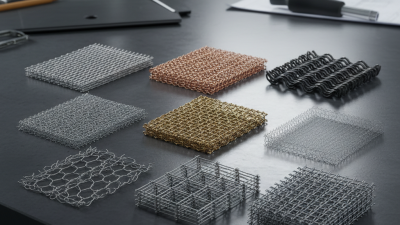
Stainless mesh comes in woven, welded, crimped, and sintered forms. Each construction controls opening size, strength, and filtration behavior. Woven mesh suits fine filtration, while welded mesh handles panels, guards, and industrial partitions. Sintered mesh offers stable permeability under pressure, but its higher cost requires careful justification. The International Stainless Steel Forum reported 58.4 million tonnes of stainless crude steel production in 2023, showing the material’s broad industrial relevance.

Grade selection should follow exposure, temperature, and cleaning conditions. Grade 304 fits general food, architectural, and indoor applications. Grade 316L performs better near chlorides, saltwater, and chemical washdown. Grade 430 can reduce cost in less aggressive environments, although it offers lower corrosion resistance. ASTM A580/A580M and A666 provide useful references for wire and stainless sheet requirements. Still, standards do not replace testing.

Small details matter. Check wire diameter, mesh count, aperture tolerance, edge finish, and surface condition. A supplier’s certificate should identify heat number, grade, and test method. In procurement practice, a clean datasheet can still hide poor flatness or inconsistent openings. Request samples.

Test the real process.

Global applications include wastewater screening, mineral processing, pharmaceutical equipment, ventilation, and food handling. MarketsandMarkets identifies filtration as a major driver of technical mesh demand, linked to tighter process-control requirements. Cost comparisons should include freight, packaging, inspection, and replacement frequency. The cheapest roll may become expensive after installation. Some specifications remain unnecessarily strict, so engineering review is worth the time.

How to Evaluate Stainless Mesh Suppliers

How to Evaluate Stainless Mesh Suppliers

Global buyers should begin with material evidence, not polished product photos. The International Stainless Steel Forum reported 58.4 million tonnes of global stainless crude steel production in 2023. That scale increases sourcing options, but it also makes traceability essential. Ask for the steel grade, wire diameter, opening size, weave type, and heat or batch number. Confirm whether the certificate follows EN 10204 3.1 requirements. For wire cloth, ASTM A580/A580M provides useful reference points for stainless steel wire specifications.

Request samples cut from actual production stock. Measure openings with calibrated tools, and check wire uniformity under magnification. A reliable supplier should explain mesh tolerance, edge treatment, roll length, and surface condition without vague promises. ISO 9001 certification can indicate controlled processes, but it does not prove every shipment is consistent.

That distinction matters. Certificates can look complete and still miss chemical composition or tensile results. Independent laboratory testing is sensible for critical filtration or heat-resistant applications.

Evaluate capacity using practical questions. Can the supplier repeat the same aperture after six months? Can it supply replacement rolls? Does packaging protect the mesh from moisture, crushing, and contamination during ocean freight? Review production records, inspection plans, corrective-action reports, and export experience.

Compare landed cost, not only the quotation. The World Steel Association’s industry reporting shows how raw-material and energy conditions influence steel markets, so fixed prices deserve careful review. My own rule is simple: verify one uncomfortable detail before trusting ten attractive claims.

10 Leading Stainless Mesh Suppliers for International Buyers

Choosing among 10 leading stainless mesh suppliers for international buyers requires evidence, not attractive catalogs. The 2023 global stainless steel production report recorded about 58.4 million tonnes, a 5.6% annual increase. This expanding supply base creates more sourcing options, but quality can still vary. Experienced buyers should examine wire grade, mesh opening, wire diameter, roll width, and surface finish. Common grades such as 304 and 316 suit different corrosion environments. A supplier’s test certificates should identify chemical composition and mechanical results. Product samples matter more than polished claims.

Supplier evaluation should also include production capacity, inspection routines, export experience, and packaging strength. ISO 9044 provides useful guidance for industrial woven wire cloth specifications and acceptance checks. Ask whether measurements are recorded by calibrated equipment. Confirm tolerance limits before placing a large order. Shipping data deserves attention too. A reliable exporter should explain lead time, pallet protection, moisture control, and document accuracy. These details prevent damaged rolls and customs delays. Still, no supplier is perfect; even a strong factory may struggle during raw-material price changes or peak seasons.

Tips: Request a small trial batch first. Compare three samples under identical lighting. Check edges for loose wires, count openings across ten centimeters, and photograph defects. Ask for recent inspection records, not old templates. An independent laboratory can verify uncertain results. It costs more, but a failed shipment costs more. My practical caution is simple: never rank suppliers by price alone. A cheaper mesh may use thinner wire, creating unexpected replacement costs.

Comparing Quality, Pricing, Certifications, and Delivery

When comparing the ten best stainless mesh suppliers for global buyers, quality should begin with measurable details. Check mesh count, wire diameter, opening tolerance, and surface finish. A reliable supplier can provide inspection photos and recent test reports. In factory reviews, I look for clean weaving floors, covered coils, and clear batch labels. Small details matter.

Pricing requires more than comparing the quoted price per roll. Ask whether cutting, edge treatment, packaging, and export documentation are included. A low offer may hide uneven openings or high minimum order quantities. Request samples before placing a large order. My first cost comparison missed inland freight, which changed the final price considerably. That mistake remains useful.

Certifications should match the intended market and application. Verify material reports, corrosion test results, quality management certificates, and traceability records. Certificates need valid dates and consistent supplier information. Delivery depends on production capacity, stock availability, port distance, and packaging strength. Ask for a realistic production schedule, not a hopeful promise. For example, vacuum-wrapped rolls with moisture barriers can reduce damage during long sea transport. Still, delays happen. A dependable supplier reports them early and offers practical alternatives, such as partial shipment or adjusted specifications. Clear communication often proves more valuable than polished sales language.

10 Best Stainless Mesh Suppliers for Global Buyers? - Comparing Quality, Pricing, Certifications, and Delivery
Supplier Profile Primary Supply Region Typical Stainless Grades Common Mesh Formats Quality Level Indicative Price Range Typical Certifications & Documents Typical MOQ Estimated Production Lead Time Export Delivery Capability Best Fit for Buyers
Supplier Profile 01 East Asia 304, 304L, 316, 316L Woven mesh, welded mesh, filter cloth ★★★★★
High dimensional consistency
US$12–38/m²
304 woven mesh, standard specifications
Mill test certificate, material composition report, dimensional inspection report, ISO 9001 commonly available 100–500 m² 15–30 working days Regular ocean freight; air shipment available for samples and urgent orders Industrial filtration, food processing, chemical equipment, OEM production
Supplier Profile 02 South Asia 304, 316, 316L, 430 Plain weave, twill weave, Dutch weave ★★★★☆
Good for standard grades
US$9–32/m²
Competitive for bulk orders
EN 10204 3.1 certificate on request, inspection report, certificate of origin, ISO 9001 frequently available 200–800 m² 20–35 working days Good container-load capability; consolidated shipments available General industrial mesh, architectural screens, agricultural equipment
Supplier Profile 03 Central Europe 304, 316L, 1.4301, 1.4404 Precision woven mesh, sintered mesh, perforated mesh ★★★★★
Tight tolerances and traceability
US$28–95/m²
Higher cost for precision products
EN 10204 3.1, ISO 9001, ISO 14001, REACH and RoHS declarations where applicable 25–100 m² 20–45 working days Strong road and air freight network; efficient EU and international distribution Pharmaceutical, laboratory, aerospace, high-specification filtration
Supplier Profile 04 North America 304, 316, 316L, 17-7 PH Woven wire cloth, welded mesh, conveyor mesh ★★★★★
Strong technical support
US$30–110/m²
Custom and short-run pricing
Material traceability, ASTM/ASME-related documentation when specified, ISO 9001 commonly available 10–100 m² 10–35 working days Reliable domestic distribution; international parcel and air freight options Replacement parts, engineering projects, low-volume technical orders
Supplier Profile 05 East Asia 304, 316, 316L, 310S Welded mesh, heavy-duty woven mesh, demister mesh ★★★★☆
Strong production capacity
US$8–30/m²
Best value for medium and large volumes
Mill certificate, weld inspection report, ISO 9001, SGS or equivalent third-party inspection available 300–1,000 m² 18–35 working days Container export capability; standard commercial documentation available Construction, mining, petrochemical equipment, large project orders
Supplier Profile 06 Western Europe 304L, 316L, 1.4404, heat-resistant stainless grades Gas-liquid separator mesh, filter mesh, woven cloth ★★★★★
Excellent process control
US$35–125/m²
Premium technical specifications
EN 10204 3.1, ISO 9001, ISO 14001, product conformity declaration, batch traceability 20–80 m² 25–50 working days Well-developed European logistics; global air and sea freight support Energy, chemical processing, emissions control, critical filtration
Supplier Profile 07 Southeast Asia 304, 316, 316L, 201 Woven mesh, welded mesh, expanded metal ★★★★☆
Good standard-product performance
US$10–34/m²
Competitive regional sourcing
Material test report, certificate of origin, dimensional report, ISO 9001 available from qualified factories 150–600 m² 20–40 working days Growing export network; sea freight is generally the most economical option Commercial kitchens, building products, general fabrication, regional distribution
Supplier Profile 08 East Asia 304, 316, 316L, nickel-alloy options Micron-rated filter mesh, Dutch weave, multilayer mesh ★★★★★
Specialist filtration capability
US$22–85/m²
Varies significantly by filtration rating
ISO 9001, pore-size and bubble-point test data, material certificate, cleanliness documentation where required 50–250 m² 20–45 working days Sample approval and international courier support; bulk sea freight available Polymer filtration, hydraulic systems, water treatment, laboratory applications
Supplier Profile 09 Eastern Europe 304, 316, 316L, 321 Welded panels, woven rolls, custom-cut mesh ★★★★☆
Flexible custom fabrication
US$15–55/m²
Competitive for custom sizes
EN 10204 documentation, ISO 9001, welding inspection records, certificate of origin 50–300 m² 15–35 working days Efficient road freight to Europe; ocean freight for overseas buyers Machine guards, custom panels, architectural and industrial fabrication
Supplier Profile 10 Middle East and North Africa 304, 316, 316L, 430 Welded mesh, woven mesh, security and ventilation mesh ★★★☆☆
Suitable for standard applications
US$11–40/m²
Pricing depends on imported raw material content
Material certificate, batch inspection report, certificate of origin, ISO 9001 available from established manufacturers 100–500 m² 20–45 working days Strong regional delivery; international ocean freight available through forwarding partners HVAC, construction, screening, local industrial maintenance
Buyer note: Price ranges are indicative market benchmarks in USD per square metre for standard stainless steel mesh and can change according to grade, wire diameter, mesh count, width, weave type, surface finish, testing requirements, order quantity, packaging, Incoterms, and freight costs. Buyers should request a current quotation, material certificate, sample approval, and delivery schedule before placing an order.

How to Select the Right Supplier for Your Project

Choosing the right stainless mesh supplier requires more than comparing prices. Define the mesh grade, wire diameter, opening size, weave, roll width, and required surface finish. For outdoor equipment, verify corrosion resistance against moisture, salt, or cleaning chemicals. A knowledgeable supplier should explain whether 304 or 316 stainless steel fits your conditions.

Ask for material certificates, inspection records, and batch traceability. Request a sample before approving a large order. Measure the aperture with a caliper and inspect several points, not just the center. Small variations can affect filtration, airflow, or structural performance. Good suppliers usually provide clear tolerances and explain their testing methods.

Production capacity also matters. Confirm monthly output, standard roll lengths, cutting accuracy, and packaging details. A wooden crate may protect heavy mesh, while moisture-resistant wrapping suits sea transport. Check lead times in writing, including sampling and final inspection. Communication is practical evidence of reliability. Slow, vague replies may become expensive later. I have seen buyers focus on unit price and overlook rejected batches, freight damage, and rework. That approach often fails. Compare the full cost, request customer references, and review independent audit or test evidence where available. A factory visit or live production video can reveal more than polished photos. Even experienced buyers should leave room for doubt and test assumptions before signing.

10 Best Stainless Mesh Suppliers for Global Buyers: How to Select the Right Supplier for Your Project

Use this recommended evaluation model to compare stainless steel mesh suppliers without relying only on price. The weighting emphasizes technical compliance, consistent quality, export capability, and total project cost.

Suggested scoring method: rate each supplier from 1 to 5 for every criterion, multiply the rating by the recommended weight, and compare the total weighted score. Always verify material grade, mesh count, wire diameter, opening tolerance, certificates, packaging, and delivery terms before placing an order.

Skip to content