
Cart

China Top 10 UV Protection Golf Umbrella Manufacturers?

Choosing a supplier for a UV Protection Golf Umbrella involves more than comparing prices or printed logos. On a bright course, the canopy should shade the golfer’s face and shoulders while opening smoothly and feeling balanced in hand. Fabric color alone does not prove ultraviolet performance. Look for clear UPF or UV test information, canopy dimensions, handle specifications, and details about quality checks.

Small details matter. A loose rib, slippery grip, or stiff runner can make an umbrella frustrating to use between holes. This guide introduces ten Chinese manufacturers and the practical questions buyers can ask when assessing their products. Company rankings may change as product ranges, testing practices, and service evolve. Treat the list as a starting point, not a guarantee.

When comparing suppliers, ask how they verify UV protection and whether test documents relate to the exact fabric offered. Check sample workmanship, stitching around the canopy, frame materials, and how the umbrella handles gusts. Request clear information about customization, minimum order quantities, and lead times before making a decision. A glossy catalog cannot answer everything. No catalog tells the whole story. If possible, inspect a sample outdoors: shade, balance, and ease of opening are easy to judge in person. The strongest supplier is not always the one with the boldest claims. Consistent evidence and responsive communication often matter more. Even careful research has limits, so confirm specifications before ordering.
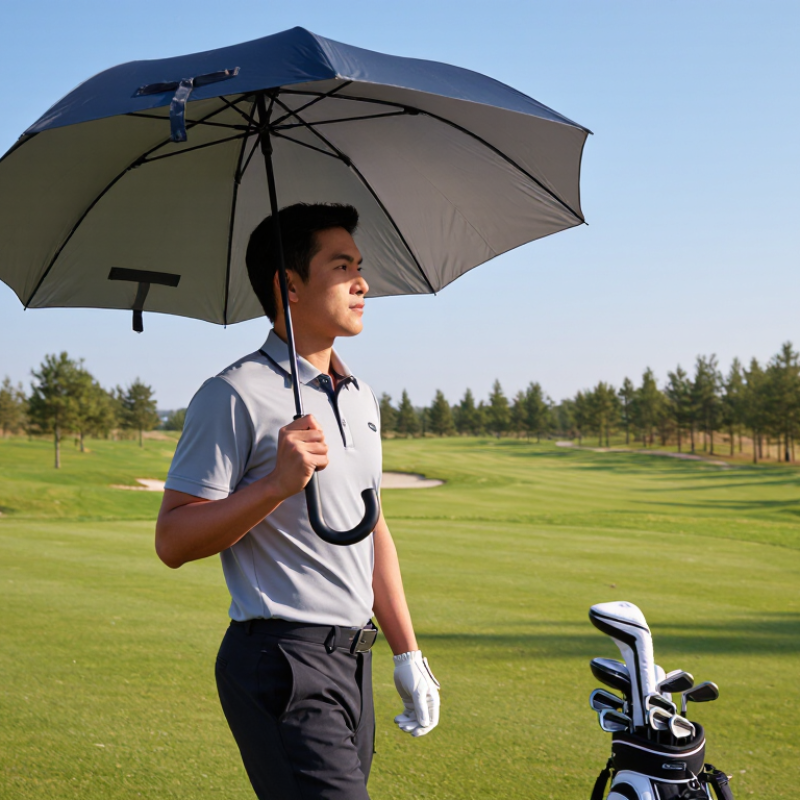
China Top 10 UV Protection Golf Umbrella Manufacturers?

UV Protection Golf Umbrellas: Design, Materials, and Performance

A UV protection golf umbrella starts with its canopy fabric, not its color. A dense weave can limit sunlight, while a tested UPF rating offers a clearer measure of protection. Ask how the rating was measured and whether it applies to the finished canopy. Small gaps at seams or stretched panels may affect real-world coverage. Details matter.

Coatings can add another barrier, but they need to hold up to repeated folding, rain, and sun exposure. A soft, matte underside may reduce reflected glare, though it does not replace a verified fabric test. Check the stitching around the ribs, too. Those points take stress when the umbrella opens in a gust. A sturdy frame helps, but extra weight can make a long walk across the course tiring.

Performance is a balance. A wide canopy shades the shoulders and golf bag, yet can catch wind more easily. Vent openings may let air pass through, but their placement and construction matter. Ask manufacturers for test reports, fabric specifications, and checks on opening cycles. Test claims deserve questions. Even good materials can age, fade, or lose coating after rough storage; that part is easy to overlook. A dry, folded umbrella kept away from prolonged heat is more likely to retain its intended performance.

China’s Golf Umbrella Manufacturing Industry

China’s golf umbrella manufacturing industry brings together fabric cutting, frame production, sewing, and final assembly. Many factories coordinate these steps under one roof, while others rely on nearby specialist workshops. This setup can shorten development cycles, but it also makes supplier coordination important. Small details matter.

For UV-protective models, manufacturers may use tightly woven polyester or apply a surface coating. The fabric, coating, and canopy coverage all affect performance. Buyers should request test documentation and check how results were measured, rather than relying on a product description alone. A larger canopy also needs a frame that stays stable in gusts. Rib material, joint design, and handle balance deserve practical inspection.

Production samples can look convincing under showroom lights. Real use is less tidy. Coatings may wear, seams may leak, and a wide canopy can catch strong wind. These issues are not always obvious from photographs. Consistent checks during fabric inspection, stitching, and assembly help reduce variation, though no inspection removes every risk. Factories also vary in how clearly they explain specifications and production limits. A useful conversation covers fabric weight, frame structure, sample testing, and acceptable defects before an order is confirmed.

Criteria for Evaluating UV Protection Umbrella Manufacturers

Choosing a UV-protection golf umbrella manufacturer takes more than comparing catalog photos. Start with fabric evidence. Request independent test reports and check whether they cover the finished canopy, not just a fabric swatch. A dark coating may look reassuring, but appearance alone proves little. Details matter.

Inspect the umbrella’s practical construction: canopy diameter, rib material, shaft strength, handle grip, and vent design. Ask how the model performs under strong sun and sudden showers. If possible, test a sample outdoors; note whether the canopy opens smoothly and feels balanced during a long walk. Small flaws show up quickly. Ask about stitching checks, coating consistency, and how production samples are compared with bulk orders. A factory’s written quality process is more useful than a broad promise of “premium quality.”

Reliable manufacturers can explain their materials, test methods, production capacity, and inspection steps in clear terms. Check whether answers stay consistent across sales, technical, and quality teams. No supplier is flawless; a strong sample may still differ from a large production run. Request photos or records from in-process inspections, and clarify how defects are handled. One limitation: documents need context, so compare them with samples and realistic use rather than treating paperwork as proof by itself.

Profiles of 10 Chinese UV Protection Golf Umbrella Manufacturers

China’s UV golf umbrella suppliers are best compared by factory capability, not catalog photographs. Grand View Research valued the global golf equipment market at US$7.3 billion in 2023 and projected 4.3% annual growth through 2030. This is not an umbrella-only estimate, but it signals steady demand around golf products. The ten anonymous manufacturer profiles below reflect distinct sourcing strengths: golf-specific canopy design; UV-rated fabric selection; fiberglass shaft production; reinforced steel frames; vented canopies for gusts; compact travel models; custom printing and OEM production; low-volume sampling; export quality control; and recycled-fabric options. Small details matter. Buyers should request fabric test documentation, frame specifications, and sample checks before comparing quotations.

A practical review should inspect canopy coverage, stitching density, rib joints, handle grip, and packed length. Ask how UV performance is tested, and whether results apply to the finished canopy rather than fabric alone. Production photos help, but they do not prove consistency across batches. One weakness in many supplier comparisons is that “UV protection” appears as a sales phrase without a clearly stated test method or rating. That deserves scrutiny. A sample may open smoothly in a showroom yet feel heavy after a full round, or wobble in a crosswind. Supplier profiles are useful starting points, not guarantees; verified test records and hands-on inspection still matter.

UV Protection Benchmarks for Golf Umbrellas

UPF indicates how much UV radiation a fabric blocks. Percentages shown are calculated from the UPF rating using 1 − (1 ÷ UPF); they are benchmarks, not measurements of any specific manufacturer’s products.

Comparing Manufacturer Capabilities, Certifications, and Services

When comparing China’s leading UV-protection golf umbrella manufacturers, look beyond canopy color and quoted UPF. WHO and IARC estimated that ultraviolet radiation caused about 1.5 million new skin cancer cases and over 120,000 deaths worldwide in 2020. Those figures make verified protection more important than promotional claims. Request lab reports listing the UPF result, test method, fabric condition, and batch traceability. WHO and WMO’s Global Solar UV Index guidance recommends protection from UVI 3. At UVI 8 or higher, exposure risk is very high. Numbers matter.

Compare test quality, production controls, and after-sales support. Ask whether an independent laboratory tested the canopy fabric and whether reports match the material in your sample. A UPF label alone does not show how well the finished umbrella blocks scattered sunlight. Check canopy coverage, seam construction, coating durability, and frame performance in wind tests. ISO 9001 indicates a quality-management system; it does not certify UV performance. One weakness: samples may not match bulk production. Request pre-shipment inspection records and clear procedures for defects. Also compare custom fabric options, sampling time, minimum order quantities, and replacement-part support. Test the seams. A useful supplier answers technical questions with documents, not just confident promises.

China Top 10 UV Protection Golf Umbrella Manufacturers? - Comparing Manufacturer Capabilities, Certifications, and Services

This is a non-ranked supplier evaluation table, not a verified list of ten named manufacturers. Company-specific capabilities and certifications should be confirmed directly with each supplier using current documents and product samples.

No. Comparison Dimension Evidence to Request from Each Manufacturer How to Compare Suppliers Important Verification Note
1 UV protection performance Test report for the specific canopy fabric and, where possible, the finished umbrella. Request the reported UPF rating and test method. Prefer a current, traceable report that identifies the tested material, color, and construction. UPF 50+ is a commonly used top rating and indicates very high UV protection under the applicable test conditions. Do not treat a product description or hangtag alone as proof. UV performance can vary with fabric, color, coverage, wear, moisture, and test conditions.
2 Fabric and canopy construction Fabric composition, fabric weight, coating or treatment details, canopy-panel construction, and material specifications. Compare the declared specifications with a physical sample and the intended use, including sun exposure, rain, and frequency of use. Fabric weight or a coating claim alone does not establish a particular UPF rating; request test evidence for the relevant fabric.
3 Frame and wind resistance Frame material, rib and shaft specifications, opening mechanism, and any wind-resistance test procedure or test results. Compare the design and documented test conditions, then inspect samples for joint strength, alignment, and ease of operation. “Windproof” is not a universal performance rating. Ask what wind speed, test method, and pass criteria the supplier means.
4 Quality management A current ISO 9001 certificate, including its scope, issuing certification body, validity dates, and covered site. Check whether the certificate applies to the actual production facility and relevant manufacturing activities. ISO 9001 concerns a quality-management system; it is not a product-performance certificate and does not verify UV protection by itself.
5 Social and factory compliance Recent social-compliance audit reports or platform records, audit date, factory address, and corrective-action status. Compare audit scope, recency, site coverage, and how findings were resolved. BSCI is an audit and improvement framework, not a product certification. Confirm the report belongs to the factory producing the order.
6 Restricted-substance and material documentation Relevant test reports or declarations for the materials and destination market; for recycled content, request chain-of-custody evidence where applicable. Check that reports identify the tested materials, applicable requirements, laboratory, and report date. OEKO-TEX® or GRS documentation, when applicable, covers defined materials or supply-chain claims; neither proves the finished umbrella's UV rating.
7 Product development and customization Available canopy sizes, panel or print options, handle and frame choices, artwork process, sample lead time, and sample charges. Compare the supplier’s ability to turn a specification into an approved sample and maintain consistency with the approved version. Confirm ownership and permitted use of artwork, logos, and custom designs in the purchase agreement.
8 Production capacity and lead time Monthly capacity for the relevant umbrella type, production schedule, peak-season capacity, and stated sample and bulk lead times. Request a production plan tied to the order quantity and confirm whether capacity is available at the named factory. Capacity and lead times are order-specific; obtain written dates and assumptions rather than relying on general estimates.
9 Quality control and traceability Incoming-material, in-process, and final-inspection procedures; inspection records; defect criteria; and batch or order traceability. Compare inspection coverage, sampling approach, defect definitions, corrective-action process, and willingness to support independent inspection. Agree on measurable acceptance criteria before production. A general “100% inspection” claim should be clarified in writing.
10 Export, packaging, and after-sales service Export-market experience, packaging specifications, carton details, spare-parts availability, warranty terms, and complaint-response process. Compare the supplier’s ability to meet destination-market, shipping, labeling, and service requirements for the particular order. Confirm Incoterms, shipping responsibilities, warranty exclusions, and remedies in the contract; these terms vary by transaction.

Skip to content