China Top 10 Level 3 DC Fast Charging Station Manufacturers
China has become an important base for electric vehicle charging equipment, including high-power direct-current systems. This guide introduces ten Chinese manufacturers of Level 3 DC fast charging station equipment. It is designed to help fleet operators, charging-network developers, and procurement teams begin their research.
A useful comparison goes beyond advertised charging speed. Power output, connector options, cooling design, cabinet footprint, and compatibility with vehicle and site systems all matter. So do installation requirements, warranty terms, remote monitoring, and access to responsive technical support. A compact charger may suit a busy urban site, while a larger installation may better serve highway stops or commercial fleets. Details vary by model.
The manufacturers are presented as options to investigate, not as a universal ranking. Product availability and specifications can change, and a published rating alone does not prove real-world performance. Buyers should confirm current technical documents, relevant certifications, service coverage, and reference projects directly with each supplier. Ask about operating performance in the climate and traffic conditions your site will face. Small details count. This overview aims to clarify the market, while recognizing that supplier information can be uneven and comparisons are never perfect. Use it as a starting point for careful, site-specific evaluation.
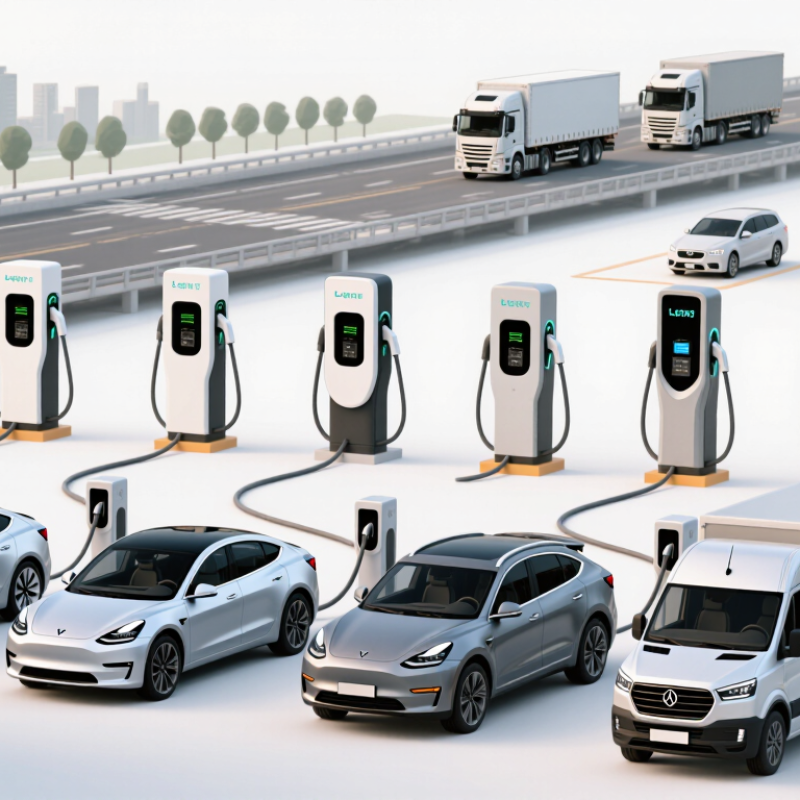
Understanding Level 3 DC Fast Charging Stations in China
In China, “Level 3” generally describes high-power DC fast charging, though the term is not used consistently across markets. The charger converts grid power into direct current and delivers it to a vehicle’s battery. Many public DC stations use GB/T connectors, but drivers should confirm vehicle compatibility before arriving. Power ratings vary by site, and a charger’s headline rating does not guarantee that every car will receive that output.
Actual charging speed depends on the vehicle, battery temperature, and state of charge. A car may charge quickly at a low battery level, then slow down as the battery fills. Heat matters. On a cold morning, the battery may also accept power more slowly. Site conditions count too: shared power cabinets can divide available output among vehicles, and a busy station may feel less convenient than its rating suggests. Operators should check connector wear, cable condition, cooling systems, and payment access regularly. These practical details are easy to overlook, and no single power figure tells the whole story. A better station choice considers vehicle compatibility, reliable operation, and the charging curve, not just the largest number on the screen.
Criteria for Identifying China’s Leading Manufacturers
China Top 10 Level 3 DC Fast Charging Station Manufacturers
A credible assessment of Chinese DC fast-charging manufacturers should start with evidence, not rankings or polished product photos. Compare rated output, connector options, cabinet design, and performance across the expected voltage range. Ask for independent test reports and check whether the tested configuration matches the unit being quoted. Field references matter, too. Look for operating data from sites with similar weather, traffic, and grid conditions. One impressive installation is not enough.
Tips: Request a sample service log. Check spare-part lead times, remote diagnostics, and response procedures. Ask who handles commissioning and operator training.
Reliability becomes clearer when you examine details: cable temperature during sustained charging, protection against dust and moisture, and how the system shares power across multiple dispensers. Review software update practices and confirm that the charger can communicate with the site’s management system. A capable manufacturer should explain limitations plainly and provide traceable documentation. Still, comparisons are rarely perfect; test conditions differ, and published uptime can omit important context. Speak with operators, verify claims independently, and assess after-sales support in the regions where the equipment will run.
Profiles of 10 Chinese Level 3 DC Fast Charging Station Manufacturers
China’s DC fast-charging market is large, but “Level 3” is not used uniformly across regions. The International Energy Agency’s Global EV Outlook 2024 reports that China had about 85% of the world’s public fast chargers in 2023. Scale matters. Buyers still need to check connector compatibility, rated output, and cooling performance against their sites.
To compare ten Chinese manufacturers without relying on brand claims, examine distinct capability profiles. One emphasizes modular high-power cabinets; another targets space-limited urban sites. A third develops liquid-cooled cables, while a fourth integrates battery storage. A fifth serves commercial fleets and depot charging. A sixth designs for demanding outdoor conditions. The seventh focuses on charger-management software; the eighth offers tailored hardware configurations. A ninth prioritizes cross-market compatibility, and a tenth builds its case around maintenance and service coverage. These are comparison profiles, not a verified ranking of named companies.
Ask each supplier for field data, not just peak-power figures. Request uptime records, thermal test results, and spare-parts response times. A cabinet rated at 240 kW may deliver less when several vehicles charge together. That detail is easy to miss. IEA data describes a rapidly expanding network, but it does not establish the reliability of any individual manufacturer. A careful profile should separate documented performance from sales language.
Comparing Product Portfolios, Charging Power, and Technologies
A useful comparison of China’s leading Level 3 DC fast-charging manufacturers starts with the jobs their equipment must handle. Some portfolios focus on compact cabinets for roadside sites; others pair high-power units with dispensers that serve several parking bays. Check whether a supplier offers both, along with cables, connectors, payment interfaces, and remote monitoring. A cabinet rated at 240 kW may not deliver that output to every vehicle at once. Load sharing matters.
Power ratings deserve careful reading. Many product lines span roughly 60 kW to 480 kW, but the practical charging rate depends on vehicle limits, battery temperature, and site capacity. Look for clear output ranges, connector options, cooling methods, and stated performance under continuous use. Liquid-cooled cables can support higher currents, though they add maintenance needs. The details matter.
Technology comparisons should include power modules, energy management, and software diagnostics—not just peak kilowatts. Modular designs can make repairs simpler: a technician may replace one module instead of taking an entire charger offline. Still, modularity alone does not prove reliability. Ask for test records, warranty terms, and evidence from installations with similar climates and traffic. I would treat sales claims cautiously until these details are verified. Specifications can change, and a neat comparison table rarely captures every site condition.
Industry Standards, Market Presence, and Manufacturer Selection Factors
A reliable comparison of Level 3 DC fast charging station manufacturers starts with standards, not headline power ratings. Check whether equipment supports the connector systems and communication protocols required in the intended market. IEC 61851 covers conductive charging requirements, while ISO 15118 supports communication between vehicles and charging equipment. Local certification and grid rules also matter. Requirements vary by region.
Market presence is more than shipment volume. Look for operating installations in similar climates, documented uptime, and technicians who can reach the site quickly. Ask how spare parts are stocked and how software updates are tested. A charger delivering 150 kW on a specification sheet may perform differently when several vehicles share limited site power. Field records help reveal that gap. Still, reported uptime can be measured in different ways, so compare definitions carefully.
For manufacturer selection, examine thermal management, enclosure protection, cable handling, payment options, and compatibility with network software. Request test reports, warranty terms, and references from operators with comparable traffic. A practical site trial can expose awkward screen placement or cables that are difficult to manage in winter. Small details count. No single supplier is best for every project; sometimes procurement teams overvalue peak output and undervalue service coverage. That is worth reconsidering.
China Top 10 Level 3 DC Fast Charging Station Manufacturers - Industry Standards, Market Presence, and Manufacturer Selection Factors
Common DC fast-charger rated power classes (kW) provide a practical benchmark for comparing product portfolios. The chart shows power ratings, not manufacturer rankings or market shares.
When evaluating manufacturers, compare power ratings alongside connector and vehicle compatibility, applicable safety and grid standards, certifications, deployment experience, warranty coverage, and after-sales service. Actual product ratings and configurations vary.