How to Choose the Best Stainless Steel Mesh Screen for Your Needs?
Choosing the right stainless steel mesh screen can be challenging. Richard Thompson, an expert in the industry, once said, "The right mesh is vital for both durability and function." This highlights the importance of understanding your specific needs when selecting a stainless steel mesh screen.
Whether you require a screen for filtration or structural support, various options exist. The mesh's weave pattern, wire diameter, and opening size all influence its performance. For instance, a finer mesh may be ideal for filtration but could reduce airflow. Conversely, a larger opening might allow more fluid movement but compromise filtering capabilities.
Many buyers overlook details when shopping. It’s essential to consider the environment where the screen will be used. Factors like temperature, humidity, and exposure to chemicals can influence durability. Yet, some companies prioritize cost over quality, leading to regrettable purchases. Evaluating your requirements before making a decision is crucial for longevity and effectiveness.
Understanding the Different Types of Stainless Steel Mesh Screens
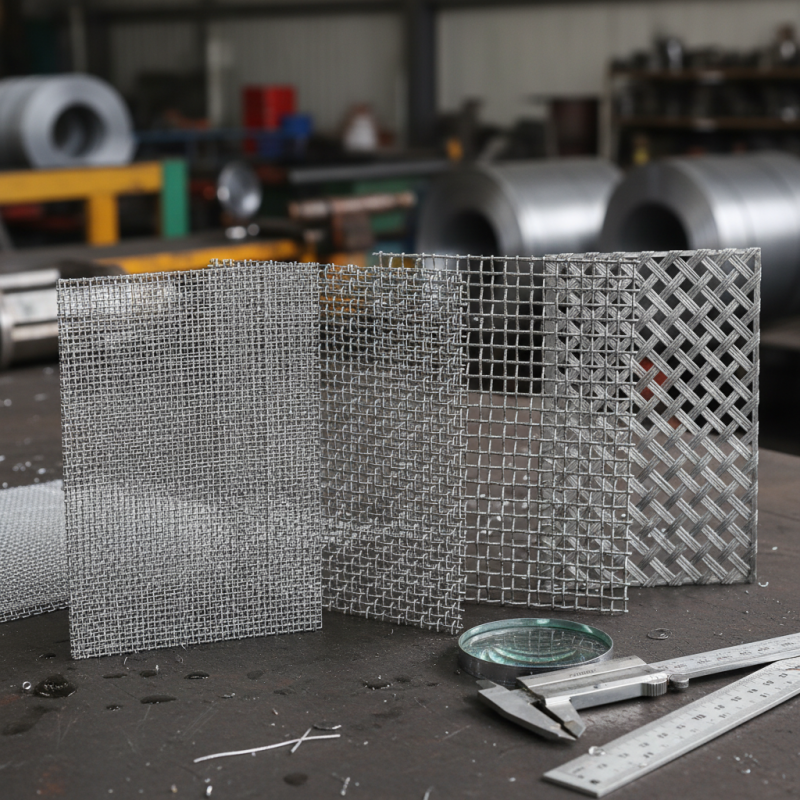
Stainless steel mesh screens come in various types, each designed for specific applications. The main options include woven wire mesh, welded wire mesh, and perforated metal mesh. According to recent industry reports, woven wire mesh is often preferred for its flexibility and versatility. This type allows for superior filtration and achieves different mesh sizes, catering to diverse needs.
Welded wire mesh is known for its strength and durability. This type is often used in construction and safety applications, providing structural support. Studies show that in harsh environments, welded mesh outperforms other types, making it favorable in industrial settings.
Perforated metal mesh has holes punched into it. This results in higher airflow and is often used in soundproofing and architectural designs.
Choosing the best type can be challenging. Users often overlook factors like gauge thickness and mesh count. A thicker gauge provides strength but can reduce flexibility. Additionally, finer mesh counts enhance filtration but can impede airflow. Reflecting on these trade-offs is crucial for selecting the right screen. Some may find themselves stuck between options, struggling with the practical implications of their choice.
Key Factors to Consider When Choosing a Stainless Steel Mesh Screen
When selecting a stainless steel mesh screen, several key factors come into play. First, consider the mesh opening size. According to industry reports, smaller openings are ideal for filtration applications. A typical range is between 20 to 400 microns. For applications needing high flow rates, larger openings, like 1 to 2 mm, may suffice. Testing various sizes can help determine what best fits your needs.
Material quality is another crucial aspect. Stainless steel screens can be made from various grades, such as 304 or 316. The difference in corrosion resistance affects longevity. For highly corrosive environments, 316 grade is often recommended. However, it can be more expensive. Balancing cost against durability is important. Remember that not all stainless steel is created equal.
Lastly, consider the screen's rigidity and frame design. A robust frame prevents bending and deformation under pressure. Reports indicate that flexibility affects performance in dynamic applications. Clients often overlook this, leading to premature failures. Assessing your specific application’s pressure requirements can be beneficial.
Assessing the Size and Mesh Count for Your Specific Application
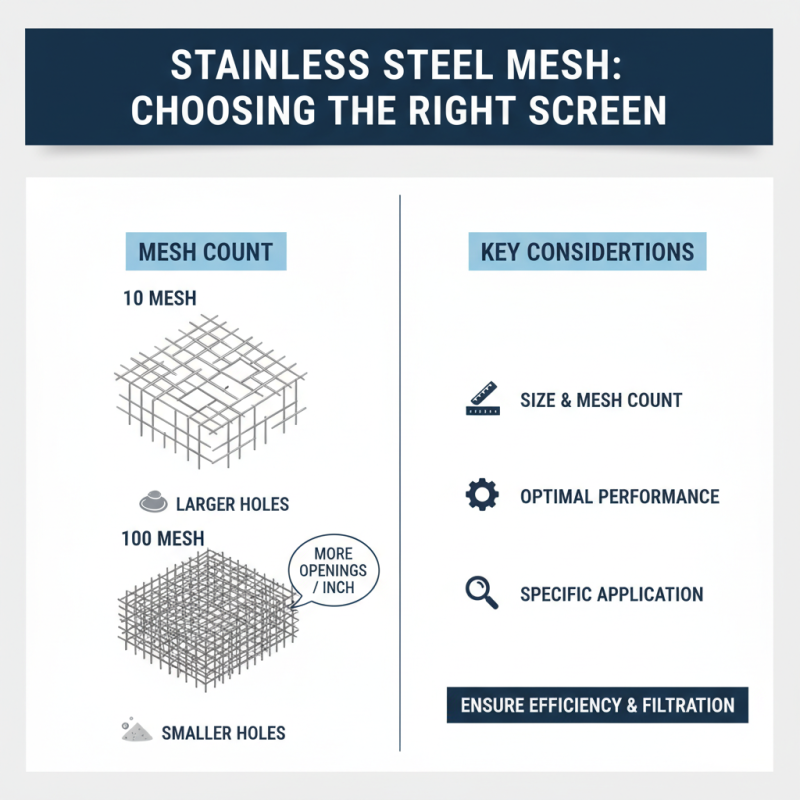
Choosing the right stainless steel mesh screen requires careful consideration of size and mesh count. This is crucial for ensuring optimal performance in your specific application. Mesh count refers to the number of openings per linear inch. A higher count means smaller holes. For instance, a 100 mesh screen has 100 openings per inch, while a 10 mesh screen has larger openings.
When assessing size, think about what you’re filtering. For liquids, a finer mesh may be necessary to catch smaller particles. Data shows that screens with 40-60 mesh counts are ideal for most liquid filtration tasks. On the other hand, coarser meshes like 10-20 are suited for bulk materials or large debris removal. Understand your needs; the mesh may seem perfect but be ineffective.
Tips: Always consider the material's thickness as well. Thicker screens provide durability, while thinner screens can better adapt to specific shapes. Test different mesh sizes with your material before settling on one. Sometimes, a smaller or larger size may work better than you initially thought. It's worth exploring beyond the obvious. Compatibility and performance can lead to surprising outcomes.
Evaluating Durability and Corrosion Resistance in Stainless Steel Mesh
When selecting a stainless steel mesh screen, durability and corrosion resistance are essential factors to consider. According to industry data, stainless steel has a corrosion resistance rate of around 80% in various environments. However, not all stainless steel is created equal. The composition of the alloy plays a significant role in its overall durability.
For instance, Type 304 stainless steel is widely used due to its excellent corrosion resistance. Yet, in marine environments, it may show signs of corrosion over time. Conversely, Type 316 stainless steel contains molybdenum, which enhances its resistance to pitting and crevice corrosion, particularly in chlorinated environments. This makes it ideal for applications near oceans or industrial settings.
Cost can sometimes be a reflection of durability. Cheaper options may compromise on quality. They might offer immediate savings but often fail to withstand harsh conditions. Ultimately, selecting the right mesh means balancing cost with the required performance and environment. Evaluating these aspects is crucial for any long-term application.
How to Choose the Best Stainless Steel Mesh Screen for Your Needs? - Evaluating Durability and Corrosion Resistance in Stainless Steel Mesh
| Mesh Size (Microns) |
Wire Diameter (mm) |
Material Grade |
Corrosion Resistance (Rating) |
Durability (Scale 1-10) |
| 100 |
0.3 |
304 |
Excellent |
8 |
| 200 |
0.2 |
316 |
Very Good |
9 |
| 400 |
0.5 |
201 |
Good |
7 |
| 500 |
0.4 |
430 |
Moderate |
6 |
| 800 |
0.1 |
430 |
Fair |
5 |
Cost Considerations and Budgeting for Stainless Steel Mesh Screens
When budgeting for stainless steel mesh screens, consider the main factors. These screens come in various grades and sizes. The material quality significantly impacts the price. A higher-grade stainless steel offers better corrosion resistance but costs more upfront. Evaluate your specific needs against these quality levels.
Installations may require additional components. Frame structures, mounting hardware, and shipping fees can increase total costs. Think about where and how you plan to use these screens. If they are for outdoor applications, durability becomes critical. Some screens might be less effective or rust quickly if not the right choice.
Keep in mind that while cheaper options may appeal, they could lead to long-term expenses. Frequent replacements can add up. Examine the balance between initial costs and potential longevity. Reflect on your use cases, and prioritize quality for better overall value.
Cost Considerations for Stainless Steel Mesh Screens