How to Choose an Aluminum Dropper for Your Product?
Choosing an Aluminum Dropper is not just a packaging decision. It affects how comfortably customers dispense a product, how well the closure fits, and how the package performs during storage and transport. A sleek metal finish may catch the eye, but appearance alone cannot confirm suitability. Small details matter.
Start with the formula and the bottle. Oils, serums, and other liquids can differ in thickness, so dropper performance should be checked with the actual product. Consider the pipette length, bulb feel, neck finish, and the amount dispensed with each squeeze. A pipette that is too short may leave product behind. One that draws liquid too slowly can frustrate users. Fit comes first.
Material compatibility also deserves careful review. The dropper’s glass, elastomer, coating, and contact surfaces should be assessed against the formula, rather than judged by the aluminum shell alone. Ask suppliers for specifications, dimensional tolerances, and available test information. Then evaluate samples in the intended bottle. Check for leakage, smooth operation, finish consistency, and wear after repeated use. Real testing often reveals what a product sheet cannot.
There is no universal dropper for every brand or formula. Cost, appearance, filling-line requirements, and user experience may pull in different directions. Some choices will still involve trade-offs. That is worth admitting early. This guide explains the main factors to compare, the questions to ask suppliers, and the practical checks that can help you select an Aluminum Dropper with greater confidence.
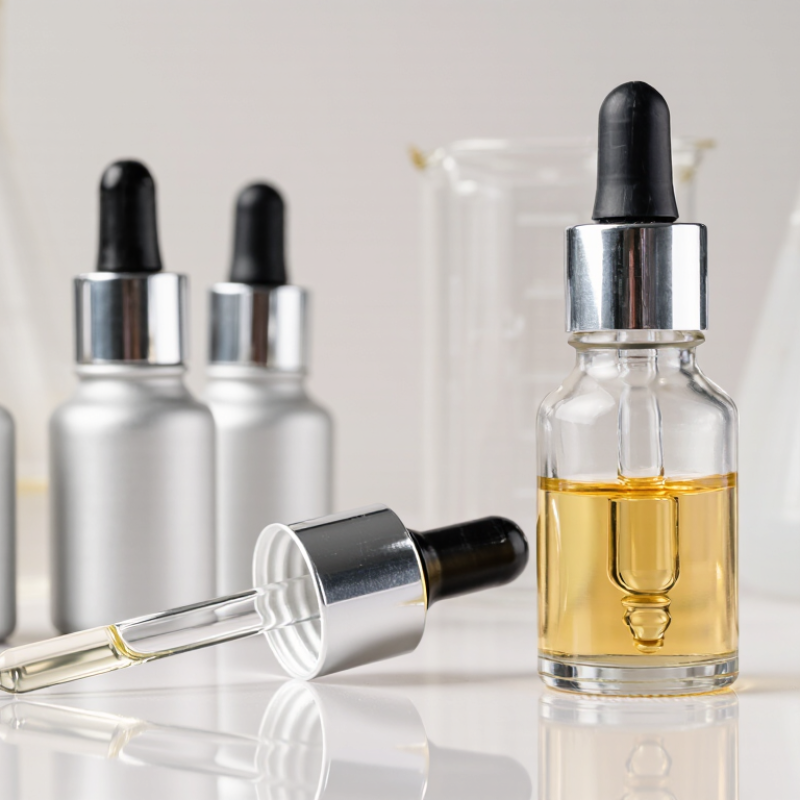
Identify Your Product’s Needs and Liquid Properties
Choose the dropper around the liquid, not just the bottle. Record its viscosity, acidity, alcohol content, oil content, and light sensitivity. These traits affect flow, seal performance, and material compatibility. NIST Chemistry WebBook data puts ethanol’s vapor pressure near 5.9 kPa at 20°C, compared with water’s 2.3 kPa. More volatile liquids can escape through weak seals, so check the bulb, liner, and pipette together. If liquid touches aluminum, assess the coating and liner for corrosion or discoloration. A good fit is only a start.
Tips: Test filled samples upright and on their sides. Check for leaks, odor changes, swelling, and dose consistency after repeated use. A quick bench check helps, but it can miss slow changes.
USP General Chapter <1663> describes assessing extractables, while <1664> addresses leachables in packaging systems. Use these principles to plan compatibility testing with the actual formula, not a substitute liquid. Compare droplets by weight or volume; thick oils may dispense slowly, while thin liquids can release too much with one squeeze. Also test after storage at realistic temperatures and light exposure. The cap may look sound, yet the seal can weaken over time. I would not assume one sample proves long-term stability; repeat checks across batches and aging conditions.
How to Choose an Aluminum Dropper for Your Product
Identify your product’s needs and liquid properties
Viscosity affects how readily a liquid moves through a dropper: higher-viscosity products may dispense more slowly and need testing with the intended pipette and opening. These representative values are approximate for pure liquids at 20°C. Also verify formulation compatibility with the dropper’s product-contact surfaces, coating or liner, and seals; viscosity alone does not determine suitability.
Check Bottle Compatibility and Dropper Dimensions
An aluminum dropper is only a good fit when its closure matches the bottle. Check the bottle’s neck finish, including thread size and shape, against the dropper cap. A cap that starts crooked or stops before the liner meets the rim may leak during storage. Small details matter. Measure the neck diameter and thread height with calipers, rather than relying on a visual guess.
Next, compare the pipette’s length with the bottle’s internal depth. It should reach near the bottom without pressing hard against the glass. Check its width, too: a pipette that is too wide can rub the neck, while a narrow one may feel loose inside the bottle. Leave enough space for the dropper assembly to seat fully. Measure twice. I have found that nominal dimensions can still vary slightly between samples, so test an actual bottle and dropper together.
The bulb and pipette should also suit the product’s flow. A thicker liquid may move slowly through a narrow tube, while a very wide pipette can draw more product than intended. Fill a sample bottle, close it, and turn it gently to check for seepage. Then dispense several drops onto a clean surface. Record the fit, insertion depth, and dispensing behavior; one test may not reveal every mismatch.
Select the Aluminum, Finish, and Liner
How to Choose an Aluminum Dropper for Your Product?
The right aluminum choice depends on the bottle’s shape, weight target, and filling process. Alloy and wall thickness affect forming, dent resistance, and the feel in hand. Ask suppliers for specifications, then check that the dropper’s neck and threads match the bottle precisely. A cap that looks aligned may still leak.
Choose a finish for both appearance and handling. Brushed aluminum can show fingerprints less clearly than a glossy coating, while colored finishes help products stand out on a shelf. Coatings may scratch during transport, so test finished samples in cartons and during repeated opening. A small scuff can change the whole impression. It is easy to overlook.
The liner deserves equal attention. Its material must suit the formula and expected storage conditions, not just the cap. Check for leakage, odor transfer, swelling, and changes after contact with the product. Test samples upright and on their sides, including after temperature changes. One trial is rarely enough. Some decisions still involve compromise: a tighter seal may make opening harder, while a softer liner may feel pleasant but need closer compatibility checks.
Evaluate Dispensing Accuracy and User Experience
An aluminum dropper should be tested with the actual formula, not just water. Oils and thicker serums may move differently through the pipette. Measure several doses by weight, then repeat after the dropper has been used throughout the day. Look for consistent output, easy priming, and clean shutoff. A few drops on the bottle neck can signal a poor fit or a tip that releases too slowly.
Small differences matter. A dose that varies can frustrate users and make routines feel unreliable. Check how much product remains in the pipette after dispensing, and whether the bulb draws liquid back smoothly. Test the dropper upright and at a slight angle. Real users rarely hold a bottle perfectly still. One lab check is not enough.
User experience also depends on touch. The bulb should be comfortable to press, while the aluminum parts should feel secure rather than sharp or slippery. Ask testers to open, fill, dispense, and close the bottle with dry hands, then with slightly damp hands. Their feedback may be messy. That is useful. A polished sample can still hide awkward handling, and a heavier metal finish may feel premium to some users but tiring to others. Choose the balance that performs consistently and feels natural with your product.