How to Choose the Right Expanded Metal Mesh?
Choosing expanded metal mesh starts with the job, not the catalog image. John French Golding, whose 1880 patent helped establish the process, is an important name in its history. His historical record does not provide a verified buying quote, so this guide avoids assigning him invented words. A useful selection principle is: “Match the mesh opening, strand, and material to the work the panel must do.”
That sounds simple. It isn’t always. A small opening may improve screening, yet restrict airflow. A thicker strand can add stiffness, but also weight. Picture a walkway exposed to rain: grip, drainage, load capacity, and corrosion resistance all matter. For a light guard, visibility and clean edges may matter more. The right choice depends on real conditions, including installation method and maintenance access.
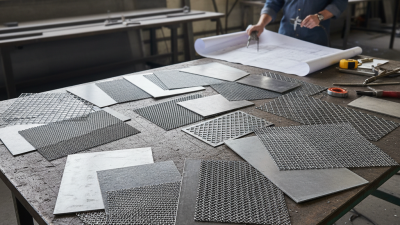
This outline will compare opening size, strand width, thickness, alloy, finish, and fabrication needs. It will also explain how to read specifications and ask suppliers useful questions. Bring a drawing, dimensions, and the intended environment. Samples help, too. Hold one against the light; inspect the edges and feel the surface. Catalog descriptions can hide trade-offs. Even experienced buyers can overlook them. A specification is only useful when it reflects the actual application.
Define Application Loads, Span, and Required Safety Factors
Start with the load, not the mesh opening. List the panel’s own weight, expected live loads, and any concentrated loads, such as a person’s foot or a wheeled cart. Note whether impacts or vibration are possible. Small details matter. A load spread across a panel behaves differently from the same force applied at one point. Record the clear span between supports, support direction, and how edges are fastened. Longer spans generally increase deflection, so a mesh that works on a short support spacing may feel unstable across a wider opening.
Choose a safety factor with the project engineer, based on load uncertainty, use, and failure consequences—not by applying an arbitrary multiplier. Ask for load tables or test data matching the exact mesh type, strand dimensions, orientation, span, and support conditions. Published figures without those details can mislead. As a reference point, OSHA’s walking-working-surface rule, 29 CFR 1910.23(e)(3)(iv), specifies a 200-pound force for guardrail top rails and 150 pounds for intermediate rails. Those figures apply to rail components, not expanded-metal floor panels. Keep that distinction clear. Recheck deflection and connection details, too; these are easy to overlook when the panel itself appears strong.
Specify Steel Grade and Finish Under ASTM F1267
Choosing expanded metal mesh starts with the steel, not just the opening pattern. Reference the applicable edition of ASTM F1267 in the purchase specification, then identify the required steel grade and product details. Do not assume a standard reference alone communicates every project need. State sheet thickness, strand width, and opening dimensions, including whether measurements refer to the long or short way of the diamond. Small differences matter. A mesh that looks right on a sample may feel too flexible across a wide frame.
Specify the finish for the actual environment. For outdoor or damp service, name the required corrosion-protection method and coating requirements; for indoor use, a different finish may be adequate. Clarify whether edges and cut surfaces need protection after fabrication. This is easy to overlook. Where coating thickness, appearance, or post-fabrication treatment matters, put it in writing and confirm it with the supplier. ASTM F1267 provides a useful product reference, but project drawings and purchase documents should resolve details the standard or a brief callout may leave open. Inspect a sample under the expected lighting, too; texture and reflectivity can surprise you.
Measure SWD, LWD, Strand Width, and Thickness in Millimeters
Choose expanded metal by recording the diamond and strand dimensions separately. SWD is the short way of the opening; LWD is the long way. Measure between corresponding points on several diamonds, then average the readings. Keep the sheet flat and note its orientation. Small errors matter. ASTM F1267, Standard Specification for Expanded Metal, is a useful reference for product specifications; confirm the applicable edition and project tolerances before ordering.
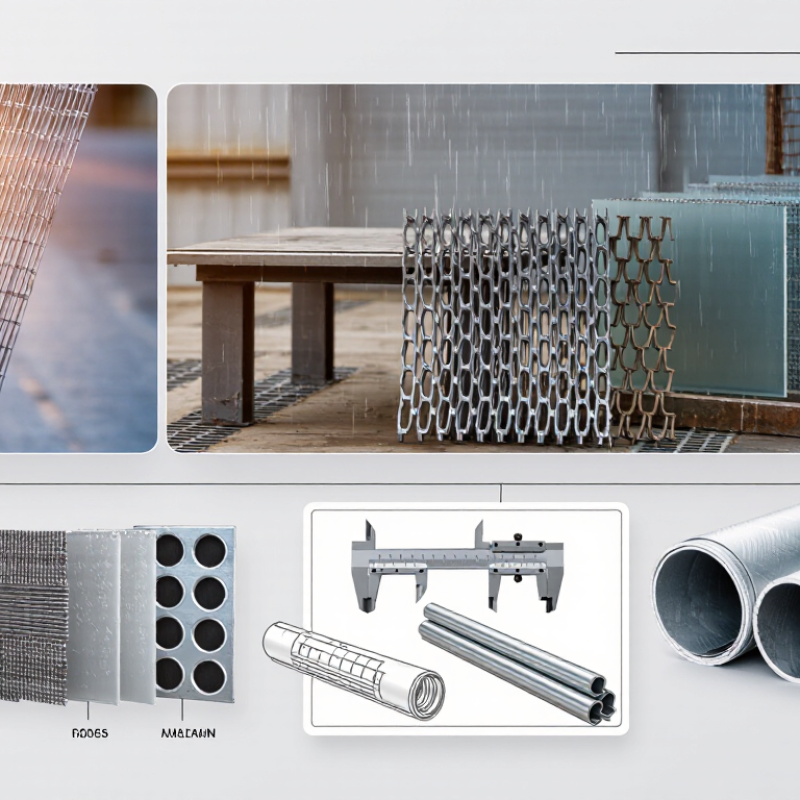
Measure strand width across the metal strip forming each diamond, not across the opening. Measure sheet thickness as the thickness of the original metal, not the raised profile. A caliper can help, but check the supplier’s measurement method if the mesh is uneven. Record all four values in millimeters.
For example: SWD 25 mm, LWD 50 mm, strand width 6 mm, thickness 2 mm. This is an illustrative specification, not a universal mesh size.
If converting inch-based drawings, NIST Special Publication 811 gives the exact relationship: 1 inch equals 25.4 millimeters. Measure twice. Keep the measurement notes with the drawing.
Compare Open-Area Percentage with Airflow and Visibility Needs
How to Choose the Right Expanded Metal Mesh?
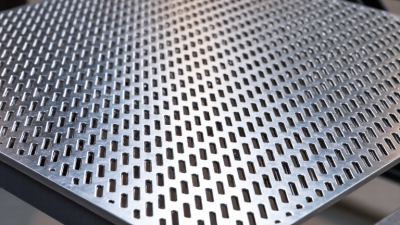
Open-area percentage describes how much of a mesh panel is open space. A higher percentage often allows more air and light through, but it does not guarantee a specific airflow rate. Strand width, mesh thickness, panel size, and the surrounding frame all affect performance. Ask suppliers for the measurement method, and compare products using the same basis. Small differences in measurement can make a comparison misleading.
Start with the actual job. For a ventilation screen, check whether air can pass through the installed panel, not just a sample held in your hand. Nearby walls or filters may restrict flow.
For a guard or partition, consider how clearly people need to see through it. Stand at typical viewing distances and angles; the mesh can look more opaque when viewed obliquely.
That matters. A larger opening may improve visibility, yet offer less screening. Not always an easy trade-off.
If possible, test a sample under real lighting and airflow conditions before ordering. Record the opening size, strand dimensions, and open-area figure, but treat them as selection clues rather than a complete performance promise.
Verify Mesh Load Capacity and Panel Tolerances Against Supplier Data
Before ordering expanded metal mesh, request a load table for the exact pattern, strand thickness, and panel size. ASTM F1267 covers steel expanded metal, but it does not provide one universal capacity for every mesh panel. The support span matters. Ask whether the supplier’s rating assumes simple supports, continuous supports, or a particular load distribution.
Check the numbers against the intended use. ASCE/SEI 7-22 Table 4.3-1, for example, lists 100 psf (4.79 kPa) for assembly areas without fixed seats; that figure is not a mesh rating or a substitute for project-specific design. Compare the required load with the supplier’s stated load and deflection at your actual span. Small differences matter. A panel that carries the load may still flex too much for carts, foot traffic, or fragile items.
Confirm tolerances in writing: overall length and width, strand dimensions, and allowable panel bow or twist. Measure sample panels across several points; sheared edges and uneven supports can affect fit. Ask how tolerances are measured, not just the nominal dimensions. One detail is often missed: coating or finishing can change fit at tight connections. Supplier data may still leave uncertainty, so flag unclear assumptions before fabrication.