How to Choose the Right Heat Treatment Furnace for Your Needs?
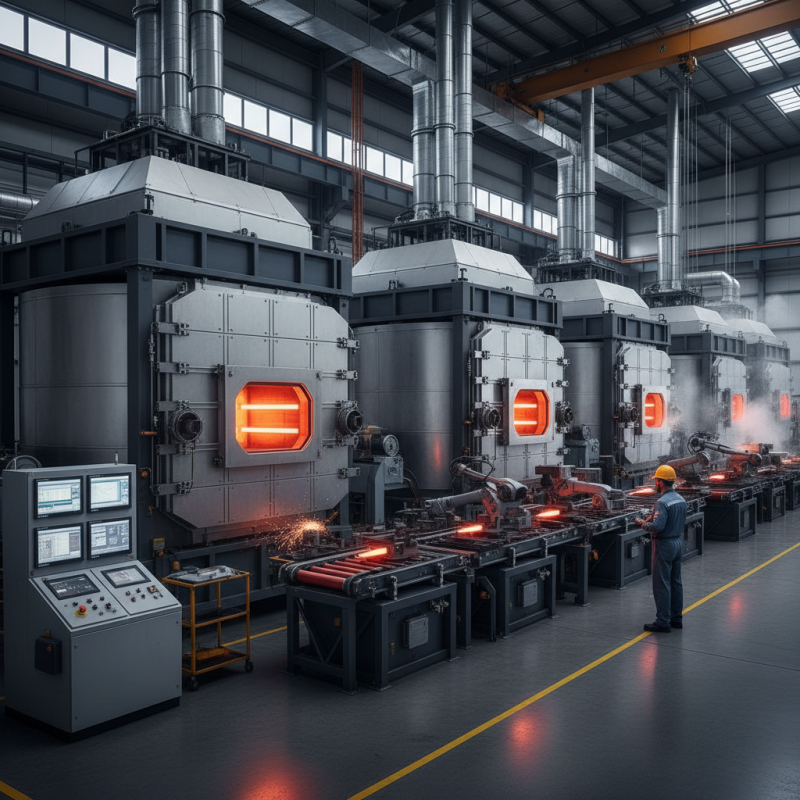
Choosing the right heat treatment furnace can be challenging. Heat Treatment Furnaces play a critical role in metal processing. They help in altering the physical properties of materials.
Understanding your specific needs is vital. Consider aspects like temperature range, type of materials, and the desired outcome. Each requirement can change your choice significantly. Do you need uniform heating or rapid cooling? Sometimes, businesses overlook the importance of energy efficiency.
Additionally, think about the capacity. A too-small furnace may limit production. On the other hand, a larger furnace could lead to unnecessary costs. Reflect on your current and future demands. This decision takes time and careful consideration. Aim for a furnace that meets your present needs while allowing for growth.
Understanding the Different Types of Heat Treatment Furnaces
When selecting a heat treatment furnace, understanding the various types is essential. Different furnaces serve specific purposes and types of materials. For instance, a batch furnace is suitable for small batches and varied recipes. This furnace can offer flexibility but requires more time for heat-up and cooling. On the other hand, continuous furnaces are better for high-volume production. They provide consistent heat treatment but may limit flexibility in processing different parts.
Induction furnaces represent another interesting option. They use electromagnetic energy to heat materials quickly. This method has efficiency benefits but could require careful control over power levels. There's a trade-off with complexity, as unexpected issues may arise during operation. Similarly, vacuum furnaces are excellent for enhancing material properties. They eliminate oxidation risks, allowing for better quality. However, they demand higher investment costs and specific maintenance protocols.
Ultimately, the right choice depends on individual needs. While considering efficiency and production speed is crucial, the learning curve of each type should not be overlooked. It's essential to weigh the logistical challenges and operational complexities. Each furnace type presents both opportunities and hurdles, requiring thoughtful evaluation.
Assessing Your Material and Process Requirements for Heat Treatment
Choosing the right heat treatment furnace requires careful consideration of both material and process requirements. Your material’s properties greatly influence the furnace type you need. For instance, steel typically requires higher temperatures than aluminum, impacting the choice of furnace design. According to a study from the American Society of Mechanical Engineers, nearly 35% of manufacturing defects stem from improper heat treatment processes.
When assessing your process requirements, think about scalability. Batch furnaces can serve small operations well, but larger production lines often require continuous furnaces. A report by the International Journal of Advanced Manufacturing Technology noted that lacking the right furnace configuration can slow productivity by over 20%. This inefficiency may not be immediately apparent, but it compounds over time.
Another crucial factor is energy efficiency. Some furnaces consume 30% more energy than optimal levels. This could lead you to reconsider your options. Regular audits are essential. Understanding your specific needs is vital, yet many overlook this aspect. It’s easy to default to what seems standard without critically assessing how your material interacts with the heating environment. Ignoring these nuances may result in costly surprises.
Heat Treatment Furnace Selection: Material and Process Requirements
Evaluating Furnace Capacity and Size for Your Production Needs
Choosing the right heat treatment furnace is crucial for production efficiency. Evaluating furnace capacity and size requires careful consideration of your specific needs. According to a recent industry report, an improperly sized furnace can lead to inefficiencies up to 20%. This impacts not just production but also heating costs.
Consider the dimensions of the components you intend to treat. A furnace that is too small can lead to overcrowding. This may result in uneven heating, affecting product quality. Conversely, an oversized furnace can lead to wasted energy and higher operational costs. Reports indicate that companies using correctly sized furnaces see a 15% improvement in energy efficiency.
You should analyze current production volumes. Are you planning to scale up operations? Predicting future needs is tricky but necessary. Underestimating capacity can lead to bottlenecks. Oversizing leads to higher capital expenditure with no immediate benefits. Striking the right balance is a constant challenge. Regularly reassess your needs as production demands change.
Consideration of Energy Efficiency and Operational Costs
Energy efficiency is critical when selecting a heat treatment furnace. According to the Industrial Heating Equipment Association, energy costs can account for up to 30% of total operational costs. Choosing furnaces with high thermal efficiency can significantly reduce these expenses. For instance, a furnace with an efficiency of 85% compared to one with a 70% efficiency can save substantial amounts in energy bills annually.
Operational costs extend beyond just energy consumption. Maintenance and downtime can impact overall productivity. A report from the Energy Efficiency and Renewable Energy department indicates that effective maintenance strategies can improve furnace lifespan by up to 30%. However, many facilities overlook routine checks, leading to unexpected failures and repairs. This can result in lost production time and higher repair costs, underlining the importance of regular maintenance plans in overall cost considerations.
Furthermore, assessing the heat treatment process's specific needs is essential. Not all applications require the same furnace type or energy source. Some operations may favor electric furnaces for their cleaner energy profile. Others may benefit from gas-fired units, depending on the local energy market. Evaluating how these choices align with your long-term operational targets is crucial. Skipping this analysis can lead to inefficient decisions and higher costs than anticipated.
How to Choose the Right Heat Treatment Furnace for Your Needs? - Consideration of Energy Efficiency and Operational Costs
| Furnace Type | Energy Efficiency (%) | Operational Cost (per hour) | Max Temperature (°C) | Maintenance Frequency (months) |
| Electrical Furnace | 85 | $10 | 1000 | 6 |
| Gas Fired Furnace | 90 | $15 | 1200 | 12 |
| Induction Furnace | 95 | $20 | 1400 | 8 |
| Vacuum Furnace | 80 | $25 | 1800 | 10 |
| Box Furnace | 82 | $12 | 1100 | 9 |
Exploring Automation Features and Control Systems in Furnaces
When selecting a heat treatment furnace, automation features and control systems play a vital role. Automated systems can enhance precision in processes. They also reduce the risk of human error, ensuring more consistent outcomes. However, not all automation is necessary or beneficial for every application. Balance is key.
Control systems vary significantly in sophistication. Basic models offer simple temperature settings, while advanced ones can include real-time data logging and remote monitoring features. This can be overwhelming. Some users may find it difficult to navigate complex interfaces. Upskilling team members could bridge this gap, but it takes time and resources.
Consider the unique demands of your operations. A furnace with too many features might complicate simple tasks. On the other hand, an overly simplified system may lack the necessary controls for precision work. Regular reevaluation of your chosen system is essential. Needs can change, and being aware of your furnace’s limitations can guide future upgrades.