7 Best Custom Golf Hat Clips for Bulk Orders
Bulk golf merchandise can look simple until an order reaches the course. A hat clip must hold a ball marker securely, sit comfortably on a cap, and show a logo clearly. For buyers ordering for tournaments, pro shops, or company events, small details can affect the whole experience. Custom Golf Hat Clips offer a practical way to add branding without taking up much space.
The clip is small. The choices are not. Material, finish, magnet strength, attachment style, and marker design all deserve a close look. A polished metal finish may suit a formal event, while a lighter style may work better for everyday wear. Logo size matters, too: fine details can disappear on a tiny surface. Ask for a sample or digital proof when possible, and confirm quantity pricing, production time, and packaging before approving a bulk order. Details vary by supplier, so check the specifications rather than relying on product photos alone.
This guide compares seven options with bulk buyers in mind, including customization flexibility, usability, and ordering considerations. It is not a promise that one clip fits every cap or budget. Sometimes the most attractive design is less practical than expected. A little skepticism helps. Use the comparisons to narrow your choices, then verify the final sample against your event needs before placing a larger order.
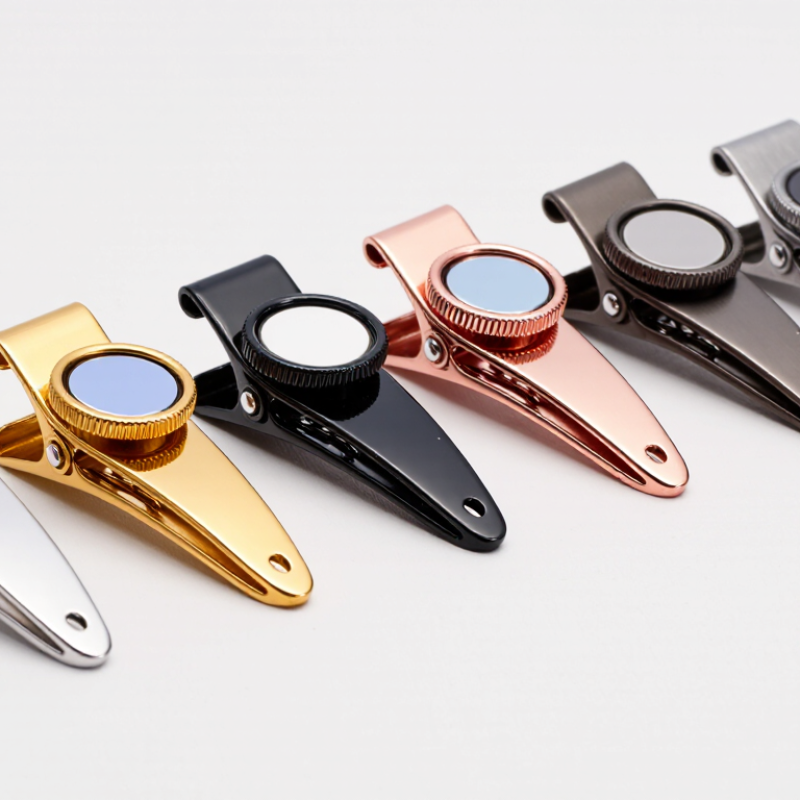
Define Custom Hat Clips and Marker Fit Using the USGA’s 1.680-Inch Ball Standard
A custom hat clip should hold a removable ball marker securely without making it awkward to lift with a gloved hand. The USGA Equipment Rules set a golf ball’s minimum diameter at 1.680 inches, or 42.67 millimeters. That standard is a useful visual reference, not a required marker size. The marker can be smaller; the clip’s recess, magnet, and rim determine its actual fit. The ball is a reference, not a marker template.
For bulk orders, approve a physical sample before decorating the full run. Measure the marker diameter and thickness, then check that it sits flush and releases without scraping the clip. A simple go/no-go gauge can catch size drift across production batches. The USGA standard defines the ball, not clip tolerances. That distinction matters. The National Golf Foundation’s 2024 participation report counted 26.6 million U.S. on-course golfers in 2023, showing the broad audience for golf accessories, but not a universal fit specification. A practical order sheet should record clip dimensions, marker dimensions, and a small tolerance agreed with the manufacturer. One detail is easy to miss: coatings add thickness. Test finished pieces, not bare metal. Even a careful sample may not represent every unit.
Compare 7 Clip Options by Material, Magnet, Finish, and Logo Method
For bulk orders, compare the clip’s feel, holding strength, and decoration area—not just its price. Option one uses polished stainless steel, a compact magnet, and laser engraving. It suits a clean, durable look, though tiny lettering may lose clarity. Option two pairs zinc alloy with a medium magnet and an antique finish. Enamel filling adds color, but detailed artwork can raise setup costs. Option three uses aluminum, a lighter magnet, and a matte anodized surface. Screen printing works well for bold logos; fine lines need testing.
Option four combines brass with a strong magnet and a brushed finish. Deep engraving gives the logo texture, but brass can feel heavier on a cap brim. Option five uses molded plastic, a standard magnet, and a glossy coating. Pad printing keeps designs simple and economical. It may scratch sooner than metal. Option six features stainless steel with a rubberized coating and a recessed magnet. UV printing can reproduce several colors, but confirm adhesion on a sample.
Option seven uses a soft enamel-metal badge over a steel clip, with a satin finish and a small magnet. The logo can be stamped or filled with enamel. Ask suppliers to test holding strength on different cap fabrics; a magnet that grips one brim may slip on another. Request a physical sample. Inspect logo edges, finish consistency, and clip tension before approving the full run. Small differences show up fast. Bulk samples sometimes look better than production pieces, so specify acceptable variation in writing.
Evaluate Bulk Vendors by MOQ, Sample Approval, Unit Price, and Lead Time
When comparing custom golf hat clip vendors for bulk orders, start with the minimum order quantity, not the advertised unit price. A low quote may only apply to a large run, while a smaller MOQ can help test demand. Ask whether setup fees, packaging, and artwork changes are included. Get the full quote in writing.
Request a physical sample before approving production. Check that the clip grips a hat brim securely, the finish looks even, and any logo stays clear at actual size. Small details matter. Confirm how many sample revisions are allowed and whether approval changes the production schedule. Then compare unit prices at several quantities, such as 300, 500, and 1,000 pieces. Ask for a dated lead-time estimate covering sampling, production, and shipping. A fast estimate is not a guarantee. I would leave room for delays, because artwork corrections or inconsistent samples can push a shipment back. Ask vendors to explain what happens if the delivered clips differ from the approved sample. These checks make quotations easier to compare, though they cannot remove every production risk.
7 Custom Golf Hat Clip Bulk-Sourcing Profiles
Compare indicative unit prices alongside minimum order quantities, sample approval time, and production lead time.
| Sourcing Profile | MOQ (pieces) | Estimated Unit Price (USD) | Sample Approval | Estimated Lead Time |
| Profile A | 100 | $2.40 | 4–6 days | 15–20 business days |
| Profile B | 200 | $2.05 | 5–7 days | 18–24 business days |
| Profile C | 300 | $1.82 | 4–7 days | 20–25 business days |
| Profile D | 500 | $1.58 | 5–8 days | 22–28 business days |
| Profile E | 800 | $1.39 | 6–8 days | 25–30 business days |
| Profile F | 1,000 | $1.24 | 5–9 days | 25–32 business days |
| Profile G | 2,000 | $1.08 | 7–10 days | 28–35 business days |
These are illustrative planning estimates, not verified supplier quotes. Actual pricing and timing depend on materials, logo customization, packaging, shipping terms, and sample revisions. Request a pre-production sample and confirm all terms before placing a bulk order.
Check On-Course Marker Use Against USGA Rule 14.1a
A bulk order of custom golf hat clips should be judged by more than color and fit. For on-course use, check that each magnetic marker comes off easily and can be handled with one hand. Test the clip on different cap brims; a loose grip can send a marker bouncing into the cart. Small details matter. Ask for a sample before approving a large run, and check whether the marker is easy to see against grass.
USGA Rule 14.1a requires a player to mark a ball’s spot before lifting or moving it. A ball-marker must be placed right behind or next to the ball, or a club can be held beside it. A marker still attached to a hat does not mark the ball’s spot. Remove it from the clip and place it beside the ball, then replace the ball on its original spot. Lifting without marking carries a one-stroke penalty. The clip is convenient, but it does not replace the rule.
Tips: Try the marker on a practice green. Check that it lies flat and stays visible near the ball. Confirm the rule wording before printing any guidance on bulk packaging; small wording errors are easy to miss.
Estimate Order Demand Using NGF’s 28.1 Million U.S. On-Course Golfers in 2023
NGF reported 28.1 million U.S. golfers played on-course in 2023. Treat that figure as a market boundary, not a ready-made sales forecast. Most golfers will never attend a particular outing or receive a custom hat clip. For bulk planning, estimate the reachable audience first: members, tournament players, corporate guests, or visitors at a specific course.
Then test a modest share of that audience. If an event can reach 2,000 golfers, a 10% distribution rate suggests about 200 clips; a 25% rate suggests 500. These are planning scenarios, not industry benchmarks. NGF’s participation data helps show the market’s scale, but local registration counts and past giveaway uptake are better guides to actual orders. Small differences matter.
For a multi-event order, add confirmed attendance across events, then account for expected extras and late registrations. A 500-piece run may suit a busy tournament, but could leave boxes untouched at a smaller gathering. That estimate can still miss. Track how many clips are handed out, kept, or requested afterward. Those simple observations make the next order more defensible than relying on the national golfer total alone.