Why is Liquefaction Plant Important for Energy Production?
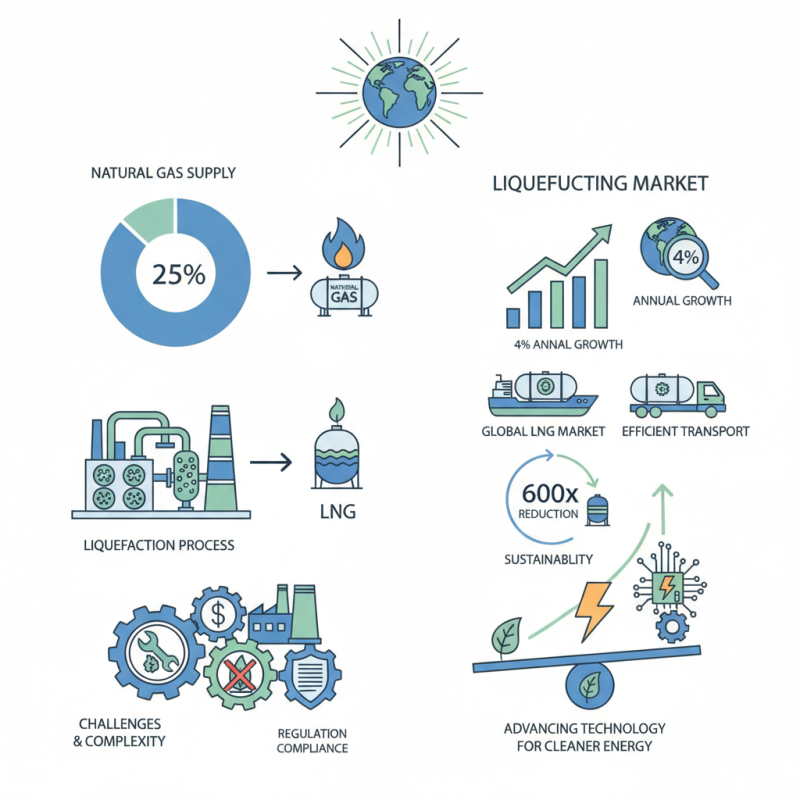
The Liquefaction Plant plays a crucial role in energy production globally. In 2022, natural gas accounted for about 25% of the world’s energy supply. The liquefaction process enables natural gas to be transported efficiently. This development also fuels a growing demand for LNG terminals and facilities.
According to the International Energy Agency, the global liquefied natural gas market is expected to grow by 4% annually. This growth highlights the significance of Liquefaction Plants in meeting energy needs. These plants convert gas into a liquid form, reducing its volume by about 600 times. This makes transportation cheaper and more efficient.
Despite the benefits, challenges exist. The construction and operation of Liquefaction Plants can be costly and complex. Issues like environmental impact and regulation compliance are often overlooked. Striking a balance between efficiency and sustainability remains a critical discussion point in the industry. As the demand for cleaner energy increases, the importance of advancing Liquefaction Plant technology becomes even clearer.
Importance of Liquefaction Plants in Energy Generation
Liquefaction plants play a vital role in energy generation. They convert gas into liquid form, making it easier to transport. This process helps meet the increasing global energy demand. With liquefied natural gas (LNG), energy can be moved across oceans without pipelines. It opens new markets and provides flexible energy sources.
However, the technology has its flaws. Constructing these plants requires significant investment. Additionally, there are environmental concerns associated with necessary extraction processes. Some argue that this can lead to resource depletion and ecological imbalance. The plants also face intense scrutiny regarding their safety measures.
Yet, the advantages can outweigh the downsides. Liquefaction plants can enhance energy security. They allow nations to diversify their energy supplies and reduce dependence on single sources. This diversification is crucial as the world shifts towards cleaner energy. Continued innovation in liquefaction technology could address many current concerns. Finding balance is essential for a sustainable future.
Why is Liquefaction Plant Important for Energy Production? - Importance of Liquefaction Plants in Energy Generation
| Dimension | Description | Value |
| Production Capacity | Amount of LNG produced per day | 5 million cubic meters |
| Energy Efficiency | Percentage of energy converted into usable electricity | 90% |
| Carbon Emission Reduction | Amount of CO2 emissions reduced compared to traditional sources | 50% |
| Investment Cost | Initial investment for setting up the plant | $300 million |
| Job Creation | Number of jobs created during operations | 200 |
How Liquefaction Plants Convert Natural Gas for Energy Use
Liquefaction plants play a crucial role in energy production. They transform natural gas into a liquid form, making it easier to store and transport. The process involves cooling the gas to extremely low temperatures, condensing it into a liquid. This process reduces the volume of gas by about 600 times, which is significant for logistics.
The conversion of natural gas starts with extraction. Once collected, the gas is purified to remove impurities. After purification, it enters the liquefaction process. Here, cooling systems employ a variety of technologies to achieve the necessary low temperatures. The transition from gas to liquid requires precise control and expertise. However, facilities can sometimes face challenges due to technical malfunctions during this delicate process.
Once liquefied, the natural gas can be transported globally. This enhances energy availability in regions without direct access to gas pipelines. However, there are still concerns about efficiency and environmental impact that need attention. Continuous improvements in technology may help address these issues. The energy transition is evolving, and liquefaction plants remain a vital part of that journey, but they are not without their imperfections.
Importance of Liquefaction Plants in Energy Production
Environmental Benefits of Utilizing Liquefaction Technology
Liquefaction technology plays a crucial role in energy production. It processes gas into a liquid state, making it easier to transport and store. This method has significant environmental benefits. By utilizing liquefaction plants, we reduce greenhouse gas emissions. This approach makes energy cleaner and more efficient.
One major advantage is reducing methane leaks, a potent greenhouse gas. Traditional methods often allow gas to escape during extraction and transport. Liquefaction minimizes these losses, benefiting the environment. Moreover, the liquid form of gas can be transported over long distances. This means that countries can access cleaner energy sources more readily.
However, despite its advantages, the liquefaction process is not without challenges. The energy required for liquefaction can be substantial. This energy use raises questions about overall efficiency. Furthermore, the plants require significant infrastructure, which may impact local ecosystems. Thus, while the technology is promising, it needs careful consideration for sustainable implementation.
Economic Impact of Liquefaction Plants on Energy Markets
Liquefaction plants play a crucial role in the energy sector by converting natural gas into a liquid state. This process not only facilitates storage and transportation but also has significant economic implications. According to the International Energy Agency, the global LNG market is projected to reach approximately $200 billion by 2025. This growth reflects the increasing demand for cleaner energy sources worldwide.
Liquefaction plants enable countries to diversify their energy sources. For instance, countries with abundant natural gas resources can export LNG, impacting global energy prices. A report by the U.S. Energy Information Administration highlights that the U.S. became the world’s top LNG exporter in 2020, showcasing the economic shift in energy trade dynamics. However, reliance on liquefaction plants also raises concerns about infrastructure costs and environmental impacts.
Moreover, while the economic benefits are evident, some regions face challenges. Building a liquefaction facility can cost billions. This fact can lead to financial strain for smaller countries or companies. Additionally, the process itself involves significant energy consumption, which raises questions about overall efficiency. Balancing these aspects is vital for sustainable energy production.
Future Trends and Innovations in Liquefaction Plant Operations
The liquefaction plant plays a crucial role in energy production. With growing environmental concerns, innovation in these plants is more important than ever. Future trends focus on improving efficiency and reducing emissions. Technologies like carbon capture are emerging, aiming for a more sustainable operation.
Plant operations are becoming more automated. This can lead to fewer human errors. However, reliance on technology may create vulnerabilities. Staff must balance automation with hands-on expertise to ensure smooth operations. Safety and reliability should not be compromised.
Tips for better operations include regular training for staff. Promote adaptability in handling new technologies. Understanding the limitations of automation is essential. Setting up maintenance schedules can prevent costly downtime. Consistent evaluation of processes can drive continuous improvement. This approach will prepare plants for the innovations on the horizon.