Cart
Top 10 Types of Metal Grate for Global Buyers?
Choosing the right metal grate can affect safety, drainage, maintenance, and long-term project costs. Global buyers often compare welded, press-locked, expanded, perforated, and cast grating options. Each type behaves differently under foot traffic, rolling loads, moisture, heat, and chemical exposure. Small details matter.
A factory walkway may need serrated surfaces for wet conditions. A loading platform may require deeper bearing bars and tighter deflection control. Stair treads demand secure nosing, accurate dimensions, and consistent slip resistance. Galvanized steel suits many outdoor projects, while stainless steel performs better in corrosive environments. Aluminum reduces weight, but it may not suit every heavy-duty application.
No single grate wins every project. That is the practical truth. This guide examines the top 10 types of metal grate for global buyers, with attention to material, structure, surface finish, load capacity, and installation needs. It also considers quality evidence, including mill certificates, coating thickness records, dimensional checks, and sample inspections. These documents support reliable purchasing decisions, but they cannot replace site-specific engineering review.
Buyers should confirm span lengths, support spacing, drainage requirements, local standards, and delivery conditions before ordering. A drawing may appear complete, yet omit access requirements or maintenance clearance. That mistake can become expensive after installation. Clear specifications, tested samples, and experienced supplier communication create a stronger result. Safety remains essential. So does honest evaluation.
What Is a Metal Grate and Where Is It Used?
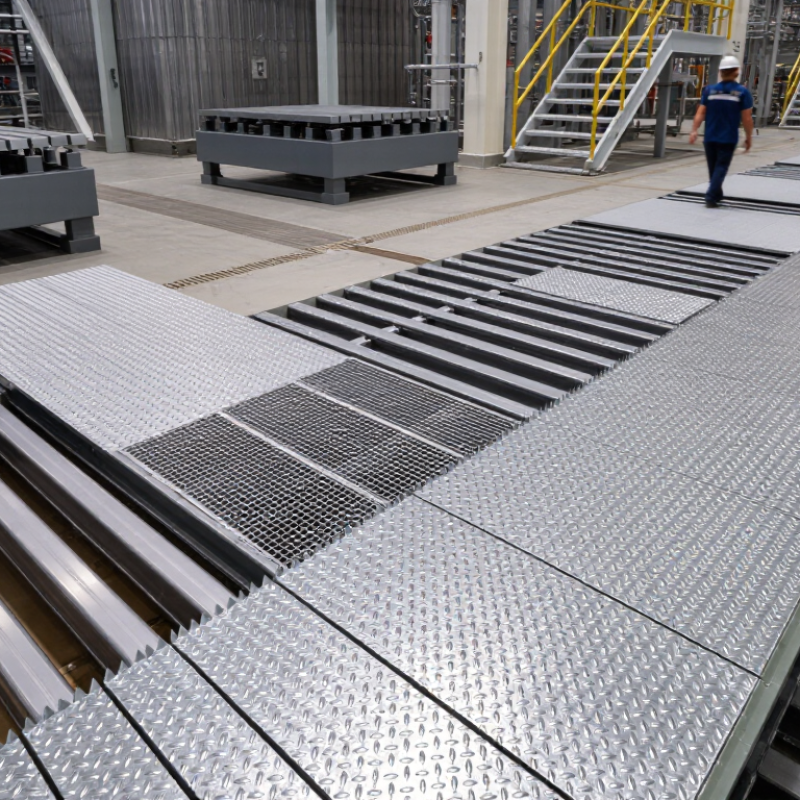
A metal grate is a structured panel made from steel, aluminum, or stainless steel. It contains open spaces that support people, equipment, or vehicles while allowing air, light, water, and debris to pass through. In practical site inspections, I often see grates used on walkways, platforms, stair treads, drainage channels, machine guards, and ventilation areas. The right design depends on load, span, moisture, temperature, and maintenance access.
Common types include welded, press-locked, riveted, swage-locked, expanded metal, perforated, serrated, plain, trench-drain, and heavy-duty grates. Welded grating suits industrial platforms because its joints provide reliable strength. Serrated surfaces improve traction in wet areas, although dirt can collect in deeper patterns.
Perforated panels offer controlled openings and are useful for screens, guards, and equipment covers. Expanded metal is lightweight and economical, but its load performance requires careful checking.
Global buyers should confirm bar size, opening dimensions, surface treatment, edge details, and allowable load before ordering. Stainless steel performs well in corrosive environments, while galvanized carbon steel often suits outdoor infrastructure. Aluminum reduces weight, yet it may need thicker sections for demanding spans.
A common mistake is choosing by appearance alone. It looks simple. Actual performance depends on support spacing and installation quality. Drainage grates also need secure seating, because loose panels can shift under repeated traffic. Some specifications remain uncertain until local conditions are measured.
How Are Metal Grates Classified by Structure and Material?
Metal grates are classified by structure and material, not appearance alone.
Common structural types include welded, press-locked, riveted, swage-locked, expanded, perforated, and cast grates.
Welded grating uses load bars joined to cross bars, creating a rigid panel for platforms and walkways. Press-locked grating offers a cleaner surface, but it may require careful load verification.
Serrated bars improve drainage and slip resistance.
Plain bars are easier to clean.
Stair treads often combine nosing edges with welded or press-locked construction.
Material selection changes service life, weight, and maintenance.
Carbon steel supports heavy industrial loads at a competitive cost. Galvanized steel adds zinc protection for damp locations. Stainless steel suits hygienic, corrosive, or coastal environments. Aluminum reduces dead weight, though it generally carries lower loads than steel.
According to the World Steel Association, global crude steel production reached about 1.89 billion tonnes in 2023. The International Aluminium Institute reported roughly 70.6 million tonnes of primary aluminum production in the same year. These figures show the scale of available material supply, but they do not replace project-specific engineering.
Tips:
Check span, load class, bar spacing, surface finish, and drainage needs before ordering. A product label can mislead. Real site conditions matter more than a neat catalog image.
Confirm dimensions against applicable ASTM or EN specifications, and request corrosion data when chemicals, salt, or constant moisture are present.
My practical concern is often overlooked: thinner grating can look strong while flexing under repeated traffic. That detail deserves a calculation, not a guess.
Top 10 Types of Metal Grate for Global Buyers
Metal grating selection depends on load, span, drainage, and working conditions. Welded bar grating suits platforms, walkways, and factory floors. Press-locked grating offers a clean surface for architectural projects. Swage-locked grating uses twisted cross bars for improved appearance and strength. Riveted grating provides a flexible option for heavy pedestrian traffic. Expanded metal grating is lightweight, economical, and easy to cut. Perforated metal grating controls openings more precisely, although drainage may be slower.
Safety grating has raised surfaces that improve traction around oil, water, and dust. Trench grating covers channels while allowing rainwater to pass through. Stair treads combine load support with serrated nosing for safer climbing. Steel, stainless steel, and aluminum each perform differently in humid or corrosive environments. Hot-dip galvanized steel usually offers practical outdoor protection, but coating quality must be checked carefully.
Global buyers should confirm panel dimensions, bearing-bar direction, opening size, edge treatment, and allowable load. Ask for material certificates, coating details, drawings, and inspection records. Packaging also matters; poorly protected edges can arrive bent after long transport. I have seen buyers focus on unit price and overlook installation hardware. That mistake becomes expensive. Weight tables can help, yet real conditions may include vibration, impact, or uneven supports. A smaller opening is not always safer, and a thicker bar is not always the best choice. Local climate, maintenance access, and replacement availability deserve equal attention.
How to Compare Load Capacity, Safety, and Durability
Metal grating selection starts with the load, span, and working environment. For global buyers, common options include welded bar grating, press-locked grating, expanded metal, perforated plate, and stair treads. Each handles weight differently. Load ratings vary.
Ask suppliers to separate uniform load from concentrated point load. A pallet wheel or narrow machine foot can stress one area sharply. Compare span tables, bearing bar size, spacing, and permitted deflection. A grating may carry a high static load yet feel unsafe under moving traffic. That difference matters on platforms, drainage covers, and maintenance walkways. Check the opening size too. Small tools and shoe heels should not pass through easily.
Safety depends on more than strength. Serrated surfaces improve grip around oil, rain, or dust, but they can damage footwear and complicate cleaning. Confirm the walking direction, support arrangement, fastening method, and edge treatment. Loose panels create trip hazards. Poorly aligned cutouts create weak corners. These details are often missed during purchasing.
Durability requires a realistic exposure review. Hot-dip galvanizing suits many outdoor applications, while stainless steel may fit corrosive or hygienic areas. Ask about coating thickness, weld inspection, drainage, and replacement access. Do not rely on a generic “heavy-duty” claim. Request material certificates, test data, and installation drawings. A past specification error taught many teams a costly lesson: corrosion and vibration can reduce service life faster than the original load calculation suggests. Recheck assumptions. Conditions change.
Top 10 Types of Metal Grate for Global Buyers
How to compare load capacity, safety, and durability
The chart uses a comparative 1–10 engineering index. Load capacity reflects structural strength and span potential; safety reflects slip resistance, drainage, and walking stability; durability reflects resistance to corrosion, wear, impact, and long-term outdoor exposure. Actual performance depends on material grade, coating, panel dimensions, span, support spacing, and applicable standards.
How to Select the Right Metal Grate for Each Application
Top 10 Types of Metal Grate for Global Buyers
Choosing the right metal grate starts with the application, not appearance. Bar grating suits platforms, walkways, and drainage areas where strong load support matters. Expanded metal offers airflow and lighter weight for guards, screens, and partitions. Perforated grating helps control ventilation, sound, and liquid flow. Woven wire grating works well for filtration and small openings.
Consider load, span, opening size, corrosion exposure, and cleaning needs. A stainless steel grate may perform better near saltwater, while galvanized steel can suit many outdoor structures. Aluminum reduces weight but may not handle heavy industrial loads as effectively. Slip resistance is critical on wet floors. Serrated surfaces usually provide better traction than smooth bars.
Tips: Measure the opening twice. Confirm the required load with a qualified engineer. Check local safety standards before ordering. Ask for material certificates and test data when reliability matters. A grate that looks strong may still bend under concentrated loads. Drainage patterns can also change after installation, especially when debris collects beneath the surface. I have seen designs fail because maintenance access was treated as an afterthought. Leave enough clearance for inspection and replacement. Water changes everything.
Top 10 Types of Metal Grate for Global Buyers? - How to Select the Right Metal Grate for Each Application
| No. | Metal Grate Type | Typical Construction | Common Materials | Typical Surface / Finish | Typical Applications | Main Advantages | Important Selection Factors | Relevant Standards / Checks |
|---|---|---|---|---|---|---|---|---|
| 1 | Welded Bar Grating | Load-bearing bars are resistance-welded to perpendicular cross bars, usually at each intersection. | Carbon steel, stainless steel, or aluminum. | Plain mill finish, hot-dip galvanized, painted, or powder coated. | Factory platforms, walkways, maintenance floors, mezzanines, ramps, and industrial stairs. | High strength-to-weight ratio, good drainage, rapid installation, and broad availability. | Clear span, uniform and concentrated loads, bearing-bar depth, panel orientation, opening size, and corrosion exposure. | Verify structural calculations, slip resistance, allowable openings, welding quality, and corrosion-protection requirements. |
| 2 | Press-Locked Grating | Cross bars are hydraulically pressed into pre-punched or slotted bearing bars, creating a flush-looking panel. | Carbon steel, stainless steel, and aluminum. | Mill finish, anodized aluminum, painted, or galvanized depending on material and service conditions. | Architectural floors, platforms, machine guards, ventilation covers, and pedestrian walkways. | Clean appearance, accurate panel geometry, and useful options for close or custom spacing. | Check cross-bar retention, impact exposure, vibration, load direction, opening size, and edge support. | Use project-specific load tables or calculations; confirm dimensional tolerances and walking-surface safety. |
| 3 | Swage-Locked Grating | Tubular or rectangular cross bars are mechanically locked into deep grooves in the bearing bars by swaging. | Aluminum, stainless steel, and carbon steel. | Mill finish, anodized, painted, or galvanized where compatible with the base metal. | Pedestrian platforms, architectural walkways, ventilation screens, ceiling panels, and light industrial floors. | Lightweight construction, attractive appearance, good airflow, and flexible visual patterns. | Select bearing-bar size for the span and load; check mechanical interlock, deflection, vibration, and environmental compatibility. | Confirm load capacity, panel supports, corrosion resistance, and compliance with the applicable walkway or platform code. |
| 4 | Riveted Grating | Bearing bars are connected with riveted flat or tubular cross bars, producing a durable mechanically fastened panel. | Carbon steel, stainless steel, and aluminum. | Mill finish, galvanized steel, painted steel, or anodized aluminum. | Heavy-duty walkways, loading areas, industrial platforms, bridge access areas, and service decks. | Good resistance to repeated traffic, impact, and dynamic service when correctly designed. | Evaluate wheel loads, impact, fatigue, span, support conditions, and the possibility of loose or damaged fasteners. | Require engineering verification for vehicular or dynamic loading and inspect fastening details during maintenance. |
| 5 | Safety Grating | One-piece formed sheet with raised perforations, serrations, or embossed holes that create multiple gripping edges. | Carbon steel, galvanized steel, stainless steel, and aluminum. | Galvanized, painted, powder coated, stainless, or aluminum mill finish. | Stair treads, ramps, ladders, catwalks, forklift access areas, and wet or oily work zones. | Excellent slip resistance, easy cutting, low material waste, and effective drainage. | Choose hole geometry, tread width, edge profile, load rating, cleaning requirements, and chemical exposure level. | Confirm slip-resistance performance, stair dimensions, nosing visibility, drainage, and local occupational-safety requirements. |
| 6 | Expanded Metal Grating | A sheet is slit and stretched to form a continuous diamond, hexagonal, or other open pattern without welded joints. | Carbon steel, stainless steel, aluminum, and galvanized sheet. | Mill finish, galvanized, painted, powder coated, or anodized aluminum. | Platforms, equipment guards, security panels, ventilation screens, infill panels, and lightweight walkways. | Continuous construction, good ventilation, relatively low waste, and useful rigidity for its weight. | Specify strand width and thickness, opening size, orientation, span, edge framing, and pedestrian safety. | Check opening dimensions, mesh direction, deflection, sharp-edge protection, and applicable guard or floor requirements. |
| 7 | Perforated Plate Grating | Flat metal sheet with punched or drilled round, square, slotted, or custom openings. | Carbon steel, stainless steel, aluminum, and galvanized steel. | Mill finish, powder coated, painted, anodized, or galvanized. | Machine covers, acoustic or ventilation panels, screens, platforms requiring small openings, and architectural façades. | Small controlled openings, smooth appearance, reduced object fall-through, and customizable open area. | Balance open-area percentage, sheet thickness, panel span, airflow, drainage, weight, and cleaning access. | Verify structural capacity, burr control, opening tolerance, airflow requirements, and edge reinforcement. |
| 8 | Trench Drain Grating | Removable linear grating installed over a drainage channel; may use bar, ductile iron, stainless, or pressed designs. | Ductile iron, stainless steel, galvanized steel, and coated carbon steel. | Galvanized, painted, epoxy coated, passivated stainless steel, or factory-finished ductile iron. | Road drains, loading bays, commercial kitchens, factories, car parks, pedestrian zones, and wash-down areas. | Efficient surface-water collection, removable access, and options for pedestrian or vehicle loading. | Determine traffic class, clear opening, channel width, hydraulic flow, anti-lift security, and corrosion exposure. | For drainage products, verify EN 1433 or the applicable local drainage standard and select the required load class. |
| 9 | Heavy-Duty Vehicular Grating | Deep bearing bars, close spacing, reinforced frames, and load-distribution details designed for vehicle or high-concentration loads. | Ductile iron, heavy carbon steel, galvanized steel, or stainless steel for severe environments. | Galvanized, painted, epoxy coated, or corrosion-resistant alloy finish. | Roadway drainage, truck yards, loading docks, plant access routes, bridge decks, and industrial traffic lanes. | Designed for high wheel loads, impact, repeated traffic, and demanding service environments. | Specify axle and wheel loads, wheel footprint, traffic frequency, span, support frame, deflection limit, and fatigue effects. | Obtain project-engineered calculations and verify the required vehicle-load classification before purchase. |
| 10 | Stair Tread Grating | Factory-made stair units using welded bar, press-locked, perforated, or safety-grating surfaces with a front nosing. | Carbon steel, galvanized steel, stainless steel, and aluminum. | Serrated, punched, or abrasive nosing; galvanized, painted, powder coated, or stainless finish. | Industrial stairs, fire escapes, plant access stairs, outdoor platforms, marine access, and utility structures. | Slip resistance, drainage, visibility of the step edge, prefabricated installation, and low maintenance. | Confirm stair width, rise and going, tread span, live load, nosing projection, handrail interfaces, and local building codes. | Check applicable stair, workplace-safety, accessibility, and structural requirements in the destination country. |
Related Posts
-
China Top 10 Metal Grate Manufacturers for Global Buyers
-

Top 10 Uses of Steel Grating in Construction and Industry?
-

2026 Best Steel Grating Options for Your Projects and Applications?
-

2026 Top Steel Grating Trends for Global Buyers to Watch
-
2026 Best Bar Grating Options for Global Buyers?
-
China Top 10 Steel Grating Manufacturers for Global Buyers