
Cart

China Top Inverter Outlet Manufacturers for Global Buyers

Choosing reliable China Inverter Outlet manufacturers requires more than comparing prices and product photos. Global buyers need stable electrical performance, consistent production, and clear technical communication. An Inverter Outlet should match the inverter system, installation setting, voltage requirements, and expected load. Small mismatches can cause overheating, poor connections, or premature failure.

Experienced manufacturers usually provide detailed specifications, material information, inspection records, and practical installation guidance. Look for suppliers with documented quality systems and relevant market certifications. Independent testing can also support claims about safety, durability, and performance. Factory visits, sample orders, and video inspections offer useful evidence before larger purchasing decisions. These steps may feel slower, but they often reveal weaknesses hidden in polished catalogs.

Real sourcing is rarely perfect. Some factories have strong engineering teams but limited export experience. Others offer excellent customization but inconsistent communication after delivery. Buyers should examine response times, packaging methods, spare-part support, and warranty procedures. Ask how the Inverter Outlet performs under heat, dust, vibration, and repeated daily use. Request test samples from the same production line whenever possible.

This guide reviews leading Chinese manufacturers from a global buyer’s perspective. It considers product quality, technical capability, production capacity, compliance awareness, and service reliability. The goal is not to praise every supplier equally. It is to help importers compare evidence, identify practical risks, and select partners with confidence. A dependable supplier should explain limitations honestly. That matters more than impressive promises.
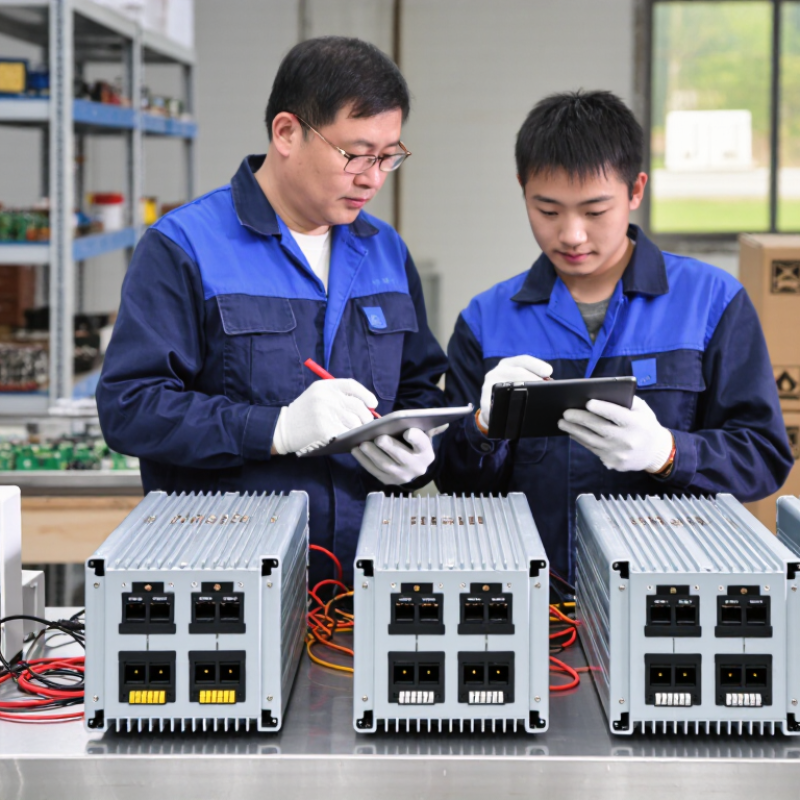
China Top Inverter Outlet Manufacturers for Global Buyers

Understanding China’s Inverter Outlet Manufacturing Industry

China’s inverter outlet manufacturing industry serves a wide range of global buyers, from solar equipment distributors to industrial electrical suppliers. Production often combines automated molding with manual assembly. Typical components include flame-retardant housings, copper alloy contacts, terminal screws, and protective shutters.

A reliable factory should explain its material grades, tooling process, and testing routine clearly. During a factory assessment, buyers can inspect contact pressure, insulation distance, heat resistance, and grounding continuity. A sample test is useful, but it is not enough. Batch inspections should check dimensions, screw torque, surface defects, and outlet stability. These details matter when products face vibration, frequent plugging, or warm installation environments.

Compliance requirements differ by destination market. Manufacturers should provide traceable test records and prepare documents for the buyer’s required electrical standards. Packaging also deserves attention. Individual sleeves, corner protection, and clear labels can reduce damage during long-distance shipping.

No factory is flawless. A polished sample may hide inconsistent production, while a smaller supplier may offer better communication and weaker documentation. That trade-off needs honest review. Buyers should compare factory capacity, engineering response, quality controls, and after-sales handling instead of choosing by price alone. The strongest partnerships usually begin with a small trial order, measured feedback, and specific corrective actions. Sometimes, a simple drawing prevents an expensive mistake.

Key Product Types Offered by Chinese Inverter Outlet Manufacturers

China’s inverter outlet manufacturers now serve residential, commercial, and mobile power markets. The IEA PVPS reported over 450 GW of new solar capacity worldwide in 2023. This growth is increasing demand for dependable conversion equipment.

Chinese suppliers commonly offer pure sine wave inverters, modified sine wave models, grid-tied units, off-grid systems, and hybrid inverters. Pure sine wave products suit refrigerators, medical equipment, and sensitive electronics. Modified sine wave units cost less, but they may cause noise or overheating. Hybrid models combine solar input, batteries, and grid power. Microinverters work at panel level, improving monitoring and reducing the impact of partial shading.

Portable inverter outlets and battery power stations are also expanding. They support camping, emergency backup, and remote work. However, “portable” does not always mean lightweight. A 1,000-watt-hour battery can be difficult to carry upstairs. EnergySage and other industry analyses also show that system efficiency, storage capacity, and installation quality strongly affect user value.

Tips: Ask for continuous power, peak power, waveform, efficiency, battery compatibility, and protection ratings. Check testing against IEC 62109 or IEC 62477-1 where relevant. Inspect the enclosure, cooling fan, terminals, and cable length. Small details matter.

The market is not perfectly tidy. Some product labels sound similar but hide different test conditions. Buyers should request independent reports, warranty terms, and sample testing before placing large orders.cynnwys

How to Evaluate Inverter Outlet Suppliers in China

China Top Inverter Outlet Manufacturers for Global Buyers

How to Evaluate Inverter Outlet Suppliers in China

Choosing an inverter outlet supplier requires more than comparing factory prices. According to IRENA’s Renewable Capacity Statistics 2024, global renewable capacity increased by 473 GW in 2023. Solar power contributed about 346 GW. This rapid growth increases demand for reliable, scalable inverter supply chains.

Request production records, test reports, and traceable component lists. Check whether the supplier follows relevant IEC safety and electromagnetic compatibility standards. ISO 9001 certification supports process control, but it does not prove every shipment is reliable. Ask for independent laboratory testing, thermal performance data, and protection results under overload conditions. A serious supplier should explain warranty exclusions clearly. Vague answers matter.

Tips: Compare at least three suppliers using the same specification sheet. Inspect solder joints, cable glands, cooling fans, and enclosure seals. Ask for a sample from normal production, not a specially prepared unit. Verify serial-number traceability and spare-part availability. The IEA’s Renewables 2024 report expects solar deployment to remain strong through 2030, so after-sales capacity deserves attention. A low price can hide weak testing. I still treat a perfect sample with caution. Real factories have occasional defects; reliable suppliers measure them, report them, and correct the process.

Quality Standards and Export Compliance for Global Buyers

China Top Inverter Outlet Manufacturers for Global Buyers

Reliable inverter outlet manufacturers should treat compliance as a production system, not a paperwork exercise. Buyers should request safety test reports, factory quality records, and product traceability before placing large orders. Relevant requirements may include IEC 62109 safety standards, EMC testing, RoHS restrictions, and destination-market certification. Requirements vary by country.

Details matter. Ask for enclosure material, IP rating, terminal torque values, temperature-rise results, and flame-retardant grades. A sample inspection should check socket alignment, insulation distance, grounding continuity, and cable strain relief. Test several units from different cartons. One perfect sample proves very little.

Export documents should match the physical product. Confirm the model number, rated voltage, frequency, plug configuration, HS code, warning labels, and packing marks. For grid-connected equipment, local grid rules may require additional testing or registration. Battery-related shipments may also need transport documentation, including applicable safety test records. A certificate alone is not enough. Some suppliers provide outdated reports or documents covering a similar model. That risk is easy to miss. Buyers should compare report numbers, factory addresses, revision dates, and production specifications. Independent pre-shipment inspection adds cost, but it can reveal loose terminals, damaged housings, or inconsistent labeling before departure. Even experienced teams sometimes overlook regional plug differences. That mistake can delay customs clearance and customer installation.

China Top Inverter Outlet Manufacturers for Global Buyers - Quality Standards and Export Compliance for Global Buyers

Evaluation Dimension Recommended Requirement for Global Buyers Applicable Standard, Regulation or Reference Verification Evidence
Product scope Confirm whether the product is an inverter AC outlet, portable power outlet, inverter-integrated socket, or an AC output accessory. Product specification and intended-use declaration Technical datasheet, product drawings, wiring diagram and rated-load definition
Rated output voltage Select the voltage configuration required by the destination market; common systems include 100–127 V or 220–240 V AC. Destination-country electrical rules and applicable IEC or national standards Nameplate marking, type-test report and output-voltage test records
Rated frequency Specify 50 Hz, 60 Hz or selectable 50/60 Hz operation according to the destination grid or load requirements. Local grid requirements and product design specification Frequency-stability test, firmware setting record and product label
Continuous and peak power State continuous output, short-duration surge capability, overload duration and supported load types separately. Manufacturer-rated performance specification Full-load test, overload test, thermal test and independent inspection report
Electrical safety Require protection against electric shock, abnormal operation, overheating, short circuit and accessible hazardous voltage. IEC 62109-1 and IEC 62109-2 where applicable to power-conversion equipment Safety test report, insulation-resistance record, dielectric-strength test and protective-earth test
Grid-connected inverter functions For grid-interactive products, verify anti-islanding, voltage/frequency response and reconnection behavior before shipment. IEC 62116, IEC 61727, IEEE 1547-2018 or applicable national grid code Grid-connection test report, protection-setting file and destination-market approval
Electromagnetic compatibility Control conducted and radiated emissions and demonstrate immunity to common electrical disturbances. IEC 61000 series and applicable market-specific EMC requirements EMC laboratory report covering emissions and immunity tests
Ingress protection Use an enclosure rating suitable for the installation environment; outdoor installations generally require a tested outdoor-rated enclosure. IEC 60529 IP Code IP test report, enclosure drawing and installation instructions
Plug and outlet configuration Match pin configuration, earthing arrangement, shutters, polarity and mechanical dimensions to the destination market. Applicable national plug, socket and wiring standards Dimensional drawing, gauge test, temperature-rise test and local certification where required
Material and environmental compliance Control restricted substances in electrical and electronic components and disclose relevant material information. EU RoHS Directive 2011/65/EU and amendments; EU REACH Regulation (EC) No 1907/2006 where applicable RoHS test report, supplier declarations, material declaration and REACH statement
Market-access marking Apply only the conformity marking supported by the completed conformity-assessment process for the target market. CE requirements for relevant European legislation; UKCA rules where applicable; destination-market rules elsewhere Declaration of Conformity, technical file, test reports and product-label photographs
Factory quality system Prefer controlled incoming inspection, traceable production records, calibrated test equipment and documented corrective actions. ISO 9001 is a commonly used quality-management reference; certification should be verified independently. Valid certificate, audit report, process-control plan and batch traceability sample
Production inspection Define sampling level, visual inspection, function test, insulation test, output test and packaging inspection before dispatch. Buyer-approved inspection plan and agreed acceptance criteria Pre-shipment inspection report, serial-number list and corrective-action record
Packaging and transport Protect outlets and electronic assemblies against impact, moisture, electrostatic discharge and incorrect handling during international transport. Applicable transport, packaging and destination-country labeling requirements Packaging specification, drop or vibration test record, carton markings and packing list
Export documentation Prepare consistent commercial and technical documents before customs clearance and customer delivery. Destination customs procedures and agreed Incoterms® rule Commercial invoice, packing list, bill of lading or airway bill, certificate of origin where required, and export declaration
Product traceability Use a unique model and serial-number system linked to production date, component lot and inspection results. Buyer quality agreement and internal quality-control procedure Serial-number database, batch records, warranty procedure and recall process
After-sales support Establish warranty terms, spare-parts availability, technical support response time and firmware or replacement procedures. Purchase contract and destination-market consumer or commercial warranty rules Warranty policy, service-level agreement, troubleshooting guide and spare-parts list

Note: Certification and labeling requirements vary by product design and destination market. Buyers should verify the current edition of each standard and confirm requirements with an accredited testing body or the relevant authority before placing an order.

Purchasing Process and Supplier Selection Considerations

For global buyers, purchasing an inverter outlet requires more than comparing catalogue prices. Start with a written specification covering rated voltage, current, outlet format, IP protection, materials, and operating temperature. Ask the supplier to confirm test methods, not only pass rates. A useful RFQ includes annual volume, destination market, packaging requirements, and the expected production schedule. This detail reduces surprises during sampling and customs preparation. Keep records. Verifiable documents matter when several factories offer similar products.

Supplier selection should combine factory evidence with technical communication. Request recent third-party test reports, quality certificates, material declarations, and sample inspection records. Check whether the stated standards match your destination market. A video tour can reveal assembly flow, storage conditions, and traceability labels, although it cannot replace an onsite audit. Ask how the factory handles loose terminals, cracked housings, and failed samples. The answer often shows more than a polished presentation. Speak with a technical contact, not only a sales representative. Small delays in answers may signal weak engineering support.

Order a pilot batch before committing to high volume. Inspect dimensions with calipers, tighten terminals to the specified torque, and run repeated load tests. Record heat buildup after several hours. Do not rely on one perfect sample. Production variation happens. I once treated a clean sample as proof of stable output; that assumption was too optimistic. Include acceptance limits, replacement terms, inspection timing, and change-notification duties in the contract. Confirm payment milestones and shipping documents before production begins. A supplier that welcomes measurable checks is usually easier to manage over time.

China Inverter Outlet Manufacturers: Global Buyer Evaluation Priorities

This planning benchmark shows how global buyers commonly weight key criteria when selecting an inverter outlet supplier. Product compliance and safety documentation typically receive the highest priority, followed by total cost, conversion efficiency, after-sales support, and delivery performance.

Skip to content