
Cart
Top Indoor COB LED Display Manufacturers Worldwide
Indoor Cob Led Display technology is reshaping premium visual communication in meeting rooms, broadcast studios, control centers, museums, and luxury retail spaces. Its chip-on-board structure places LED chips directly on the module surface, creating a compact and often more durable display. Fine pixel pitches, strong contrast, and smooth close-up images make the technology attractive where viewers stand only a few steps away.
The market is expanding quickly.
This guide examines leading Indoor COB LED Display manufacturers worldwide through practical criteria. These include pixel pitch, cabinet precision, brightness control, thermal design, front maintenance, service coverage, and long-term reliability. A display may look impressive in a showroom yet perform differently after months of daily operation. Dust, heat, repeated installation, and camera exposure can reveal weaknesses that brochures rarely mention.
Dr. Roland Haitz, a respected LED researcher, famously stated, “The cost per lumen of light-emitting diodes has fallen by a factor of 10, while light generation has increased by a factor of 20, every decade.” His observation helps explain the industry’s rapid progress. However, lower cost does not automatically mean better value. Manufacturing consistency still matters.
No ranking is perfect.
Supplier comparisons can also be incomplete because test conditions vary between brands. Some companies publish detailed data, while others provide only attractive headline specifications. Therefore, readers should request sample panels, inspect seams under white content, test grayscale performance, and review warranty response times. This introduction offers a realistic starting point, not a final verdict, for identifying manufacturers that combine engineering depth, installation experience, and dependable support.
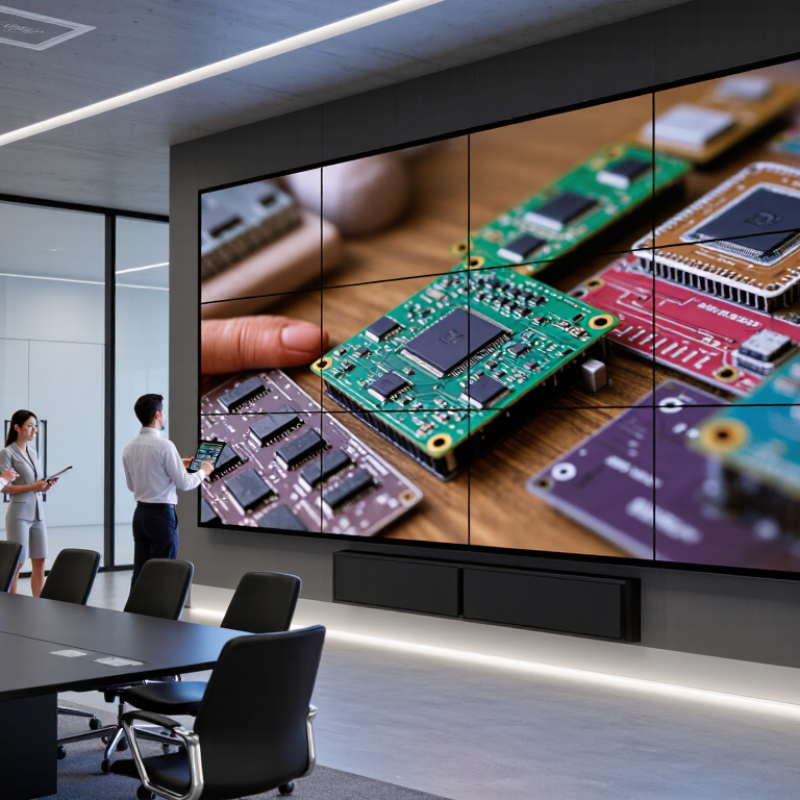
Indoor COB LED Displays: Definition and Core Technology
Indoor COB LED displays use chip-on-board packaging, where microscopic LED chips attach directly to a circuit board. A protective resin layer covers the chips and creates a smooth, integrated surface. This structure reduces the space between light-emitting elements. It also improves resistance to dust, impact, and accidental contact.
The core technology depends on precise chip placement, stable current control, and effective heat management. In practical installations, engineers check pixel pitch against viewing distance, not room size alone. A smaller pitch is not always better. It can increase cost without improving the image for viewers standing several meters away.
Fine calibration is equally important. Brightness, grayscale, white balance, and color consistency must remain stable across the entire cabinet.
Thermal performance still deserves careful attention. Even indoors, continuous operation can warm the module and affect long-term color accuracy. Reliable systems use suitable circuit designs, controlled driving methods, and measured ventilation paths. Technicians should inspect dead pixels, surface flatness, viewing angles, and refresh behavior before acceptance. COB displays feel robust, but they are not flawless. Repairs may require specialized tools because the LED chips are integrated into the board. In my view, transparent testing records matter more than impressive showroom brightness. Manufacturers should provide measurable data, although some specifications remain difficult to compare fairly.
Key Criteria for Evaluating Global COB LED Manufacturers
When evaluating global COB LED display manufacturers, begin with engineering evidence, not polished product images. Request measured brightness, contrast, grayscale performance, color uniformity, and power consumption at operating temperature. A serious supplier should explain how chip packaging, protective coating, and module design affect reliability. Ask for evidence. Factory experience matters, but documented process control matters more.
Review soldering standards, aging tests, incoming inspection, and pixel repair procedures. Request test records from recent production batches, not only laboratory samples.
THERMAL MANAGEMENT deserves close attention in large indoor installations. Inspect cabinet airflow, heat paths, fan noise, and temperature monitoring methods. COB surfaces resist many impacts, yet they are not immune to installation damage. Manufacturers should provide handling guidance, replacement methods, and realistic maintenance times.
Check whether calibration remains stable after module replacement. This detail is often missed. Independent certifications can support credibility, but certificates alone cannot prove field performance. Compare certification scope, issuing body, test date, and covered product model.
Global delivery also requires dependable documentation and technical communication. Evaluate response times, spare-parts planning, software compatibility, and local service capability. Ask for references from similar venues, including measured results after extended operation.
A credible manufacturer will discuss weaknesses without excessive promises. That honesty matters. I would also inspect warranty exclusions carefully, especially for moisture, cleaning, and improper handling. No evaluation is perfect. A supplier may pass factory tests yet struggle with installation consistency. Therefore, combine audits, sample testing, contractual service terms, and independent verification before making a global procurement decision.
Leading Indoor COB LED Display Manufacturers Worldwide
Leading indoor COB LED display manufacturers are judged by more than pixel density. Experienced suppliers control chip bonding, encapsulation, cabinet tolerances, and thermal performance during production. These details affect image stability in meeting rooms, retail spaces, studios, and control centers.
Reliable manufacturers provide measured brightness, contrast, refresh rate, and color uniformity data. They should explain testing conditions, not only publish attractive figures. A strong factory checks modules under continuous operation, inspects solder joints, and calibrates panels before shipment. Ask for a sample wall. Watch gray-scale transitions closely. Skin tones often reveal uneven calibration.
Service quality matters on installation day. Front-access modules can reduce maintenance time in narrow indoor spaces. Clear spare-part policies also protect long-term operation. Useful documentation includes wiring diagrams, receiving inspections, cabinet maps, and troubleshooting procedures. Certifications and traceable quality records add confidence, but they cannot replace practical testing.
Some manufacturers still overstate lifetime estimates. That deserves careful questioning.
COB surfaces resist impact better than exposed diode packages, yet they are not impossible to damage. Fine-pitch panels may show excellent detail, but poor signal processing can create visible noise. I have found that acoustic reflections, room lighting, and viewing distance sometimes matter more than a headline specification. A dependable supplier admits these limitations and adjusts the design accordingly.
Product Features, Applications, and Industry Standards
Top Indoor COB LED Display Manufacturers Worldwide
Indoor COB LED displays combine dense pixel layouts with a sealed LED surface. Their common strengths include fine pixel pitch, strong contrast, and reduced exposed diode damage. A well-designed cabinet may offer front access, magnetic modules, and tool-free replacement. These details matter during maintenance. They reduce downtime in control rooms, meeting spaces, broadcast studios, and premium retail environments. Some models support high refresh rates above 3,840 Hz, helping cameras capture cleaner images. However, refresh rate alone does not guarantee excellent video performance.
Experienced buyers should inspect brightness uniformity, grayscale quality, calibration records, and thermal behavior. A display that looks impressive in a showroom may reveal color variation after several months. That weakness deserves attention. Effective heat paths, stable power supplies, and careful factory calibration improve long-term consistency. Pixel protection also helps in busy environments where equipment may face accidental contact.
Applications influence the correct specification. Fine-pitch COB screens suit close viewing in boardrooms and galleries, while larger pitches can serve transport halls or lecture spaces. Manufacturers should provide documented testing for electrical safety and electromagnetic compatibility. Relevant references may include IEC 62368-1, CISPR 32, CISPR 35, and applicable RoHS requirements. Buyers should also request module traceability, operating temperature data, service procedures, and warranty terms. Installation quality remains critical. Poor ventilation or uneven cabinet alignment can undermine even a technically strong display.
| Product Category | Typical Technical Specifications | Key Product Features | Recommended Indoor Applications | Relevant Industry Standards and Compliance | Selection Considerations |
|---|---|---|---|---|---|
| Fine-Pitch COB LED Display | Pixel pitch: approximately 0.7–1.5 mm Brightness: commonly 600–1,200 nits Viewing angle: typically ≥160° horizontal and vertical | Flip-chip or chip-on-board LED packaging, high pixel density, low pixel-failure visibility, and a smooth matte surface with reduced glare. | Boardrooms Control rooms Broadcast studios Premium retail | IEC 62368-1 for audio/video and ICT equipment safety; CISPR 32 or EN 55032 for multimedia equipment emissions; RoHS restrictions where applicable. | Use pixel pitch according to viewing distance. Verify grayscale performance, refresh rate, camera compatibility, and calibration uniformity. |
| Common-Pitch Indoor COB Display | Pixel pitch: approximately 1.2–2.5 mm Brightness: commonly 600–1,500 nits Refresh rate: often 3,840 Hz or higher | Integrated LED packaging, strong surface protection, good contrast, and reduced risk of individual lamp damage compared with exposed SMD designs. | Meeting rooms Auditoriums Lecture halls Corporate lobbies | IEC 62368-1; EMC testing based on CISPR 32, EN 55032, EN 55035, or applicable regional requirements; electrical equipment may require CE or equivalent market approvals. | Compare contrast ratio, front-service access, cabinet flatness, power efficiency, and compatibility with the selected sending and receiving system. |
| High-Contrast COB Display | Contrast ratio: commonly specified from 10,000:1 upward Surface: black encapsulation or black mask Color depth: typically 14–16 bit processing | Deep black appearance, improved perceived contrast in low-light environments, controlled reflections, and enhanced image detail. | Cinema presentation Luxury retail Museums Executive spaces | RoHS and REACH requirements may apply depending on the destination market; EMC and electrical safety evaluation should follow the installation region. | Request measured contrast data under realistic ambient lighting. Check black-level consistency, color calibration, and viewing-angle performance. |
| Front-Service COB LED Cabinet | Cabinet size: commonly 600 × 337.5 mm or 640 × 480 mm formats Maintenance: front access Cabinet depth: project-dependent, often under 100 mm | Magnetic module access, simplified maintenance, reduced rear clearance, and suitability for wall-mounted or space-constrained installations. | Fixed installations Retail walls Transport terminals NOC facilities | IEC 62368-1 safety assessment; installation wiring and protective earthing should comply with local electrical codes; IP rating must be stated by the supplier. | Confirm module tolerances, magnetic force, tool requirements, spare-module availability, and cabinet alignment between adjacent panels. |
| Fine-Pitch COB Rental or Touring Display | Pixel pitch: commonly 1.5–2.6 mm Cabinet weight: project-specific, often optimized for handling Refresh rate: generally 3,840 Hz or higher | Lightweight cabinets, quick-lock mechanisms, reinforced corner protection, and compatibility with temporary indoor event structures. | Conferences Studios Exhibitions Indoor events | IEC 62368-1 for equipment safety; EMC requirements based on the destination market; structural and rigging requirements must be assessed separately. | Check assembly repeatability, corner protection, service access, flight-case compatibility, power distribution, and allowable hanging or stacking loads. |
| Interactive COB LED Display | Pixel pitch: approximately 1.2–2.5 mm Touch technology: infrared, optical, or other integrated sensing systems Brightness: commonly 500–1,000 nits | Durable encapsulated surface, touch or gesture interaction, low-reflection finish, and support for collaborative content. | Education Showrooms Experience centers Wayfinding | EMC, electrical safety, RoHS, and applicable radio or wireless requirements for connected accessories; accessibility requirements may apply to the complete installation. | Evaluate touch accuracy, latency, protective-glass behavior, operating-system compatibility, cleaning resistance, and accessibility height. |
| Curved or Creative-Shape COB Display | Form factor: concave, convex, column, or custom geometry Pixel pitch: commonly 1.5–4.0 mm Installation: fixed or modular | Modular cabinet geometry, seamless visual continuity, protected LED surface, and support for architectural or immersive content. | Architecture Hospitality Theme venues Brand experiences | IEC 62368-1 and applicable EMC requirements; building, fire, structural, and emergency-egress regulations must be reviewed for the complete installation. | Confirm minimum bending radius, cabinet-to-cabinet alignment, content mapping, structural load, service route, and heat dissipation. |
| Energy-Efficient Indoor COB Display | Operating voltage: commonly low-voltage DC inside the display system Brightness control: automatic or manual dimming Thermal design: passive or low-noise active cooling | Optimized driver ICs, dynamic brightness adjustment, lower heat output, and reduced operating power under typical content conditions. | 24/7 operation Control centers Corporate campuses Public information | Applicable energy, EMC, electrical safety, and environmental substance requirements depend on the destination country and system configuration. | Compare maximum power with typical power, standby consumption, thermal derating, power-factor behavior, and lifecycle service requirements. |
| Reliability and Quality Evaluation | Useful checks: pixel uniformity, color consistency, temperature rise, humidity tolerance, and aging behavior Service target: project-defined | Factory calibration, module traceability, burn-in testing, spare-parts planning, and monitoring of voltage, temperature, and communication faults. | Mission-critical AV Broadcast Financial trading Healthcare facilities | Quality systems may be managed under ISO 9001; environmental management may follow ISO 14001; product compliance remains dependent on the applicable market. | Request test reports, calibration records, warranty terms, mean-time and failure definitions, replacement procedures, and long-term support commitments. |
| Global Procurement Checklist | Core parameters: pixel pitch, resolution, brightness, contrast, refresh rate, viewing angle, power, cabinet dimensions, and weight | A complete technical specification should distinguish guaranteed values from typical values and identify the measurement method used. | Suitable for comparing suppliers serving offices, retail, education, entertainment, transport, government, and industrial facilities. | Confirm destination-specific requirements such as CE, FCC Part 15, UKCA, UL or CSA certification, RoHS, REACH, EMC, and electrical safety documentation where applicable. | Select based on total cost of ownership, viewing distance, serviceability, content workflow, installation environment, compliance documentation, and local technical support. |
How to Select the Right Indoor COB LED Display Manufacturer
Selecting the right indoor COB LED display manufacturer requires more than comparing pixel pitch and price. The 2024 AVIXA Industry Outlook forecasts professional AV revenue to grow from about 332 billion dollars in 2023 to 402 billion dollars by 2028. This expanding market increases supplier choices, but also raises quality risks. Ask for measured brightness, grayscale performance, color uniformity, and power consumption at your intended viewing distance.
COB technology can improve surface protection and reduce visible pixel gaps. However, performance depends on packaging quality and repair procedures. Request a factory sample, not only a showroom video. Check pixels at one meter, three meters, and wide viewing angles. LEDinside’s 2024 market analysis identifies fine-pitch direct-view LED as a continuing growth area, especially for corporate, broadcast, and control-room applications. The report supports demand growth, but it does not guarantee every manufacturer’s reliability.
Experience matters during installation. Examine the manufacturer’s failure-rate records, module replacement time, spare-parts policy, and thermal test results. A trustworthy supplier should provide aging-test reports, EMC documentation, calibration records, and an ISO 9001 quality process. Ask who performs final inspection. Ask again. Some specifications look impressive but lack test conditions. I would also inspect a running display for dead pixels, cabinet seams, fan noise, and brightness drift after several hours. Cheap bids often exclude installation tools, calibration, or long-term support. That omission can become expensive.
Top Indoor COB LED Display Manufacturers Worldwide: How to Select the Right Manufacturer
Pixel pitch is one of the most practical specifications for comparing indoor COB LED display manufacturers. Smaller pixel pitches provide finer image detail and are generally suitable for closer viewing distances. The chart uses the widely applied rule of thumb that the approximate minimum viewing distance in meters is similar to the pixel pitch in millimeters.
Use this reference when reviewing a manufacturer's available product range. Actual viewing distance also depends on content detail, display resolution, installation environment, and audience requirements.
