Cart

Top 10 Types of Metal Mesh Sheet for Global Buyers?

Buying metal mesh sheet across borders is not simply a matter of comparing price per square metre.
The right choice depends on load, opening size, corrosion exposure, surface finish, and fabrication needs.
A warehouse screen may require welded mesh, while filtration equipment often needs tightly woven wire cloth.
Expanded metal can provide strength with reduced weight.
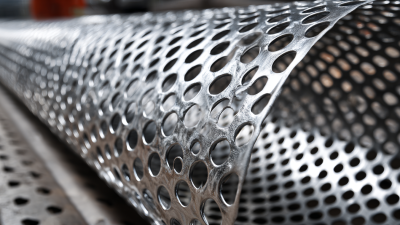
Perforated sheet offers controlled openings and clean airflow.
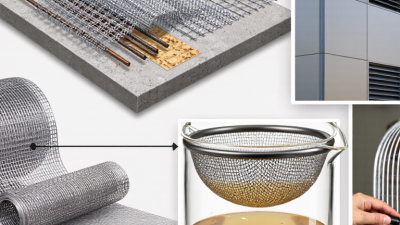
Other useful categories include woven, hexagonal, crimped, architectural, and stainless steel mesh.

Metalworking consultant Dr. Michael R. Smith explains, “The right mesh begins with the duty, not the appearance.”
That principle matters when buyers review drawings, samples, and supplier claims.
Experienced purchasers check wire diameter, tolerance, material grade, edge condition, and coating thickness.
They also request mill certificates, inspection records, and clear packaging details.
Small details matter.

This guide examines ten common types of metal mesh sheet for global buyers.
It considers practical applications, advantages, limitations, and typical purchasing concerns.
Stainless steel may suit humid processing areas, while galvanized steel can support economical outdoor use.
Aluminium reduces weight, but it may not fit every demanding application.
No single mesh solves every problem.
That is easy to forget.

Product names can also vary between suppliers and regions.
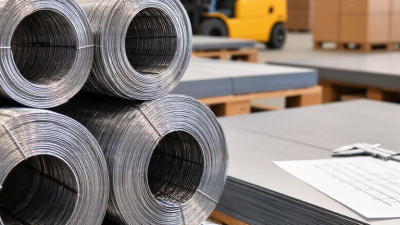
Therefore, buyers should confirm technical drawings instead of relying on photographs alone.
A sample may look correct but perform poorly under vibration, heat, or repeated cleaning.
The following overview aims to make comparison clearer, although real projects still require engineering review and supplier verification.
Top 10 Types of Metal Mesh Sheet for Global Buyers?

Metal Mesh Sheet Classification: 10 Types, ASTM Standards, and Key Dimensions

Top 10 Types of Metal Mesh Sheet for Global Buyers

Metal mesh sheet classification starts with construction and opening pattern. The ten common types are plain woven, twill woven, welded, expanded, perforated, hexagonal, crimped, knitted, flattened expanded, and safety grating mesh. Each type uses different key dimensions. Check aperture, wire diameter, strand width, sheet thickness, pitch, open area, and panel size. A 2 mm aperture can behave differently when the wire diameter changes. Small details matter.

ASTM references help buyers compare material quality. ASTM F1267 covers expanded metal, while ASTM A240 supports stainless steel sheet selection. ASTM A580 addresses stainless steel wire, and ASTM A641 covers zinc-coated carbon steel wire. ASTM A478 is relevant to stainless weaving and knitting wire. Welded applications may require ASTM A1064. These standards address material, dimensions, or testing, but they do not replace project specifications. Always confirm the latest edition and applicable grade.

A 2024 industry market report estimated the global metal mesh sector at approximately USD 8 billion, with annual growth near 6% through 2030. Demand is strongest in filtration, guarding, construction, and airflow control. Yet market estimates vary. That deserves caution. In practice, buyers should request mill certificates, dimensional inspection records, surface-finish details, and tolerance data. A perfect-looking sheet may still fail if open area or flatness is uncontrolled. I would also recheck corrosion exposure, forming direction, and shipping size before approving production.

Perforated, Expanded, and Slotted Mesh: 30–80% Open-Area Design Data

Perforated, expanded, and slotted metal mesh sheets serve different airflow, screening, and weight targets. Their open area commonly ranges from 30% to 80%, but the number alone can mislead buyers. Hole shape, pitch, sheet thickness, and edge condition also affect performance.

A 30% open area leaves more metal for impact resistance and load support. At 80%, airflow and light transmission improve, while stiffness usually declines. Perforated sheets offer consistent round, square, or elongated openings. Expanded mesh provides stronger three-dimensional geometry with less cutting waste. Slotted mesh can guide airflow in one direction, which helps equipment panels and ventilation covers. ASTM E2016 provides terminology for metal mesh classification, supporting clearer supplier comparisons.

Global demand remains tied to steel and aluminum availability. The World Steel Association reported about 1.88 billion tonnes of crude steel production in 2023, showing the scale of the raw-material base. The USGS Mineral Commodity Summaries 2024 also identifies aluminum as a major industrial material, especially for lightweight applications. These reports do not predict mesh pricing directly. That limitation matters. Freight, alloy grade, tooling, and local conversion costs can change a quotation sharply. Buyers should request measured open-area data, not only catalog percentages. A 60% design may perform well on paper, yet a rough edge or uneven pitch can reduce real-world efficiency. Small details matter.

Woven, Welded, and Knitted Mesh: ASTM E11 and 20–5,000 μm Openings

Top 10 Types of Metal Mesh Sheet for Global Buyers?

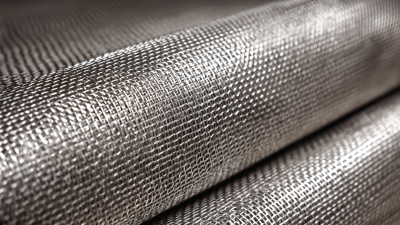
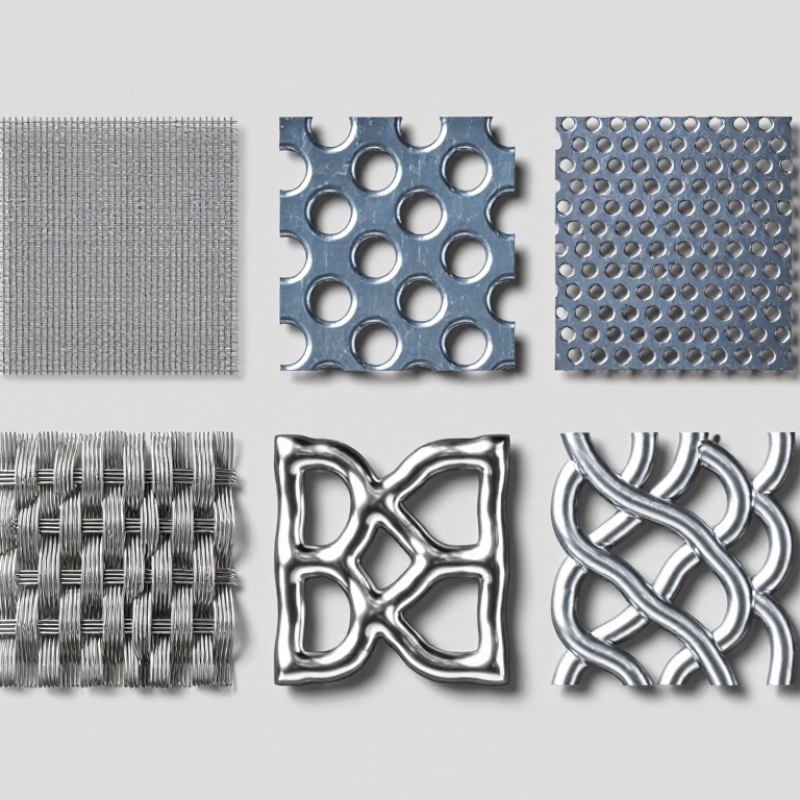
Metal mesh sheets differ by forming method, opening accuracy, and load behavior. ASTM E11 covers test sieve cloth with nominal openings from 20 μm to 5,000 μm and beyond. That range helps buyers compare specifications, not just product names. Plain weave, twill weave, Dutch weave, reverse Dutch weave, welded mesh, expanded metal, perforated sheet, knitted mesh, crimped mesh, and sintered mesh each solve different problems.

Woven mesh suits laboratory screening and fine filtration. Twill and Dutch weaves hold smaller particles while retaining useful strength. Welded mesh offers rigid square openings for guards, racks, and concrete reinforcement. Knitted mesh behaves differently. Its interlocking wire loops absorb movement and reduce vibration in mist eliminators and flexible seals. A 2024 industrial filtration market analysis from Grand View Research identifies filtration as a major growth application, reflecting demand for controlled particle separation. Still, market figures vary. I would verify the report date and regional scope before using them for forecasts.

Tips: Ask for the aperture tolerance, wire diameter, open-area percentage, and test method. A 20 μm opening can perform poorly if wires deform during installation. Request a sample and measure it under the intended inspection method. Check corrosion resistance after cutting or welding. ASTM E11 alignment is helpful, but it does not guarantee service life. That part needs testing.

Architectural and Security Mesh: 304/316 Stainless Steel and Load Ratings

Top 10 Types of Metal Mesh Sheet for Global Buyers

Architectural and security mesh selection starts with metal chemistry, aperture, and verified load performance. The ten common families include woven, welded, expanded, perforated, crimped, cable, ring, chain-link, grille, and decorative mesh. Austenitic stainless steel remains popular for façades, balustrades, screens, and access barriers. ASTM A240/A240M data typically places 304 stainless steel at 18–20% chromium and 8–10.5% nickel. Grade 316 usually contains 16–18% chromium, 10–14% nickel, and 2–3% molybdenum. That molybdenum improves resistance in chloride-rich coastal or industrial environments. It does not make the mesh maintenance-free.

That molybdenum improves resistance in chloride-rich coastal or industrial environments. It does not make the mesh maintenance-free.

Load ratings require more than a material grade. ASTM E330/E330M testing evaluates pressure performance for assembled exterior systems, while EN 1991-1-1 and ASCE 7-22 distinguish permanent, imposed, wind, and impact actions. Buyers should request test loads in kPa or kN, panel span, support spacing, deflection limits, and fixing details. A 316 woven façade can still fail if its edge frame twists. Small apertures often increase stiffness, but they also increase weight and cleaning effort. A larger opening may reduce wind pressure, yet compromise security visibility or tool resistance.

Site inspections regularly expose a weak assumption: catalog load values are not universal.

Weld quality, wire diameter, crimp geometry, corrosion exposure, and installation direction change real performance. One overlooked detail can matter more than the alloy. Ask for mill certificates, dimensional tolerances, independent test records, and maintenance guidance before approving a global shipment.

Global Buyer Selection: ±0.1 mm Tolerance, ISO 9001, Corrosion, and MOQ

Top 10 Types of Metal Mesh Sheet for Global Buyers

Global buyers often compare woven wire, welded wire, expanded metal, perforated sheet, and hexagonal mesh. Other useful options include crimped mesh, Dutch weave, sintered mesh, square mesh, and filter mesh. Each type supports different openings, loads, airflow, and filtration needs. A supplier should provide drawings, material certificates, and inspection records before production.

A ±0.1 mm tolerance sounds precise, but buyers must define where it applies. It may cover thickness, aperture, sheet width, or hole diameter. I have seen projects delayed because “tolerance” lacked a clear measurement method. Ask for sampling plans, calibrated tools, and inspection points. ISO 9001 shows controlled processes, yet it does not guarantee every shipment is perfect. Independent checks still matter.

Corrosion resistance depends on alloy, surface treatment, humidity, salt exposure, and cleaning chemicals. Stainless steel suits many demanding environments, while coated carbon steel may reduce initial cost. Request salt-spray data when outdoor service is expected. Do not trust a generic “rustproof” statement. MOQ also affects the real purchase price. Small orders may carry setup fees, unused material, or custom tooling charges. Confirm the minimum quantity, packaging, lead time, and replacement policy in writing. Small details matter.

Top 10 Types of Metal Mesh Sheet for Global Buyers

Global buyer selection benchmark: ±0.1 mm tolerance suitability, corrosion resistance, and MOQ flexibility

The scores are normalized industry-reference indicators from 0 to 100 based on commonly available metal mesh configurations. Precision woven and perforated meshes generally provide stronger dimensional control, while galvanized, aluminum, and stainless-steel options improve corrosion resistance. ISO 9001 is a supplier-level certification and should be verified separately; actual tolerance, corrosion performance, pricing, and MOQ depend on alloy, thickness, opening size, finish, and order specifications.

Skip to content