
Cart
What Are the Top Physiotherapy Tools and Equipment?
Physiotherapy clinics use a practical mix of equipment, from resistance bands and balance pads to treatment tables and exercise bikes. The best choice depends on the person, the goal, and the stage of recovery. A band may help someone practise controlled shoulder movement at home. A balance pad can make a standing exercise more challenging, but it is not suitable for every patient. Equipment should support a clear plan, not replace assessment or clinical judgment.
Physiotherapist and pain researcher Peter O’Sullivan is known for his person-centred approach to care. A fair paraphrase of that approach is: “Choose the tool for the person, not the other way around.” That distinction matters. A device can look impressive and still add little value if it does not match someone’s abilities, symptoms, or goals. Therapists also need to explain how to use equipment safely and review whether it is helping.
This guide explores common Physiotherapy Tools Equipment, including mobility aids, strengthening tools, balance equipment, and hands-on treatment essentials. It considers what each item can do, where it may fit, and what clinicians should weigh before using it. Some choices are less straightforward than product descriptions suggest. That deserves a closer look. Equipment alone does not create progress; consistent, well-selected care does.
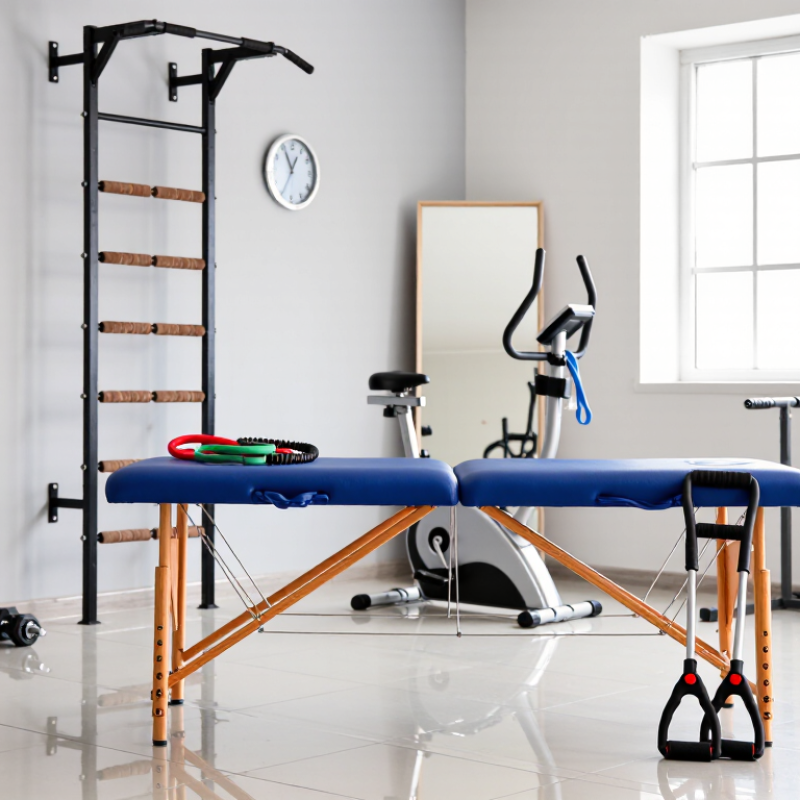
How Physiotherapy Equipment Is Classified by Assessment and Treatment Function
What Are the Top Physiotherapy Tools and Equipment?
How Physiotherapy Equipment Is Classified by Assessment and Treatment Function
Physiotherapy equipment is easiest to choose by asking what it helps a clinician do. Assessment tools measure movement or function: goniometers check joint range, handheld dynamometers estimate muscle force, and timed walk tests record mobility. Balance platforms and pressure mats can reveal weight-shifting patterns, but results still need clinical interpretation. A device gives data, not a diagnosis. The World Health Organization’s 2023 rehabilitation fact sheet estimates that 2.4 billion people could benefit from rehabilitation worldwide, underscoring the need for appropriate, accessible services—not any single equipment list.
Treatment tools support strength, mobility, pain management, or task practice. Resistance bands, free weights, and stationary cycles help deliver graded exercise; parallel bars and step platforms allow supervised practice of everyday movements. Modalities such as heat or electrical stimulation may be used for selected goals, but they should not replace active rehabilitation when movement training is appropriate. A room crowded with equipment can still lack the tool that matches a patient’s actual limitation.
Tips: Match each tool to a measurable goal, such as walking farther or improving shoulder range. Check fit, cleaning needs, and staff competency before purchase. Reassess whether the tool changes care; sometimes the first choice is not the best one.
Which Tools Measure Joint Range, Muscle Strength, Balance, and Mobility?
A goniometer helps measure joint range of motion by recording the angle between body segments. For example, a therapist may compare knee bending on both sides after an injury. An inclinometer can assess spinal or shoulder movement when the angle is harder to capture with a standard goniometer. Results are most useful when the same position and method are used each time. Small differences can come from measurement technique, not a true change.
Muscle strength can be checked with manual resistance, while a handheld dynamometer provides a measurable force reading when available. Neither measure should be interpreted alone; pain, fatigue, and effort can affect performance. No tool tells the whole story. Balance tests may include standing with feet together or reaching in different directions, with close supervision when a person feels unsteady. For mobility, a timed up-and-go test records how long someone takes to stand, walk a short distance, turn, and sit. Gait speed and walking distance can add useful context. These simple tests have limits, and I would be cautious about treating one score as a complete picture of daily function. A therapist should pair measurements with symptoms, goals, and observed movement.
What Are the Top Physiotherapy Tools and Equipment? — Tools for Measuring Joint Range, Muscle Strength, Balance, and Mobility
| Tool or Equipment | Primary Measurement | How Results Are Recorded | Common Physiotherapy Use | Key Consideration |
|---|---|---|---|---|
| Goniometer | Joint range of motion (ROM) | Angle in degrees, measured between body segments | Tracking active or passive movement at joints such as the knee, elbow, or shoulder | Consistent positioning and anatomical landmarks help improve measurement reliability. |
| Inclinometer | Joint or spinal movement angles | Angle in degrees; some methods use measurements from more than one position | Assessing spinal mobility and selected limb movements | Follow the same placement and testing procedure at each assessment. |
| Handheld dynamometer | Muscle force | Force, commonly recorded in newtons or kilograms-force | Quantifying strength in accessible muscle groups during resisted testing | Results can be affected by tester strength, stabilization, and the patient’s position. |
| Manual muscle testing | Muscle strength and ability to move against gravity or resistance | Ordinal grade, commonly recorded on a 0–5 scale | Screening muscle function and documenting broad changes in strength | The scale is ordinal, so a one-grade change does not represent a fixed amount of force. |
| Force platform | Postural sway, balance, and ground-reaction forces | Force and centre-of-pressure measures over time | Objective balance assessment during standing or movement tasks | Results depend on the testing task, footwear, visual conditions, and analysis method. |
| Balance assessment scale | Functional balance during everyday tasks | Task-based score; some widely used scales have a maximum score of 56 | Assessing activities such as transfers, reaching, turning, and standing | Use the complete standardized assessment and interpret the score in clinical context. |
| Stopwatch | Task completion time | Seconds, for example during a Timed Up and Go test | Measuring functional mobility, transfers, turning, and walking performance | Use consistent instructions, chair setup, walking distance, and timing procedure. |
| Marked walkway and timing system | Walking speed | Time over a measured distance; speed may be reported in metres per second | Assessing gait speed, including a timed 10-metre walk | Document whether acceleration and deceleration sections are included in the timed distance. |
| Tape measure | Linear distance, limb circumference, or selected swelling measures | Centimetres or millimetres | Recording limb dimensions, swelling, or distances reached during functional tests | Use consistent anatomical landmarks and tape tension for repeat measurements. |
| Step or stair platform | Functional stepping ability and lower-limb performance | Task completion, repetitions, time, or observed movement quality | Assessing step-ups, stair function, and dynamic balance | Choose a safe height and provide guarding appropriate to the person’s balance and mobility. |
What Exercise and Mobility Equipment Supports Progressive Rehabilitation?
Progressive rehabilitation uses equipment to make movement safer, clearer, and gradually more challenging. A physiotherapist may begin with a stable chair, a low step, or a light resistance band. These simple tools help build strength while keeping movement controlled. For example, a patient might practise standing from a chair, then add repetitions before trying a lower seat. Small steps matter.
As control improves, light dumbbells, adjustable resistance bands, and step platforms can increase the workload. A stationary bike supports low-impact leg movement, while parallel bars offer support during early walking practice. Balance pads may be useful later, but they can make standing less stable. Use them only when the person can manage the challenge safely. Not every tool helps.
Mobility equipment should match the person’s current ability and daily goals. A walking aid may support practice between appointments, but its height and fit need checking. Progress should be based on movement quality, symptoms, and recovery, not just heavier resistance. If pain rises sharply or movement becomes less controlled, pause and ask the treating professional to reassess the plan. That can feel slow. Yet careful adjustment often makes practice more useful and sustainable.
How Do Manual-Therapy and Electrotherapy Tools Differ in Clinical Use?
Manual-therapy and electrotherapy tools serve different clinical purposes, though neither works as a stand-alone solution. Hands-on tools, such as treatment tables, mobilization belts, and soft-tissue instruments, help clinicians assess movement and apply targeted pressure or guided joint motion. A therapist may feel resistance at a stiff shoulder, adjust the force, and check the response immediately. The patient’s comfort and feedback matter. Technique and judgment matter, too.
Electrotherapy devices deliver controlled electrical or other physical energy, such as stimulation for pain modulation or muscle activation. Their settings can be measured, but the response still varies between patients.
The World Health Organization’s 2023 rehabilitation fact sheet estimates that 2.4 billion people worldwide live with conditions that may benefit from rehabilitation. That scale makes appropriate, individualized care important—not simply having more equipment.
NICE’s 2021 guideline on chronic primary pain advises against offering TENS for that condition, a reminder that a device’s usefulness depends on the diagnosis and evidence. Manual techniques also have limits; temporary relief does not prove lasting functional change. In practice, clinicians often combine a suitable modality with exercise and reassessment. The choice is not always obvious. That uncertainty deserves honest discussion.
Why Equipment Matters: WHO Says 2.4 Billion People May Benefit from Rehabilitation
WHO estimates that 2.4 billion people worldwide live with health conditions that may benefit from rehabilitation. Behind that figure are people rebuilding strength after surgery, managing chronic pain, or learning to move safely after a stroke. Rehabilitation is not one exercise or device. It is an individualized process, guided by assessment and adjusted as a person’s abilities change. Small details matter: a stable chair for sit-to-stand practice, a resistance band for controlled strengthening, or a balance pad used with close supervision.
The right physiotherapy equipment can make practice safer, more measurable, and easier to repeat at home or in a clinic. A stopwatch can track walking endurance; a simple goniometer can help record joint movement over time. But equipment is not a treatment plan. A tool that suits one person may frustrate or endanger another, especially when pain, fatigue, or balance problems are overlooked. More gear does not automatically mean better care. Clinicians need to explain each tool, check technique, and notice when progress stalls. That can be harder than selecting equipment. A band may look basic, yet the right resistance and clear instructions make a real difference. Rehab access also depends on trained professionals, time, and follow-up—not just what sits on a shelf.
