2026 Top Types of Perforated Aluminum Sheet?
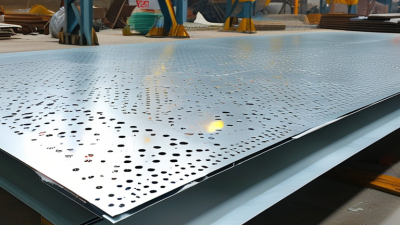
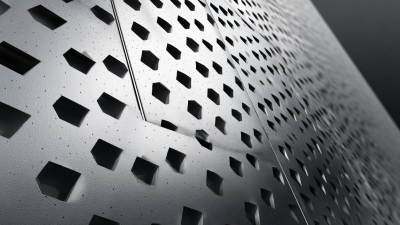
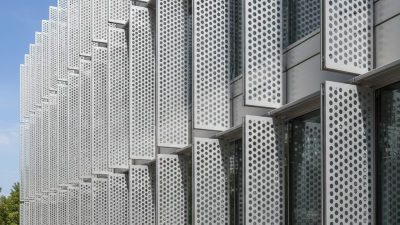
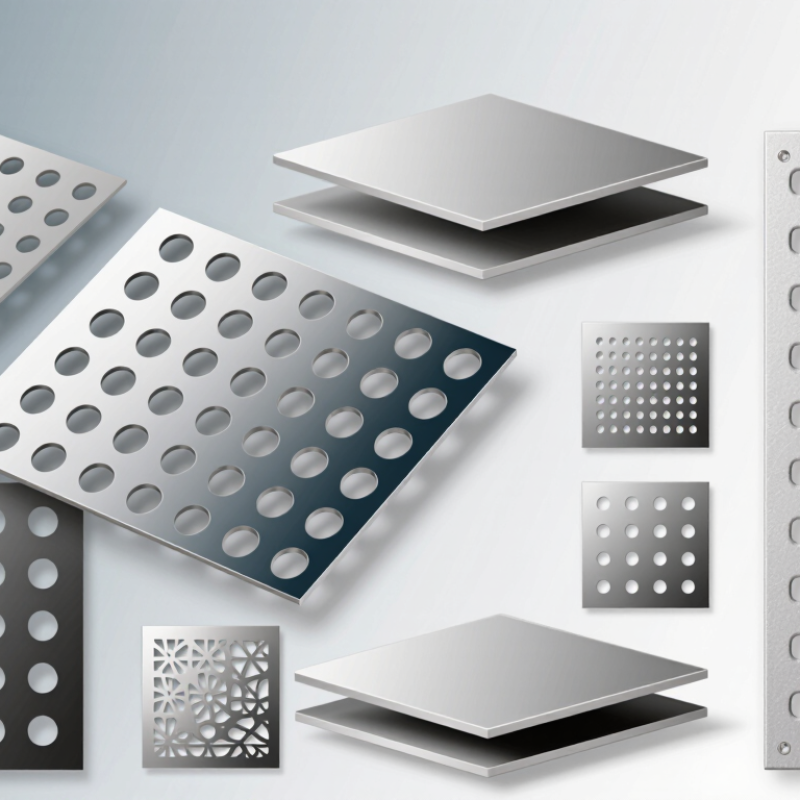
Choosing the right perforated aluminum sheet in 2026 requires more than comparing hole patterns. Each type affects airflow, daylight, weight, noise control, strength, and visual character. Round-hole sheets remain popular for machine guards, ceiling panels, and exterior screens. Square-hole designs provide a more structured appearance and can support higher open-area requirements. Slotted perforations guide airflow in a different direction, making them useful for ventilation equipment and acoustic applications.
Small details matter.
This guide examines the leading types of perforated aluminum sheet, including decorative patterns, precision panels, and heavy-duty options. It considers aluminum alloys, sheet thickness, hole diameter, pitch, open area, and surface finishes. A 1.5-millimeter panel may suit an indoor partition, while a thicker sheet can perform better in exposed architectural installations. Powder coating, anodizing, and mill finishes also influence durability and maintenance.
Real project experience shows that attractive design is not enough. A pattern that looks excellent in a showroom may create excessive glare, weak edges, or difficult cleaning conditions. That assumption can fail. Engineers and fabricators should verify load requirements, forming limits, drainage needs, and installation methods before ordering. Reliable suppliers should provide clear dimensional data, production tolerances, alloy information, and sample approval.
No single pattern wins.
The best choice depends on the environment, function, budget, and expected service life. This overview offers a practical comparison, while acknowledging one limitation: supplier terminology and available sizes can vary by region. Careful specification remains essential for consistent results.
Define Perforated Aluminum Sheet by Alloy: 3003, 5052, and 6061 Grades
2026 Top Types of Perforated Aluminum Sheet
Perforated aluminum sheet is defined by more than hole size and open area. Its alloy controls forming, strength, corrosion resistance, and service life. Grade 3003 is a practical choice for decorative screens, ventilation panels, and light-duty enclosures. It bends easily and usually offers consistent punching results. However, it is not the strongest option for panels exposed to repeated impact.
Grade 5052 provides higher strength and stronger corrosion resistance, especially in humid or coastal environments. It suits equipment covers, transportation panels, and exterior ventilation surfaces. Its work-hardening behavior deserves attention during tight forming. Grade 6061 offers the highest structural strength among these common grades. It fits rigid guards, walkways, and load-supporting panels. Yet, it is less forgiving during complex bending and may develop cracks if the forming process is poorly controlled. Stronger is not always better.
Tips: Match the alloy with the finished shape, not only the design load. Check the temper, sheet thickness, hole diameter, pitch, and required open area together. Ask for material certificates and inspect a trial panel for burrs, distortion, and edge cracking. A small sample can expose problems early. I would also review the surface finish after punching, because a clean drawing may not predict actual production results.
Compare Round, Square, Slotted, and Decorative Patterns by Open-Area Ratio
2026 Top Types of Perforated Aluminum Sheet?
Round holes usually provide the clearest airflow path. In a 60-degree staggered layout, open area follows approximately 90.7(d²/C²), where d is hole diameter and C is pitch. Many practical screens fall between 30% and 60% open area. Square patterns use about 78.5(d²/C²), so they often provide slightly less open space at identical dimensions. Their straight grid also suits guards, vents, and panels requiring predictable alignment.
Slotted sheets can offer strong directional flow. Their ratio changes sharply with slot length, width, pitch, and orientation. Typical designs range from 20% to 50% open area, but the geometry deserves checking. Decorative patterns are more variable, commonly below 40%. Their visual rhythm may matter more than maximum airflow. DIN 24041 provides useful perforation terminology, while ASTM E283 supports laboratory air-leakage testing. These standards do not replace project testing. Open area alone can mislead.
Tips: Ask for the exact pitch and hole dimensions, not only a percentage. Check burrs, edge distance, and pressure drop. The U.S. Geological Survey’s Mineral Commodity Summaries 2025 estimated 2024 global primary aluminum output near 72 million metric tons. That scale supports broad availability, but alloy, temper, and thickness still affect forming performance. A lighter sheet may look efficient. It may also vibrate more than expected.
2026 Top Types of Perforated Aluminum Sheet: Open-Area Comparison
The chart compares representative geometric designs rather than brand products. Open-area ratios are calculated from common metric layouts: round holes use a 10 mm diameter on a 15 mm staggered pitch; square holes use 10 mm openings on a 15 mm square pitch; slotted holes use 6 × 25 mm slots on 15 × 30 mm pitches; and the decorative pattern represents a custom laser-cut motif with a 32% measured open area. Actual results vary with hole size, pitch, border layout, and decorative geometry.
Match Hole Diameter, Pitch, and Open Area Using the 60° Staggered Layout
2026 Top Types of Perforated Aluminum Sheet
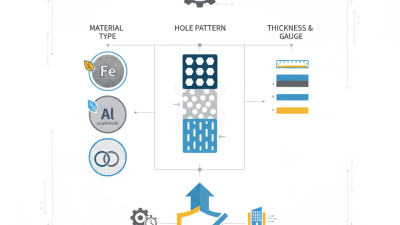
Choosing perforated aluminum sheet starts with the hole pattern, not appearance alone. A 60° staggered layout places each hole between two holes in the next row. This arrangement supports even airflow, balanced strength, and a consistent visual texture. Round holes are common for ventilation and filtration panels. Square or slotted holes may suit different screening needs, but their open-area calculations are not interchangeable.
Hole diameter and pitch must be matched carefully. For round holes in a 60° staggered pattern, open area is approximately 90.69 × (hole diameter ÷ pitch)² × 100. A 3 mm hole on a 5 mm pitch provides about 32.6% open area. Increasing the diameter improves airflow, but it can reduce stiffness. Increasing the pitch preserves more metal, yet may restrict ventilation. Small changes matter.
In practical work, I check airflow targets, panel span, edge margins, and cleaning access together. A sheet that looks suitable on paper may vibrate after installation. Measure twice. I also confirm whether the requested pitch is center-to-center, because unclear drawings create costly mistakes. The calculation is reliable, but real performance depends on frame support, thickness, and site conditions. Some designs need revision after testing, and that is not a failure. It is useful evidence.
2026 Top Types of Perforated Aluminum Sheet? - Match Hole Diameter, Pitch, and Open Area Using the 60° Staggered Layout
The table compares commonly specified round-hole perforated aluminum sheet configurations using a 60° staggered layout. Hole diameter and pitch are center-to-center dimensions; open area is the theoretical percentage of the sheet occupied by holes.
Open-area formula for round holes on a 60° staggered layout:
Open Area (%) = 90.69 × (hole diameter ÷ hole pitch)². Actual airflow, strength, and filtration performance can vary with sheet thickness, edge margins, burrs, framing, and installation conditions.
Select 2026 Top Types by ASTM B209 Alloy Standards and Application Needs
2026 Top Types of Perforated Aluminum Sheet?
Selecting a perforated aluminum sheet should begin with ASTM B209, not appearance alone. This standard identifies aluminum alloy grades, tempers, dimensions, and material requirements. It does not decide every perforation detail.
For formed panels, 3003 aluminum is often a practical choice. Its good ductility supports bending around shallow frames and curved covers.
Use 5052 when moisture, salt air, or cleaning chemicals are concerns. It offers stronger corrosion resistance and handles moderate forming well.
For load-bearing screens or equipment guards, 6061 may be suitable. Its higher strength helps, but its lower formability deserves attention.
Application changes the best type.
A ventilation panel may need a high open area, such as 40 to 60 percent, to reduce airflow resistance. A machine guard needs smaller holes and enough ligament width between openings. Exterior façades require careful review of thickness, temper, drainage, and galvanic contact with nearby metals. Hole diameter, pitch, sheet thickness, and edge distance should be checked together.
In practice, specify the ASTM B209 alloy and temper on the purchase document. Request a material test report, then verify thickness after perforation. Perforating can create local distortion, especially in thin sheets. That detail is easy to miss. I would also test one formed sample before approving a large order. Standards improve reliability, but they cannot replace application testing.