
Cart
What Are the 2026 Top Types of Wire Mesh Fencing?
Wire mesh fencing is becoming more specialized as property owners demand stronger security, cleaner design, and easier maintenance. In 2026, the leading options are expected to include welded wire mesh, chain-link mesh, expanded metal, and high-security anti-climb panels. Each type serves a different purpose. Appearance alone cannot decide the right choice.
Performance comes first. Construction expert Mike Holmes often repeats, “Do it right the first time.” That advice applies directly to wire mesh fencing. A poorly aligned post, weak corner, or loose fixing can reduce the value of an otherwise excellent system. Good installation still matters.
Welded mesh may lead residential and commercial projects because its rigid grid looks neat and resists deformation. Chain-link remains practical for sports grounds, farms, and large boundaries. Expanded metal can provide stronger visual screening, while anti-climb mesh suits sites requiring tighter perimeter control. Galvanized steel offers dependable corrosion resistance, and powder coating adds color and another protective layer.
Small details matter. Mesh opening size affects visibility, climbing resistance, and animal containment. Wire diameter influences rigidity and service life. Post spacing also changes the final result. No single ranking is perfect. Local weather, soil movement, budget, and maintenance habits can change the best selection. That assumption needs testing. This guide will compare the main 2026 wire mesh fencing types through strength, security, appearance, installation effort, durability, and long-term value.
What Defines the Top Wire Mesh Fencing Types in 2026?
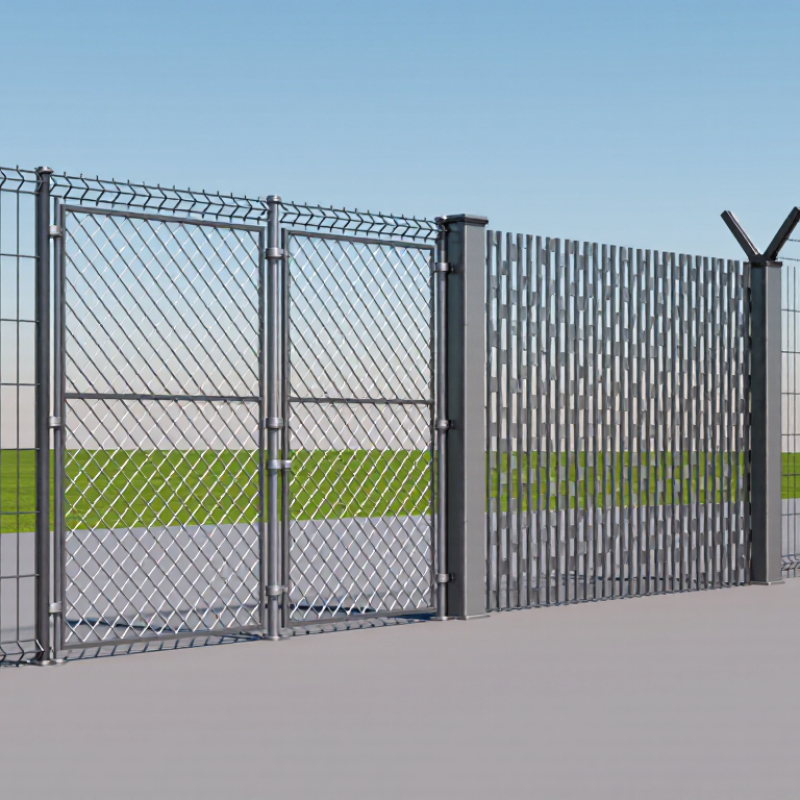
In 2026, top wire mesh fencing is defined less by appearance than by verified performance. Good selection starts with purpose, site exposure, and maintenance expectations. Welded mesh offers rigid panels and clean sightlines for homes, schools, and commercial boundaries. Woven chain-link remains practical where flexibility, airflow, and economical coverage matter. Expanded metal creates a tighter visual barrier, although it can feel heavy in smaller spaces. These differences matter on site.
Experienced installers examine wire diameter, mesh opening, coating quality, post spacing, and connection strength. A fence facing salt air needs corrosion-resistant protection, not merely a convincing product label. Hot-dip galvanized finishes often suit demanding outdoor conditions, while powder coatings improve color and surface feel. However, coating damage around cuts and fasteners deserves inspection. Small defects spread. Security-focused projects may use narrow apertures and anti-climb profiles, but tighter mesh can increase cost and wind load. Engineers should check foundation depth and local conditions before specifying height.
The strongest 2026 choices also support repair. Replaceable panels, accessible fasteners, and standard dimensions reduce downtime after impact. I have seen attractive fencing fail because gates sagged or posts were set too shallow. That lesson is easy to overlook. A reliable specification records test methods, corrosion expectations, load assumptions, and inspection intervals. It should also allow uncertainty, because soil, drainage, and actual use rarely match drawings perfectly. The top type is the one whose tested details fit the location, not the one with the most impressive photograph.
How Welded Wire Mesh Fencing Combines Strength and Clean Design
Welded wire mesh fencing is gaining attention among the top fencing types for 2026. Its appeal comes from a practical balance: strong welded joints, clear sightlines, and a restrained appearance. Unlike loose woven mesh, each intersection is fixed, creating a rigid panel that resists spreading and daily deformation. The structure feels secure without making a yard look closed in.
In field installations, panel spacing matters as much as wire thickness. Smaller openings help control access, while larger grids create a lighter visual effect. A dark protective coating can reduce glare and blend with landscaping, but surface preparation remains critical. Poorly prepared steel may develop rust around cuts, weld points, or fasteners. It looks remarkably clean.
Good installation also depends on accurate posts and even tension between panels. Uneven ground can expose gaps beneath the fence, especially on sloped sites. Stepped panels may solve this issue, although they can create visible lines that some property owners dislike. This is where design judgment becomes important. Strength alone does not guarantee a satisfactory result.
Welded wire mesh is not flawless. Heavy impact can bend a panel, and repairing one section may leave a noticeable mismatch. Still, its open pattern improves visibility, airflow, and natural light. For homes, gardens, schools, and controlled commercial areas, that combination often supports both practical security and a cleaner architectural character.
What Are the 2026 Top Types of Wire Mesh Fencing?
How Welded Wire Mesh Fencing Combines Strength and Clean Design
The chart compares representative wire-diameter ranges commonly used in major wire-mesh fencing systems. Welded wire mesh typically uses rigid welded intersections and wire sizes from about 2.5 to 6.0 mm, providing a clean appearance with strong resistance to deformation. Chain-link fencing is flexible and economical, while 358 security mesh uses closely spaced openings and 4 mm wire for high-security applications. Gabion mesh generally uses smaller wire diameters because the structure is supported by filled stone.
Values are representative industry specification ranges; exact dimensions vary by application, height, coating, mesh opening and applicable standard.
Why Chain-Link Mesh Remains a Versatile Fencing Choice
Among the leading wire mesh fencing types in 2026, chain-link mesh remains a practical choice for many properties. Its open diamond pattern provides visibility, airflow, and dependable boundary control without creating a heavy visual barrier. Installers often select it for gardens, sports areas, warehouses, and residential yards.
It is also adaptable. Galvanized steel helps resist moisture and surface corrosion, while polymer-coated options offer added protection and a softer appearance. Mesh height, wire diameter, and opening size can be matched to the site’s needs. A smaller opening may improve security, but it can also increase material weight and installation effort. That trade-off deserves careful planning.
The posts matter as much as the mesh. Firmly set posts, level lines, and properly tensioned fabric prevent sagging and loose edges. I have seen attractive fences fail because installers rushed the corner supports. Small errors become obvious after heavy rain or strong wind. Chain-link is not a decorative solution for every property. It can feel too exposed beside a quiet home, especially without planting or screening. Still, its low maintenance and repairable structure make it valuable where function, visibility, and controlled costs matter. Regular checks should focus on rust spots, bent framework, damaged ties, and shifting posts.
Where Expanded Metal and Security Mesh Fencing Work Best
What Are the 2026 Top Types of Wire Mesh Fencing?
Where Expanded Metal and Security Mesh Fencing Work Best
Wire mesh fencing remains practical for industrial sites, schools, utilities, and commercial properties in 2026. Expanded metal is a strong choice where visibility and controlled access matter. Its continuous diamond pattern has no welded joints across each opening. This can reduce weak points. It also allows airflow and daylight around equipment yards or plant rooms.
Security mesh fencing works best when smaller openings are needed. The tight pattern can discourage climbing, cutting, and the passage of small objects. It suits data facilities, transport compounds, storage areas, and restricted service zones. I have found that clear sightlines often improve daily inspections. Staff can notice damaged panels, open gates, or unusual activity without entering the enclosure. That practical benefit is easy to overlook.
Material selection should follow the site, not fashion. Galvanized steel may suit exposed outdoor conditions, while coated finishes can support appearance and added corrosion resistance. Panel thickness, aperture size, post spacing, and foundation depth deserve careful review. Poor installation can undermine good mesh. Really quickly. Uneven ground, loose anchors, and badly aligned gates create avoidable gaps. No fence removes every security concern. Design assumptions can fail when lighting, drainage, or access routines change. A qualified installer should assess these details before fabrication, then inspect the finished fence against the original site requirements.
| Fence Type | Typical Construction | Common Opening or Profile | Security Level | Visibility and Airflow | Where It Works Best | Key Advantages | Main Considerations |
|---|---|---|---|---|---|---|---|
| Expanded Metal Fencing | Sheet metal is slit and stretched into a continuous diamond-shaped mesh without welded joints. | Typical diamond openings range from approximately 10 × 20 mm to 30 × 60 mm, depending on gauge and design. | ★★★★★ High to very high |
Good airflow with limited footholds; smaller openings provide stronger visual screening. | Perimeter security, transport facilities, utility sites, rooftops, and equipment compounds. | Rigid panel structure, difficult to cut quickly, no loose wires, and good resistance to impact. | Heavier than many wire products; sharp edges must be properly framed and finished. |
| High-Security Anti-Climb Mesh | Rigid welded wire panels with narrow apertures and closely spaced horizontal and vertical wires. | Common apertures include approximately 6 × 76 mm, 12.7 × 76 mm, or similar narrow formats. | ★★★★★ Very high |
Excellent visibility and airflow while restricting hand and foot access. | Critical infrastructure, correctional facilities, data centers, airports, and high-value industrial sites. | Strong anti-climb performance, clean appearance, and good resistance to cutting with conventional hand tools. | Higher material and installation cost; accurate posts, clamps, and foundations are required. |
| Welded Wire Mesh Fencing | Steel wires are welded at each intersection to form rigid rolls or panels. | Common grid sizes range from approximately 25 × 25 mm to 100 × 200 mm. | ★★★★☆ Medium to high |
Usually provides clear visibility and consistent airflow. | Commercial properties, schools, animal enclosures, gardens, warehouses, and general boundary fencing. | Uniform appearance, easy layout, good dimensional stability, and a wide range of wire diameters. | Large openings may permit climbing or tool access; thin wires are less resistant to impact and cutting. |
| Chain-Link Fencing | Interwoven steel wires form a flexible diamond-pattern fabric attached to line posts and rails. | Common mesh sizes are approximately 25 mm, 40 mm, 50 mm, and 75 mm; wire gauges vary by duty. | ★★★☆☆ Low to medium |
Very high visibility and airflow; privacy can be increased with screening materials. | Residential boundaries, sports fields, temporary works, storage yards, and large sites requiring economical coverage. | Cost-effective, quick to install, adaptable to uneven ground, and easy to repair. | Standard versions are climbable and can be cut; security improves with smaller mesh, heavier wire, and enhanced toppings. |
| Woven Wire Mesh Fencing | Steel wires are woven together, commonly in square, rectangular, or hexagonal patterns. | Opening sizes commonly range from approximately 13 mm to 100 mm, depending on the application. | ★★★☆☆ Low to medium |
Good airflow; visibility depends on the wire diameter and opening size. | Agricultural boundaries, animal control, landscaping, erosion-control areas, and low-impact perimeter applications. | Flexible, lightweight, economical, and suitable for irregular ground or curved boundaries. | Less rigid than welded panels and generally less suitable for high-security locations. |
| Palisade Fencing | Vertical steel pales with pointed, rounded, or safety-profile tops are fixed to horizontal rails. | Typical pale spacing is approximately 75 mm to 150 mm; heights commonly range from 1.8 m to 3 m. | ★★★★★ High to very high |
Low to moderate visibility and airflow, depending on pale profile and spacing. | Industrial estates, energy facilities, warehouses, rail infrastructure, and sites requiring a strong visual deterrent. | Highly visible deterrent, robust steel construction, and good resistance to forced entry when correctly specified. | Less transparent than mesh fencing; pointed tops may require safety controls and local regulatory review. |
| Temporary Welded Mesh Panels | Freestanding welded wire panels supported by movable feet or bases and connected with temporary clamps. | Common openings range from approximately 50 × 100 mm to 100 × 300 mm; panel heights often range from 1.8 m to 2.4 m. | ★★☆☆☆ Low to medium |
High visibility and airflow. | Construction sites, public events, traffic management, short-term access control, and maintenance areas. | Fast deployment, reusable components, relocatable layout, and minimal ground disturbance. | Usually offers less resistance to deliberate attack than permanently anchored systems; bases need adequate ballast. |
How Coated, Stainless Steel, and Specialty Mesh Meet Modern Needs
What Are the 2026 Top Types of Wire Mesh Fencing?
How Coated, Stainless Steel, and Specialty Mesh Meet Modern Needs
In 2026, wire mesh fencing is being selected for performance, not appearance alone. Coated mesh suits residential yards, schools, and light commercial sites where corrosion resistance matters. A polymer coating softens the visual impact and adds protection against rain, salts, and routine scratching. Still, damaged coating can expose the steel beneath. Inspect cut edges and contact points during installation. That small step often prevents early rust.
Stainless steel mesh serves harsher settings, including coastal paths, food-processing areas, and busy public facilities. Its chromium-rich surface supports corrosion resistance, while tight openings can improve containment and safety. Grade selection deserves professional attention because strength, chloride exposure, and cleaning chemicals vary by site. Overlooking weld quality is a common mistake. Details matter. A strong wire can still fail at a weak joint.
Specialty mesh addresses needs ordinary fencing cannot. Welded panels can provide rigid boundaries, while woven mesh offers flexibility on uneven ground. Small apertures help limit climbing and keep animals or debris from passing through. Security-focused designs may combine heavier wire, reinforced edges, and tamper-resistant fasteners. However, stronger is not always better. Heavy systems cost more and may complicate repairs. A perfect specification on paper can still disappoint. Measure wind, impact, drainage, and maintenance access before choosing.
Related Posts
-
Top Benefits of Using Sheet Steel in Construction and Manufacturing Projects
-
2025 Guide: How to Choose the Right Wire Mesh Screen for Your Project
-
Why Choose Steel Sheet Metal for Global Sourcing?
-
Top 10 Tips for Choosing the Right Stainless Steel Mesh for Your Needs
-
Top Steel Sheet Metal Suppliers for Global Buyers?
-
How to Choose the Right Woven Wire Mesh for Your Needs?