
Specialty Metal & Fiberglass Products
ISO 9001:2015 Certified
Cart
Why Choose Steel Sheet Metal for Global Sourcing?
Choosing steel sheet metal for global sourcing is a practical decision, not a simple price comparison. The material supports enclosures, automotive panels, machinery covers, roofs, and countless fabricated components. Its strength-to-weight balance helps reduce material use without sacrificing durability. It also works well with laser cutting, stamping, bending, welding, and powder coating.
Lakshmi Mittal, a leading steel industry executive, once said, “Steel is the backbone of modern civilization.” That statement still carries weight. Reliable steel sheet metal can keep production stable across different markets. However, material selection requires more than a familiar grade name. Buyers should verify thickness tolerances, surface quality, yield strength, coating weight, and mill test certificates. A 2-millimeter galvanized sheet may look acceptable during inspection, yet small flatness issues can disrupt automated bending. Packaging matters too. Moisture trapped inside a container can leave stains before the shipment reaches its destination.
Global sourcing also creates measurable advantages. Qualified suppliers can offer competitive mill access, scalable production, and consistent fabrication standards. Regional alternatives may shorten delivery routes and simplify communication. Still, the cheapest quotation is rarely the safest choice. A supplier with weak inspection records may create hidden costs through rejected parts, rework, and delayed assembly.
The decision is not flawless.
Procurement teams should compare total landed cost, quality evidence, production capacity, and response speed. They should also test a sample order before committing to long-term volume. Steel sheet metal remains highly dependable, but only when supplier capability matches the application. That distinction deserves careful attention.
Steel Sheet Metal: Definition and Key Manufacturing Processes
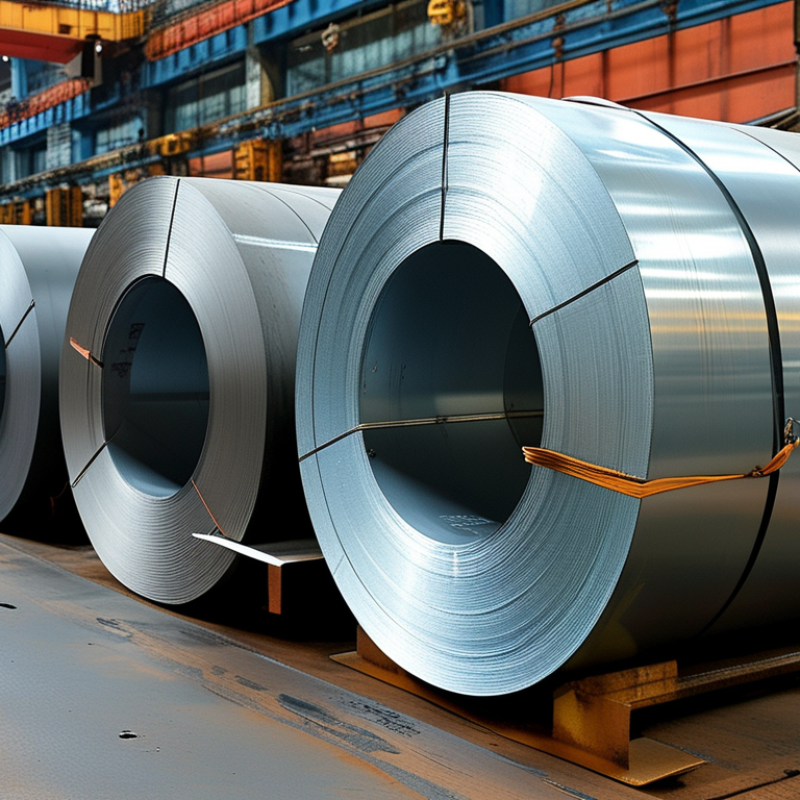
Steel sheet metal is flat steel produced in thin, controlled sections. It is valued for strength, consistent dimensions, and broad manufacturing flexibility. For global sourcing, these qualities support repeatable production across different factories and regions. However, material grade and thickness must match the product’s working conditions. A low-cost choice can become expensive when corrosion or distortion appears later.
Manufacturing usually begins with coil or plate preparation. Laser cutting creates accurate profiles with limited material waste. Punching adds holes, slots, and formed features efficiently. Press brakes then bend the blank into brackets, covers, panels, or frames. High-volume projects may use stamping dies for faster cycle times. Welding joins separate parts, while grinding improves visible seams. Powder coating, plating, or other finishes can improve appearance and surface protection. In practice, sharp internal corners often cause trouble. Designers sometimes overlook bend allowance, tool access, or springback. Quality checks should include thickness, hole location, flatness, bend angles, and coating coverage.
Tips: Send a clear drawing with tolerances, material grade, finish, and inspection requirements. Ask for a first-article sample before full production. Review critical dimensions physically, not only on a digital file. Leave realistic tolerances. Perfect precision may be unnecessary and costly. Also confirm packaging details, because thin panels can scratch or bend during long-distance transport.
Why Choose Steel Sheet Metal for Global Sourcing? - Steel Sheet Metal: Definition and Key Manufacturing Processes
| Dimension | Key Information | Global Sourcing Relevance |
|---|---|---|
| Definition | Steel sheet metal is flat-rolled steel supplied in thin, relatively wide sections. It is commonly processed into enclosures, panels, brackets, frames, automotive components, and industrial equipment parts. | Its standardized flat form supports efficient nesting, automated processing, and repeatable production across different manufacturing regions. |
| Common Material Types | Typical choices include low-carbon steel, galvanized steel, high-strength low-alloy steel, weathering steel, and stainless steel. | Buyers can match corrosion resistance, strength, appearance, and budget requirements without changing the basic sheet-metal workflow. |
| Typical Thickness | Commercial sheet-metal applications commonly use thicknesses from approximately 0.5 mm to 6 mm, although available ranges vary by material grade, mill, and process. | Clear thickness specifications help international buyers compare quotations, calculate weight, and confirm tooling and forming capability. |
| Material Strength | Low-carbon grades offer good formability, while high-strength grades provide greater load capacity with less material in some designs. | Strength selection can reduce part weight, improve product durability, and support compliance with application-specific engineering requirements. |
| Cutting | Laser cutting, plasma cutting, waterjet cutting, and mechanical shearing are widely used. Laser cutting is suitable for accurate profiles and detailed features. | Digital cutting data can be transferred internationally, making design revisions and production coordination more efficient. |
| Bending and Forming | Press brakes, roll forming, stamping, and deep drawing shape flat blanks into three-dimensional parts. | Standardized bend allowances, tooling specifications, and inspection criteria reduce communication risks between buyers and overseas suppliers. |
| Joining | Common joining methods include spot welding, MIG welding, TIG welding, riveting, clinching, and fastening. | The appropriate method can balance joint strength, production speed, appearance, repairability, and total manufacturing cost. |
| Surface Finishing | Finishing options include powder coating, wet painting, hot-dip galvanizing, electroplating, passivation, brushing, and polishing. | Finishing requirements should identify coating type, color standard, thickness, adhesion, corrosion testing, and protected surfaces before production. |
| Dimensional Control | Critical characteristics may include thickness, flatness, hole position, bend angle, overall dimensions, weld location, and surface condition. | A complete drawing with tolerances and an agreed inspection plan helps prevent costly disputes during cross-border procurement. |
| Cost Structure | Total cost typically includes raw material, cutting, forming, tooling, welding, finishing, inspection, packaging, freight, duties, and other import-related charges. | Comparing landed cost rather than unit price gives a more accurate view of the financial benefit of global sourcing. |
| Production Volume | Laser cutting and press-brake forming are adaptable for prototypes and low-to-medium volumes, while stamping and dedicated tooling are more suitable for high-volume production. | Selecting the process according to order volume helps control tooling amortization, setup time, and per-part cost. |
| Material Efficiency | Computer-aided nesting can arrange multiple profiles on a sheet to reduce scrap. Recyclable steel offcuts can generally re-enter the steel recycling stream. | Higher material utilization can lower purchasing costs, shipping weight, and production waste. |
| Quality Documentation | Useful records may include material certificates, first-article inspection reports, dimensional inspection results, coating reports, weld checks, and shipment inspection records. | Documented quality evidence improves traceability and supports consistent acceptance procedures across borders. |
| Packaging and Logistics | Parts should be protected against scratches, moisture, deformation, and mixed-order confusion. Packaging may include separators, edge protection, pallets, and moisture barriers. | Proper packaging reduces transit damage and helps control the risks associated with long-distance ocean, rail, or air transportation. |
| Primary Advantages | Steel sheet metal offers high stiffness, broad material availability, scalable processing, design flexibility, repairability, and compatibility with many protective finishes. | These characteristics make it suitable for standardized international production and a wide range of industrial applications. |
| Key Sourcing Risks | Common risks include inconsistent material grades, unclear tolerances, springback after bending, weld distortion, coating defects, corrosion during shipment, and inaccurate landed-cost estimates. | These risks can be reduced through approved drawings, material verification, pre-production samples, defined acceptance criteria, and documented final inspection. |
Related Posts
-

Top Benefits of Using Sheet Steel in Construction and Manufacturing Projects
-
Top Steel Sheet Metal Suppliers for Global Buyers?
-

What is Steel Wire Mesh Its Types Applications and Market Growth Trends
-

Why Choose Perforated Metal for Your Next Project?
-
How to Choose the Right Aluminum Grating for Your Project?
-
Top 10 Uses for Stainless Steel Perforated Sheet in Construction?