Cart

China Best Perforated Metal Panels Supplier?

Finding China’s best perforated metal panels supplier requires more than comparing prices. “Best” depends on your project’s design, performance, and delivery requirements. A hotel façade may need precise patterns and consistent color. A machine guard may require stronger steel and safer edges. Acoustic panels demand different calculations, materials, and finishes.

This guide examines how experienced buyers evaluate Chinese manufacturers. It focuses on material grades, hole accuracy, open-area ratios, panel thickness, surface treatment, and production capacity. Reliable suppliers should provide clear drawings, material certificates, inspection records, and realistic tolerances. Factory experience also matters. A supplier that has produced panels for airports, commercial buildings, or industrial equipment may understand practical installation problems better than a trading company.

Samples tell an honest story.

Look closely at the edges. Check whether the holes remain uniform near corners. Compare the sample with the approved drawing, not only with attractive website images. Supplier audits, video inspections, and independent quality checks can reduce uncertainty. However, no single certificate proves complete reliability. Documents may be outdated, and communication can still fail.

The following outline compares supplier capabilities, customization support, quality control, packaging, lead times, and after-sales service. It also considers how export experience affects project risk. Some recommendations may need refinement because every application has different standards. That limitation should be stated clearly. A trustworthy supplier welcomes technical questions, explains weaknesses, and supports testing before mass production. In the end, the strongest choice is not always the cheapest or largest factory. It is the supplier that consistently delivers suitable perforated metal panels with traceable quality and dependable communication.
China Best Perforated Metal Panels Supplier?

What Are Perforated Metal Panels?

What Are Perforated Metal Panels?

Perforated metal panels are flat sheets shaped with repeated openings. A press or laser creates holes in circles, slots, squares, or custom patterns. These openings reduce weight while allowing airflow, daylight, drainage, or sound movement. The solid metal surrounding each hole provides useful strength. Common materials include steel, aluminum, and stainless steel. Each choice behaves differently outdoors.

In building projects, panels may cover façades, ceilings, machinery guards, vents, and acoustic surfaces. Hole diameter, pitch, open-area percentage, sheet thickness, and edge margins affect performance. For example, a tightly spaced pattern can screen equipment, but it may restrict ventilation. A wide opening improves airflow, yet it offers less visual privacy. This trade-off is easy to overlook. Before ordering, I check drawings, loading conditions, corrosion exposure, and finishing requirements. Sample panels also reveal sharp edges, uneven holes, and coating problems that photographs hide.

A reliable China-based supplier should explain tolerances, material grades, production methods, and inspection records clearly. Ask for measurable data, not broad claims. Confirm packaging, export documents, and delivery responsibilities before production. I have seen attractive patterns fail when cut edges were not protected properly. That mistake is preventable, but specifications are sometimes incomplete. Clear drawings and physical samples reduce costly misunderstandings.

China Best Perforated Metal Panels Supplier? - What Are Perforated Metal Panels?
Data Dimension Verified Technical Information Common Options or Typical Values Why It Matters
Definition Perforated metal panels are flat metal sheets manufactured with regularly arranged holes, slots, or other openings. Round holes, square holes, slotted holes, rectangular holes, hexagonal holes, and decorative patterns. The openings provide controlled airflow, light transmission, sound interaction, drainage, screening, or weight reduction.
Common Materials Perforated panels are commonly produced from carbon steel, stainless steel, aluminum, and galvanized steel. Aluminum is lightweight; stainless steel offers corrosion resistance; carbon steel provides strength; galvanized steel adds zinc-based corrosion protection. Material selection affects structural performance, corrosion resistance, weight, fabrication, and project cost.
Sheet Thickness Available thickness depends on the material, hole size, pitch, panel dimensions, and forming process. Thin decorative sheets may be below 1 mm, while architectural and industrial panels are often several millimeters thick. Thickness influences stiffness, impact resistance, acoustic behavior, weight, and the minimum practical hole size.
Hole Shape The hole shape is selected according to appearance, open area, airflow direction, screening requirements, and structural needs. Round holes are widely used; square and slotted holes are common for screening and ventilation; custom patterns are used for architectural designs. Different shapes can produce different visual effects, flow characteristics, edge strength, and open-area ratios.
Round Hole Pattern Round perforations are commonly arranged in 60-degree staggered, 45-degree staggered, or straight-line patterns. 60-degree staggered layouts generally provide efficient distribution of holes and a relatively high open area. Pattern arrangement affects open area, panel strength, appearance, airflow, and material usage.
Hole Diameter and Pitch Hole diameter is the nominal width of the opening. Pitch is the center-to-center distance between adjacent holes. A larger pitch generally reduces the percentage of open area when the hole diameter remains unchanged. The relationship between hole diameter and pitch determines ventilation, transparency, strength, and edge distance.
Open Area Open area is the percentage of the panel surface occupied by openings. For round holes in a 60-degree staggered pattern:
Open Area (%) = 90.69 × (d ÷ p)2

d = hole diameter; p = hole pitch.
Open area is used to evaluate airflow, light transmission, drainage, screening, pressure drop, and acoustic performance.
Panel Dimensions Panel length and width are determined by the application, available sheet size, perforating equipment, transportation, and installation method. Panels may be supplied as flat sheets, cut-to-size pieces, cassettes, ceiling panels, façade panels, or formed components. Correct dimensions help reduce waste, simplify installation, and maintain consistent alignment between adjacent panels.
Edge Treatment Perforated panels can be supplied with unperforated margins, folded edges, hemmed edges, drilled fixing holes, or framed borders. Unperforated margins are often used for fastening, reinforcement, and cleaner visual transitions. Edge treatment improves handling, rigidity, safety, installation accuracy, and resistance to local deformation.
Surface Finishes Common finishes include mill finish, hot-dip galvanizing, powder coating, paint systems, anodizing for aluminum, and passivation or polishing for stainless steel. Finish selection should match the exposure environment, required appearance, cleaning conditions, and service life. A suitable finish helps protect the base metal from corrosion and provides the required architectural appearance.
Architectural Applications Perforated panels are used for façades, sunshades, balustrades, ceilings, partitions, screens, stair elements, and decorative wall cladding. Architectural designs often combine custom hole patterns, folded forms, colored coatings, and backlighting. The panels can provide visual screening, solar control, ventilation, privacy, and a distinctive building envelope.
Industrial Applications Industrial uses include machine guards, equipment covers, ventilation grilles, filters, drying screens, grain screens, and material separation equipment. Industrial specifications typically focus on strength, aperture accuracy, wear resistance, cleanability, and operating temperature. Performance depends on the correct combination of material, thickness, opening size, open area, and support structure.
Acoustic Applications Perforated metal panels can be used as the visible face of acoustic systems when combined with an absorptive backing material and an appropriate air space. Acoustic performance depends on hole size, open area, panel thickness, backing material, cavity depth, and frequency range. A perforated face alone does not guarantee sound absorption; the complete acoustic assembly must be designed and tested.
Key Selection Criteria Important selection factors include material, thickness, hole shape, hole size, pitch, open area, panel dimensions, finish, tolerances, load requirements, and installation method. Outdoor projects usually require stronger corrosion protection and suitable drainage; indoor projects may prioritize appearance, acoustic performance, or weight. A complete specification reduces manufacturing errors and helps ensure that the panels meet functional and aesthetic requirements.
Quality Checks Typical checks include material verification, sheet thickness, hole diameter, pitch, open area, flatness, dimensions, edge condition, coating quality, and visual appearance. Inspection requirements should be agreed before production and may include sampling plans, dimensional tolerances, coating checks, and documentation. Consistent inspection helps maintain interchangeability, installation accuracy, appearance, and long-term service performance.

Key Materials, Patterns, and Manufacturing Methods

China Best Perforated Metal Panels Supplier?

Selecting a perforated metal supplier starts with material choice, not price. Aluminum suits lightweight façades, ceilings, and ventilation screens. Stainless steel handles moisture, cleaning, and demanding architectural interiors. Galvanized carbon steel offers practical strength for industrial enclosures and equipment guards. Material thickness must match span, load, forming, and installation conditions. A thin sheet may look economical. It can vibrate, dent, or lose alignment.

Patterns affect both appearance and performance. Round holes usually provide balanced airflow and predictable open areas. Square holes create a sharper visual rhythm, while slotted patterns guide airflow direction. Hole diameter, pitch, and stagger influence strength, transparency, sound movement, and weight. I recommend checking a physical sample under daylight. Drawings can hide rough edges and uneven spacing. Small errors spread.

Manufacturing quality depends on punching, laser cutting, leveling, deburring, and surface treatment. Punching suits repeat production and consistent patterns. Laser cutting handles unusual shapes but may leave heat marks without proper control. Experienced inspection should measure sheet thickness, hole size, pitch, flatness, and coating adhesion. The first sample is rarely perfect. Ask for corrective feedback before mass production. A dependable supplier should provide traceable material records, inspection reports, packaging details, and clear tolerances. Some projects still overlook the back surface. That is a mistake.

How to Evaluate a Perforated Metal Panel Supplier

How to Evaluate a Perforated Metal Panel Supplier

A capable supplier should prove more than a low quotation. Ask for mill certificates, alloy grades, thickness tolerances, and recent inspection records. In 2023, China produced about 1,019 million tonnes of crude steel, according to World Steel Association data. Large output helps, but it does not guarantee consistent perforation quality.

Review the supplier’s tooling and process controls. Confirm hole diameter, pitch, open-area percentage, sheet flatness, and burr limits. Request a physical sample matching your drawing, not a generic showroom piece. Measure it independently with calipers and a coating-thickness gauge. ASTM-based testing can support dimensional and coating checks. Ask how rejected panels are recorded and corrected. Weak answers matter.

Traceability is equally important. Each batch should link to raw material certificates, production dates, operator records, and final inspection results. Check whether the supplier can provide test reports from an independent laboratory. The World Steel Association’s 2024 figures show the scale of China’s steel sector, yet scale may hide uneven subcontracting. Clarify who actually cuts, perforates, finishes, packs, and exports the panels. A supplier may appear organized while outsourcing critical steps.

Do not assess price alone. Compare tolerance control, packaging strength, replacement policy, lead time, and communication speed. A small pilot order exposes more than polished claims. Still, one successful sample is not enough. Seasonal material changes and rushed production can reveal weaknesses later. Ask difficult questions early. That is where reliability becomes visible.

China’s Leading Perforated Metal Panel Supplier Capabilities

China’s Leading Perforated Metal Panel Supplier Capabilities

China’s perforated metal panel industry combines high-volume production with flexible engineering. The World Steel Association reported global crude steel output of about 1.89 billion tonnes in 2023. This supply base supports stable access to carbon steel, stainless steel, aluminum, and galvanized materials.

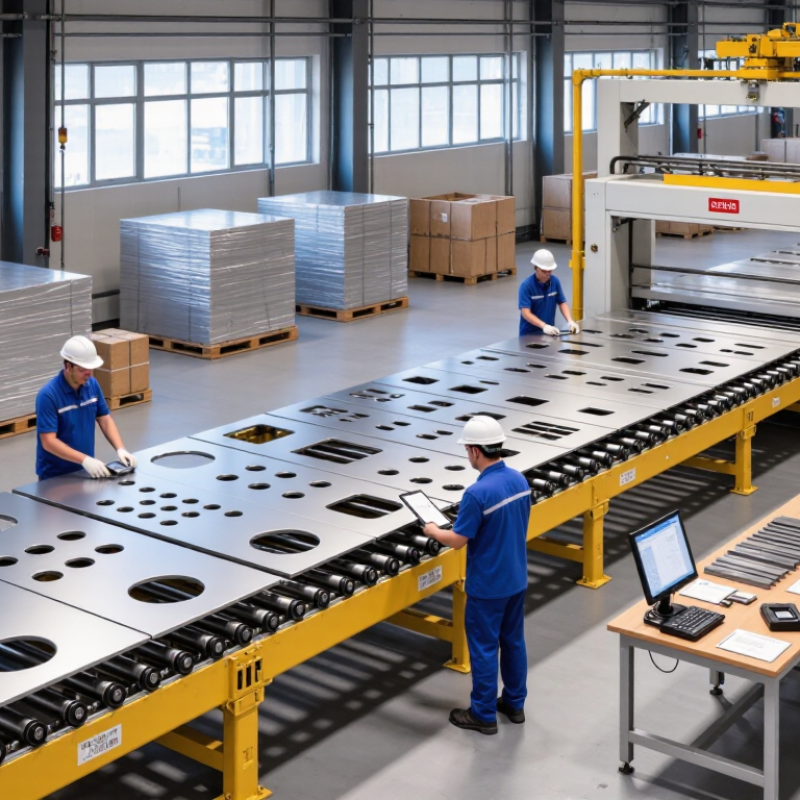
A capable supplier should control the full production process. It should verify coil thickness, tensile strength, hole diameter, pitch, and open area before punching. CNC punching lines can produce round, square, slotted, and custom patterns. Laser cutting supports unusual shapes and detailed edge work. Powder coating, anodizing, and PVDF finishing improve surface protection, but coating performance still depends on pretreatment and curing.

Details matter.

For architectural panels, dimensional tolerance affects joint alignment and shadow lines. For acoustic applications, open area and backing material influence sound absorption. ASTM E1503 and ISO 10140 test methods can support acoustic evaluation, while ISO 9001-based quality systems improve process traceability. However, certification alone does not prove consistent production. A supplier should provide inspection records, material certificates, sample approvals, and batch photographs.

The 2024 World Steel in Figures report shows China remains the world’s largest steel-producing country, reinforcing its manufacturing depth. Yet scale can create risk. A large factory may still overlook burrs, uneven coating, or packaging damage. Practical audits, trial orders, and independent inspections remain necessary before long-term purchasing decisions.

Applications, Quality Standards, and Customization Options

China Best Perforated Metal Panels Supplier?

Applications depend on the panel’s function, not only its appearance. Perforated panels can screen façades, ventilate equipment enclosures, reduce glare, protect machinery, and support acoustic ceilings. In transport and commercial projects, aluminum suits lightweight façades, while galvanized steel handles tougher service conditions. The World Steel Association reported 1.89 billion tonnes of crude steel production in 2023, showing the material’s broad industrial supply base. Yet a large supply base does not guarantee stable quality.

Quality standards should be written into the purchase specification. Ask for material certificates under EN 10204 3.1, or applicable ASTM grades such as A240 for stainless steel. Confirm hole diameter, pitch, open-area percentage, sheet thickness, flatness, and edge condition. Burrs matter. They can damage cables, gloves, or nearby finishes. A supplier should also provide coating-thickness records and samples from the actual production line. The ISO Survey 2023 reported more than 1.2 million ISO 9001 certificates worldwide, but certification alone proves little without traceable inspection records.

Customization may include round, slotted, or decorative holes; varied open areas; folded edges; stiffening ribs; powder coating; anodizing; and acoustic backing. For a façade, engineers should review wind pressure, drainage, fixing points, and thermal movement. For equipment guards, safety clearance and visibility need equal attention. A beautiful sample can still fail during installation. That risk deserves more thought. Supplier comparisons should include drawings, tolerances, test reports, packaging details, and replacement procedures before mass production.

Skip to content