Cart

What Is Decorative Wire Mesh Used For?

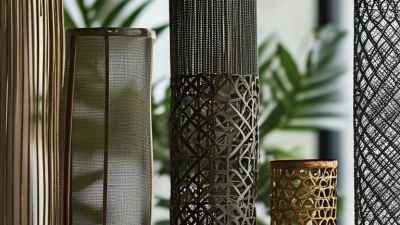
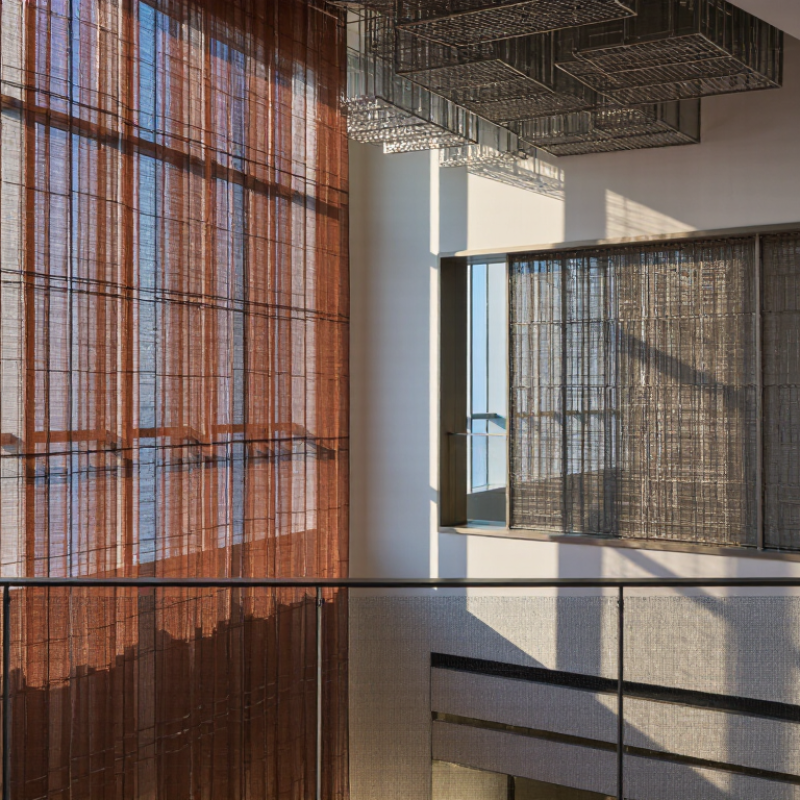
Decorative wire mesh can turn an ordinary surface into a working design feature. A bronze-toned screen may soften sunlight across a lobby, while a stainless-steel mesh panel can add texture to a wall or ceiling. Depending on its weave, finish, and opening size, the material can balance visibility, airflow, and visual privacy. It appears in architectural facades, room dividers, balustrade infill, cabinetry, and feature walls. The right choice depends on the setting, expected contact, cleaning needs, and the details of installation.

Its appeal is practical as well as visual. Mesh lets light and air pass through, yet its pattern can partially screen what lies beyond. Some products are rigid and architectural; others are finer and better suited to interior accents. Finishes change the effect, too: a dark coating can recede into the background, while polished metal catches light at each crossing wire. Small details matter.

An experienced specification team will check wire diameter, aperture, alloy, finish, and edge treatment against the project conditions. A sample viewed under the actual lighting can prevent surprises. One limitation deserves attention: mesh is not automatically private, safe to touch, or suitable for every exposure. Those qualities depend on the product and its installation.

No source was provided to verify a named decorative wire mesh expert or an exact quotation, so I won’t invent one. A sourced expert comment would strengthen this introduction.
What Is Decorative Wire Mesh Used For?

What Decorative Wire Mesh Is: Woven or Welded Metal Filaments

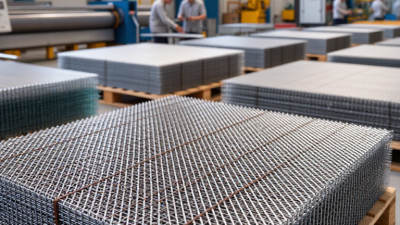
Decorative wire mesh is made by arranging metal filaments into a visible, repeating pattern. In woven mesh, wires pass over and under one another, much like a fine fabric. In welded mesh, crossing wires are joined at their intersections, creating a more fixed grid. Stainless steel, aluminum, brass, and copper are common choices. Wire thickness, opening size, and pattern shape affect weight, transparency, and stiffness. Small details matter.

The World Steel Association reported 1,892.2 million tonnes of crude steel production in 2023. The International Stainless Steel Forum reported 58.4 million tonnes of stainless-steel production that year. These figures describe metal production, not decorative-mesh sales; the distinction matters when assessing demand. Designers use mesh for room dividers, ceiling panels, façade screens, and cabinet inserts. A woven panel can filter daylight across a lobby, while welded mesh often keeps a crisp grid on a partition. Finishes change the look and may affect maintenance. Mesh is not automatically private: backlighting can reveal silhouettes, and openings may catch dust. A small sample helps.

How Mesh Is Specified: Aperture, Wire Diameter, and ASTM E2016

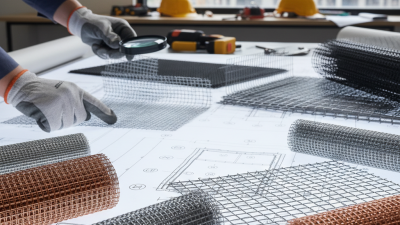
Decorative wire mesh is specified by aperture, wire diameter, and weave, not by appearance alone. ASTM E2016, Standard Specification for Industrial Woven Wire Cloth, provides industry terminology for describing woven mesh. Aperture means the clear opening between wires; wire diameter is the thickness of each wire. Both affect light, airflow, visibility, and panel stiffness. Small details matter.

For example, a square weave with a 1.0 mm aperture and 0.5 mm wire has a nominal pitch of 1.5 mm. That equals about 16.9 openings per 25.4 mm, calculated from aperture plus wire diameter. This is a dimensional example, not a guaranteed production value; manufacturing tolerances can change the finished opening. Always check the supplier’s stated tolerances against ASTM E2016 and request a sample when visual consistency matters. On a real panel, even a slight wire-thickness change can alter the apparent density. That is easy to miss. A specification that lists only “mesh count” may leave too much unclear: confirm aperture, wire diameter, weave, material, and tolerance before approving drawings.

Common Materials: 304 and 316 Stainless Steel per ASTM A580/A580M

Decorative wire mesh depends on consistent wire quality, not appearance alone. ASTM A580/A580M covers stainless steel wire, setting requirements for chemical composition and mechanical properties. It does not guarantee that a finished mesh will suit every site. Weave, wire diameter, finish, and installation also affect performance. A 1 mm wire, for example, may look delicate in a lobby screen but feel too flexible across a wide opening.

Nickel Institute technical guidance describes 304 stainless steel as typically containing about 18% chromium and 8% nickel. Grade 316 commonly includes about 2% molybdenum, which improves resistance to chloride exposure compared with 304. That difference matters. For indoor partitions, display panels, and many sheltered architectural features, 304 is often a practical choice. Near coastal air, pool areas, or frequent washdowns, 316 may be more suitable. Neither grade is maintenance-free; salt deposits and trapped dirt can still stain a surface. One caution: grade names alone are not enough. Buyers should request mill certificates confirming the wire grade and ASTM A580/A580M compliance, then check mesh opening, finish, and fabrication details against actual exposure conditions. A datasheet cannot fully predict how a panel will age in a particular building.

What Is Decorative Wire Mesh Used For? — Common Materials: 304 and 316 Stainless Steel per ASTM A580/A580M

Decorative wire mesh is a woven or welded metal material used to combine visual texture with functions such as screening, enclosure, and airflow. The suitable alloy and mesh construction depend on the environment, appearance, and project requirements.

Application Typical Use Common Material Choice Selection Considerations
Interior partitions and room dividers Creates visual separation while allowing light and air to pass through. 304 stainless steel is commonly suitable for many indoor settings. Choose mesh opening, wire diameter, and finish to balance visibility, privacy, and light transmission.
Wall panels and decorative cladding Adds a textured metal surface to interior or exterior architectural features. 304 may suit typical interior or mild atmospheric exposure; 316 is often considered for more corrosive environments. Account for the installation location, support system, finish, drainage, and cleaning requirements.
Ceiling features and light screens Provides a patterned screen around lighting, services, or ceiling areas while permitting airflow. 304 is a common option for dry indoor applications. Confirm the mesh’s weight, attachment method, opening size, and any applicable building or fire-safety requirements.
Balustrade and guard infill Acts as a visually open infill within a designed railing or barrier system. 304 or 316 may be selected according to exposure and project specifications. Mesh alone does not establish guard safety. The complete assembly must meet applicable local codes and loading requirements.
Facade and exterior screening Provides a patterned screen for visual interest, partial shading, or separation from exterior spaces. 316 is often preferred where chloride exposure or coastal conditions increase corrosion concerns; 304 may suit less aggressive environments. Exposure, crevices, deposits, finish, maintenance, and the full support system affect service performance.
Cabinetry, displays, and furniture Forms visible panels, shelf inserts, cabinet fronts, or decorative accents. 304 is widely used for general indoor decorative applications. Consider edge finishing, rigidity, mesh pattern, and whether the panel will be touched or cleaned frequently.
Screening and ventilation panels Allows airflow while screening openings or equipment areas. 304 or 316 can be used, depending on indoor or outdoor exposure. Opening size affects airflow and screening; specify the required mesh construction for the intended function.

Material and standards note: 304 stainless steel is a common general-purpose stainless grade. 316 contains molybdenum and generally offers better resistance to chloride-related corrosion than 304, but neither grade is immune to corrosion in every environment. ASTM A580/A580M is a specification for stainless steel wire; it does not by itself define the finished mesh pattern, dimensions, or performance. Confirm the wire grade, applicable specification, mesh construction, finish, and project requirements with the supplier.

How 30–80% Open Area Affects Light, Airflow, and Privacy

What Is Decorative Wire Mesh Used For?

How 30–80% Open Area Affects Light, Airflow, and Privacy

Decorative wire mesh can screen partitions, cabinet fronts, façades, and ceiling features while allowing light and air to pass through. Open area is the percentage of the panel’s face that is unobstructed. At 30%, a close weave typically softens daylight and obscures details more than an 80%-open mesh. At 80%, a room feels brighter and more visually connected, but objects behind the panel are easier to see. These are practical tendencies, not guarantees: wire thickness, weave, viewing angle, and lighting contrast also matter.

More open area does not equal a fixed airflow rate. Mesh shape and pressure difference affect resistance, so project teams should request tested airflow or pressure-drop data when ventilation matters. Privacy changes with light, too. A brightly lit room behind mesh may remain visible at night. The U.S. Department of Energy’s Better Buildings daylighting guidance reports potential lighting-energy reductions of about 20–60% with effective daylighting and controls. That is a building-level potential, not a guaranteed saving from mesh alone.

Tips: Compare samples at the actual viewing distance, in both daytime and evening lighting. Check the manufacturer’s open-area figure and test data. A sample can look convincing in a showroom and still disappoint on site.

Where It Is Used: Facades, Interiors, Screens, and Safety Barriers

Decorative wire mesh gives building facades texture while allowing daylight and airflow through the surface. On an exterior, panels can soften the look of a large wall or screen service areas without making them feel sealed off. The spacing, wire thickness, and finish affect both appearance and performance. Light still passes. Designers should also consider how panels are fixed, how water drains, and how the material responds to local weather.

Inside, mesh can divide an open office, define a stairwell, or screen a reception area while keeping sightlines partly open. A bronze-toned panel beside warm timber feels different from a fine stainless pattern in a bright corridor. It can also cover shelving or mechanical equipment. Details matter. Sharp edges, cleaning access, and the way panels meet at corners deserve attention; these are easy to overlook in a rendering.

For safety barriers, mesh may be used around equipment, walkways, or elevated spaces, but decorative appearance alone does not establish safety. Opening size, wire strength, anchoring, and expected loads need to suit the application. A fine-looking panel can still be unsuitable if its supports are weak. Project teams should verify dimensions and performance requirements with qualified professionals before installation.

Skip to content