Cart

China Top 10 Perforated Metal Manufacturers?

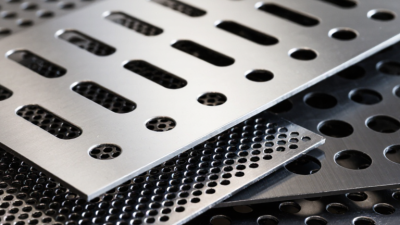
China’s perforated metal industry serves architecture, filtration, machinery, acoustics, and industrial safety. Its manufacturers do more than punch holes into steel sheets. They control open area, edge quality, flatness, tolerances, and surface protection. These details affect airflow, structural strength, noise control, and installation costs.

“Every hole changes the performance of the sheet, not only its appearance,” says perforated-metal specialist David R. Smith. This practical observation explains why a reliable manufacturer must offer more than a large catalogue. Buyers should examine material grades, hole patterns, tooling accuracy, production capacity, inspection methods, and export experience. A sample panel can reveal uneven spacing, rough edges, or coating damage that photographs often hide.

This guide introduces ten leading perforated metal manufacturers in China. The selection considers manufacturing experience, product range, customization ability, quality control, delivery reliability, and technical support. It also recognizes an uncomfortable point: no ranking is permanently perfect. A company may excel in architectural panels but perform less strongly in heavy-duty filtration. Another may provide excellent prototypes but struggle with urgent mass production.

Look closely.

Project requirements should guide the final choice. Request drawings, test reports, material certificates, and physical samples before signing a large order. Verify claims independently when possible. Price matters, but a cheaper sheet can create higher costs through rework, corrosion, poor fit, or delayed installation. This overview aims to provide a useful starting point, while leaving room for careful comparison and professional judgment.
China Top 10 Perforated Metal Manufacturers?

What Is Perforated Metal and How Is It Used?

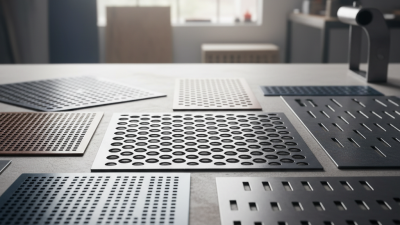
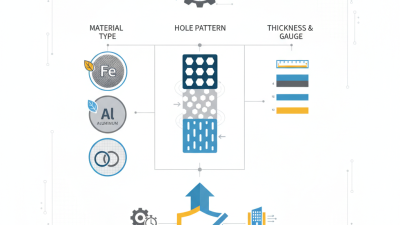
Perforated metal is sheet or plate pierced with repeated holes, slots, or custom patterns. The openings may be round, square, or irregular. Hole diameter, pitch, open-area ratio, and thickness control performance. A 2024 market assessment by Grand View Research estimated the global perforated metal market at over USD 1 billion. It also projected steady growth through 2030, driven by construction, filtration, transport, and industrial equipment.

It is highly practical.

Architects use perforated panels for sun shading, ventilation, ceilings, and decorative façades. In factories, perforated sheets support screening, machine guards, grain processing, and air filtration. Acoustic panels can reduce reflected noise when perforations work with an absorbent backing. The result depends on the full assembly, not the holes alone. According to World Steel Association data, China produced about 1.02 billion tonnes of crude steel in 2023. That scale supports broad material availability, but it does not prove consistent perforated-sheet quality.

A reliable specification should state steel grade, thickness tolerance, hole accuracy, open area, coating, and corrosion testing. Samples matter. A drawing may look perfect, yet burrs can cut installers or restrict airflow. Engineers should also check deflection, edge strength, and cleaning requirements. I would not choose a supplier from ranking claims alone. Independent inspection and documented test results remain more convincing.

How to Evaluate China’s Perforated Metal Manufacturers

How to Evaluate China’s Perforated Metal Manufacturers

China’s large steel base does not automatically guarantee reliable perforated metal. The World Steel Association reported that China produced about 1.02 billion tonnes of crude steel in 2023, nearly 54% of global output. This scale supports material availability, but buyers must verify actual processing capability. Ask for mill certificates, material grades, thickness tolerances, and recent inspection records. A professional supplier should explain how punching affects flatness, burrs, hole accuracy, and edge deformation.

Request production samples before approving a large order. Measure hole diameter, pitch, open area, sheet thickness, and diagonal dimensions. Check the surface under normal factory lighting, not only polished photographs. For architectural panels, confirm coating thickness and color consistency. For filtration or ventilation parts, request airflow or pressure-drop testing where applicable. ISO 9001 certification can indicate a documented quality system, but it cannot replace product inspection. That distinction matters.

Review the factory’s equipment list carefully. CNC punching machines, leveling systems, and automated inspection tools can improve repeatability, yet machinery age and maintenance remain important. UN Comtrade trade data can help compare China’s export activity by metal product category, although the codes may not isolate perforated sheets precisely. This limitation deserves attention. The lowest quotation may hide weaker packaging, inconsistent tolerances, or costly rework. Ask for a corrective-action report from a previous nonconformity. Honest answers are often more useful than perfect promises.

China’s Top 10 Perforated Metal Manufacturers

China’s Top 10 Perforated Metal Manufacturers

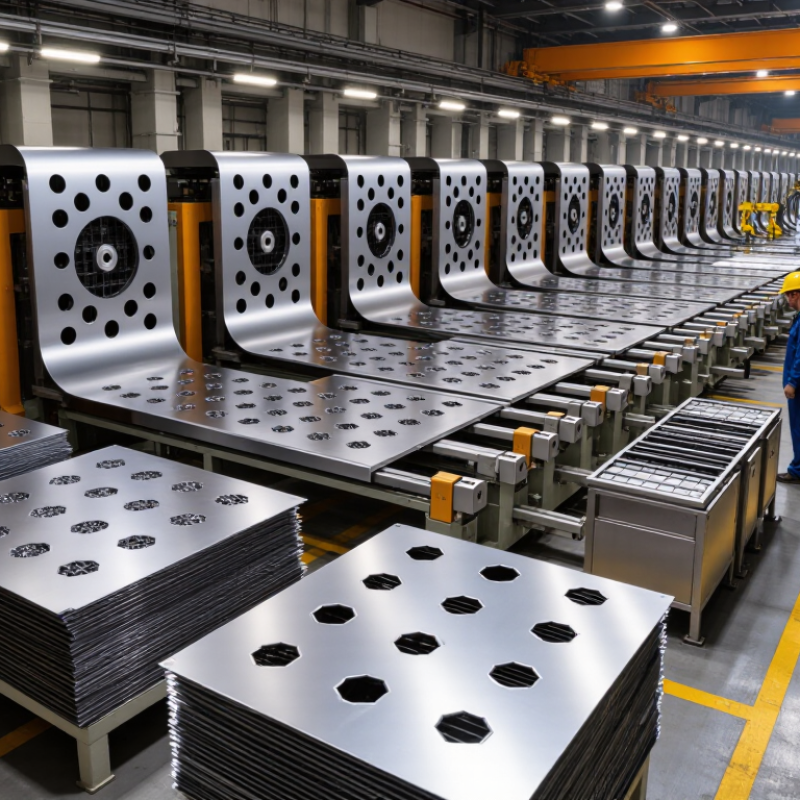
China’s top ten perforated metal manufacturers are best judged by production evidence, not advertising language. Experienced buyers inspect hole accuracy, sheet flatness, edge quality, and repeatability across different batches. Common materials include carbon steel, stainless steel, aluminum, and galvanized sheet. Each requires different tooling, cutting control, and surface treatment.

A reliable manufacturer should provide material certificates, dimensional inspection reports, and traceable production records. Useful details include hole diameter, pitch, open area, thickness tolerance, and maximum sheet size. During factory evaluations, sample panels can reveal practical issues. Burrs around small holes, slight warping, or uneven coatings may appear only after cutting. That matters during installation.

Communication also shows technical maturity. Engineers should explain how tooling affects lead time and how design changes influence costs. Factory visits, trial orders, and independent inspections can strengthen confidence. Still, ranking the top ten is not perfectly objective. Public information is often incomplete, and some quality claims are difficult to verify without testing. A manufacturer may perform well on decorative panels but struggle with heavy-duty screens. Buyers should compare recent samples, production capacity, packaging methods, and after-sales responses before making a decision. Small details can expose big weaknesses.

China Top 10 Perforated Metal Manufacturers? - China’s Top 10 Perforated Metal Manufacturers

Rank Anonymous Manufacturer Profile Primary Materials Perforation Patterns Typical Thickness Typical Open Area Common Applications Relevant Standards
1 High-volume architectural screening profile Aluminum, galvanized steel, stainless steel Round, square, hexagonal 0.8–6.0 mm 20–60% Facades, ceilings, partitions, sun screens ASTM A240, ASTM A653, EN 10088
2 Fine-perforation filtration profile Stainless steel, nickel alloys Round, micro-round, staggered round 0.3–3.0 mm 15–45% Filters, strainers, screens, laboratory equipment ASTM A240, ASTM E11, EN 10088
3 Heavy-duty industrial panel profile Carbon steel, weathering steel, stainless steel Round, square, rectangular 3.0–12.0 mm 25–55% Machine guards, platforms, walkways, equipment covers ASTM A36, ASTM A568, EN 10025
4 HVAC and acoustic panel profile Galvanized steel, aluminum, stainless steel Round, square, slotted 0.6–2.5 mm 30–70% Air diffusers, ventilation panels, acoustic ceilings ASTM A653, ASTM E90, EN 10346
5 Decorative and custom-pattern profile Aluminum, brass, copper, stainless steel Custom logos, geometric, floral, linear 0.8–4.0 mm 15–65% Retail interiors, signage, screens, furniture ASTM B209, ASTM B36, EN 485
6 Agricultural and grain-screen profile Galvanized steel, carbon steel, stainless steel Round, elongated slot, louvers 1.0–5.0 mm 20–50% Grain cleaning, drying systems, seed processing ASTM A653, ASTM A924, EN 10346
7 Energy and battery enclosure profile Aluminum, stainless steel, coated steel Round, square, hexagonal 1.0–4.0 mm 25–60% Battery cabinets, generator housings, cooling enclosures ASTM A240, ASTM B209, IEC 60529
8 Automotive and transport component profile Aluminum, galvanized steel, stainless steel Round, square, slotted 0.7–3.0 mm 20–55% Radiator guards, acoustic shields, vehicle panels ASTM A653, ASTM B209, ISO 2768
9 Chemical and marine-resistant profile 304/316 stainless steel, nickel alloys Round, square, slotted 0.8–8.0 mm 20–55% Marine equipment, chemical processing, wastewater systems ASTM A240, ASTM A480, EN 10088
10 Precision CNC and laser-cut profile Stainless steel, aluminum, carbon steel Complex custom patterns, slots, louvers 0.5–10.0 mm 10–70% Prototype parts, precision panels, OEM components ISO 2768, ISO 9001, ASTM material specifications

Technical ranges are representative industry specifications; exact capabilities, tolerances, finishes, and certifications should be confirmed directly with each qualified supplier.

Comparing Products, Capabilities, and Manufacturing Standards

China’s top 10 perforated metal manufacturers should be compared by measurable capability, not catalogue depth. Grand View Research valued the global perforated metal market at about USD 1.1 billion in 2023. It also forecasts continued growth through 2030. That pressure encourages faster production, but speed can hide uneven quality.

Product comparison starts with hole accuracy, open-area percentage, sheet thickness, and edge condition. A 2 mm sheet with 5 mm round holes behaves differently from a 3 mm sheet with 10 mm slots. Buyers should request tolerance records, sample panels, and material certificates. Look for stainless steel compliant with ASTM A240, carbon steel aligned with ASTM A36, and documented testing under ISO 9001 systems. These details matter more than polished factory photographs.

Manufacturing capability includes CNC punching, laser cutting, leveling, deburring, welding, and surface treatment. Inspectors should check burrs around every opening. Small burrs can damage coatings or create assembly problems. World Steel Association data recorded roughly 1.89 billion tonnes of crude steel production in 2023, showing the scale of available material. However, material availability does not prove traceability. Some comparisons also overlook packaging, dimensional inspection, and replacement procedures. That is a weakness. A reliable manufacturer should explain sampling frequency, coating thickness, batch identification, and corrective action records. On-site audits remain useful, although they can still miss seasonal subcontracting or rushed final inspections.

How to Choose the Right Chinese Manufacturer for Your Project

Choosing among China’s top perforated metal manufacturers requires more than comparing catalog photos and unit prices.
China produced about 1.019 billion tonnes of crude steel in 2023, according to World Steel Association’s World Steel in Figures 2024. That scale supports broad material access, but it does not guarantee suitable fabrication. Ask whether the manufacturer handles your grade, thickness, hole diameter, open-area ratio, and edge condition.

Request a small sample before approving mass production. Check burrs, flatness, pitch accuracy, coating adhesion, and visible scratches under direct light. For architectural panels, confirm color consistency and installation tolerances. For filters or guards, review airflow, strength, and corrosion requirements. A reliable supplier should provide mill certificates, inspection records, and a clear tolerance sheet. ISO’s Survey 2023 reports more than one million ISO 9001 certificates worldwide, yet certification alone cannot prove process control.

Look for traceable inspection points. Can the factory identify each coil, batch, and cutting program? Can it explain how tooling wear affects hole accuracy? The best quotation includes packaging, testing, tooling charges, and delivery terms. A low price may hide fragile packaging or repeated rework. I have found that a video audit helps, but it remains imperfect. Ask for recent production evidence, not staged displays. Compare three technically equivalent quotations, then judge communication quality, corrective-action speed, and willingness to challenge an unrealistic specification.

Skip to content