Cart
What Are the Top FRP Grating Types in 2026?
Choosing the right FRP grating in 2026 means looking beyond price and color. The best option depends on load, span, foot traffic, drainage, and exposure to chemicals or weather. A walkway beside a coastal process line has different demands from a covered equipment platform. Small details matter.
This guide compares common FRP grating types, including molded, pultruded, covered-surface, and specialized options. Molded panels often suit areas with irregular layouts and multidirectional loading. Pultruded grating can be a practical choice for longer spans and directional loads, provided the support design matches the manufacturer’s guidance. Gritted surfaces can improve underfoot traction, while covered tops may help control dropped objects. No type solves every problem.
Selection should start with the actual site conditions, not a product label. Check panel dimensions, support spacing, load tables, resin compatibility, fire-performance documentation, and installation requirements. Ask suppliers for current technical data and verify that it applies to the exact product being quoted. Specifications can vary between manufacturers, even when products share a familiar name. That part is easy to overlook.
The sections ahead explain where each type performs well, where it may fall short, and what questions buyers should ask before ordering. They also consider maintenance, fabrication, and lifecycle value. These comparisons are a useful starting point, not a substitute for project-specific engineering review. Conditions change. So should the decision.
How FRP Grating Is Made: Molded and Pultruded Types
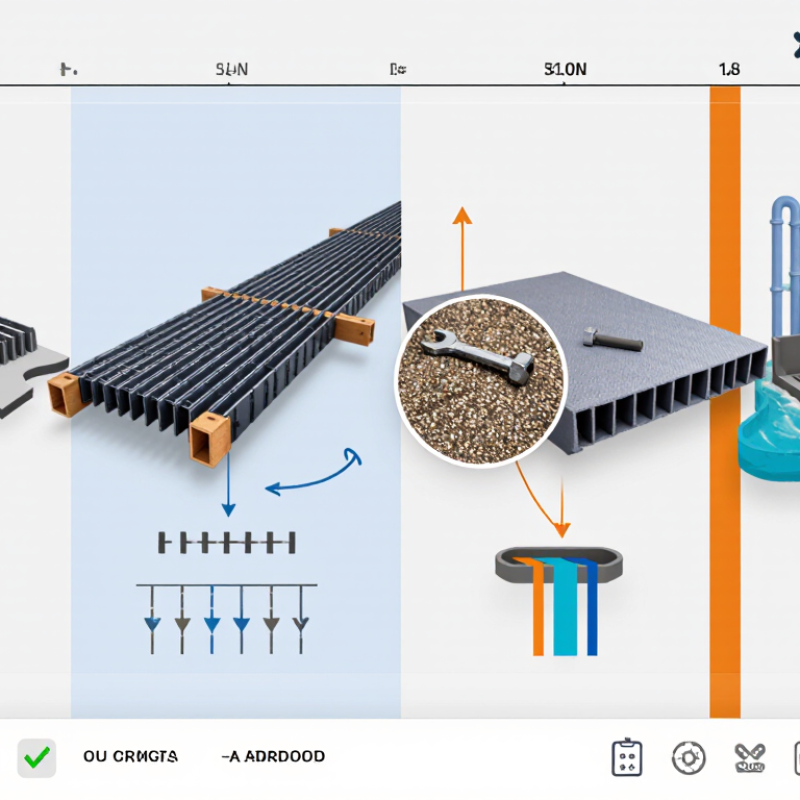
Molded and pultruded FRP grating start with the same basic ingredients: glass-fiber reinforcement and a resin system. The manufacturing process changes the finished panel’s structure. In molded production, workers arrange glass strands in an open mold, often placing them in crossing directions. Resin saturates the fibers, then cures into a rigid panel with integral openings. The result distributes loads across multiple directions. It can also be trimmed around pipes or awkward corners. Details matter.
Pultruded grating is made differently. Continuous glass rovings pass through a resin bath and a heated forming die, creating solid bars with a consistent cross-section. Those load-bearing bars are then joined by transverse bars to form a panel. Pultruded panels typically provide strong support along the bar direction, so installers should align that direction with the main span. A simple mistake here can affect performance.
The right type depends on the job, not just the label. Molded panels suit layouts with frequent cutouts or loads coming from several directions. Pultruded panels may suit longer, clearly defined spans where directional strength is useful. Check the manufacturer’s load tables, support spacing, resin compatibility, and expected exposure before specifying either type. Resin choice affects resistance to moisture, chemicals, and sunlight. Real installations can be less tidy than drawings suggest, so verify dimensions and support conditions on site.
What Sets Molded FRP Grating Apart?
Molded FRP grating is made by placing continuous glass-fiber rovings in a resin bath, then curing them inside a mold. The result is a one-piece panel with fibers running in multiple directions. That structure helps distribute loads across the panel, rather than concentrating strength along one axis. It also allows square or rectangular openings that are easy to trim around pipes and columns. A saw-cut edge, however, may expose fibers and needs proper sealing.
Corrosion resistance is a key reason to consider it in wet, chemical, or coastal areas. The NACE IMPACT study estimated corrosion’s global cost at US$2.5 trillion annually, or 3.4% of global GDP. That figure covers many industries, not grating alone, but it shows why maintenance conditions matter. Molded panels can resist many corrosive environments, though resin choice must match the chemicals, temperature, and exposure time. Check the manufacturer’s chemical-resistance data. Not every resin behaves alike. For fire performance, ask for project-specific ASTM E84 test results; the standard measures flame spread and smoke development, not overall fire safety. Molded grating can be heavier and less stiff than pultruded grating, so span and load calculations still matter. A little extra care here prevents a costly mismatch.
How Pultruded FRP Grating Performs
Pultruded FRP grating performs best when loads follow its strong direction. Continuous glass fibers run lengthwise through the structural bars, giving the panel high stiffness along that axis. Underfoot, a properly selected panel feels firm across a defined span. The cross-rods hold the bars together, but they are not designed to carry equal loads in every direction. Check the manufacturer’s load tables and panel orientation before specifying it.
Corrosion resistance is a practical advantage in wet process areas, wastewater facilities, and coastal walkways. A grated surface lets water drain through, while molded-in grit can improve traction around spills. Still, resin choice matters. Sunlight can gradually weather exposed surfaces, and chemicals that suit one resin may damage another. Review the actual exposure conditions. Small details count.
Compared with steel, pultruded grating is often lighter, which can simplify handling and reduce structural demands. Yet its performance depends on bar depth, spacing, support conditions, and load duration. A panel that feels solid during a quick site visit may deflect more under sustained equipment loads. That part is easy to overlook. Specify span limits, verify deflection criteria, and consider how workers will inspect and secure the panels over time. Fire performance also varies by formulation, so confirm project-specific requirements rather than assuming all FRP grating behaves alike.
What Are the Top FRP Grating Types in 2026? — How Pultruded FRP Grating Performs
| FRP Grating Type | How It Is Made | Typical Strength Profile | Best-Suited Applications | Key Advantages | Important Considerations |
|---|---|---|---|---|---|
| Pultruded FRP Grating | Continuous glass-fiber roving and reinforcement are pulled through resin and a heated die to form structural bars, which are assembled into panels. | High strength and stiffness along the bar direction; engineered for defined load spans and support conditions. | Long-span walkways, platforms, stair treads, and areas requiring directional load capacity. | High strength-to-weight ratio, consistent bar geometry, and the ability to orient load-bearing bars to suit the design. | Strength is directional. Panel orientation, support spacing, connection details, and load data should be checked against the project design. |
| Molded FRP Grating | Glass-fiber reinforcement is placed in a mold and saturated with resin to form an integrated, typically square-mesh panel. | More nearly multidirectional than pultruded grating, though capacity still depends on panel construction, span, and support. | Corrosive or irregularly shaped areas, maintenance platforms, trenches, and installations requiring cut-outs. | Open mesh, corrosion resistance, and flexibility when cutting or fitting panels around obstacles. | May require closer support spacing than a comparable pultruded design; verify load tables and deflection limits for the selected panel. |
| Covered-Top FRP Grating | A molded or pultruded grating panel is supplied with a bonded solid or grit-coated surface layer. | Depends on the underlying grating; the cover primarily changes the walking surface rather than the structural span capacity. | Walkways where dropped objects, liquid containment, or a more continuous surface is required. | Reduces openings at the surface and can provide a textured, slip-resistant finish. | Check drainage, cleanability, surface texture, and the effect of the cover on panel weight and design loads. |
| Mini-Mesh FRP Grating | Manufactured with smaller openings than standard open-mesh panels; available in molded and other panel constructions. | Capacity depends on the material system, panel depth, and support layout rather than mesh size alone. | Walkways and work areas where smaller openings are preferred for tools, heels, or small items. | Smaller surface openings while retaining an open-grid design. | Smaller openings can reduce airflow and drainage compared with wider mesh; confirm panel load ratings and intended use. |
| Solid FRP Plate | A solid composite plate, rather than an open grid, is formed from resin and reinforcing fibers. | Varies with plate thickness, fiber orientation, support spacing, and laminate construction. | Cover plates, enclosures, splash zones, and locations where open grating is unsuitable. | Provides a continuous surface and can help limit material or liquid passing through. | Typically offers less open drainage and ventilation than grating; assess deflection, fastening, and drainage requirements. |
Performance depends on resin system, fiber content, panel depth, mesh geometry, temperature, chemical exposure, support spacing, and installation details. Compare project-specific load tables and test data before selecting a grating type.
Which FRP Grating Surfaces and Resin Options Are Available?
FRP grating is available with several surface finishes, and the right choice depends on how people and equipment move across it. A molded grating may have a concave top that adds grip without a separate coating. Gritted surfaces provide a rougher feel, useful around wet walkways or washdown areas. Smooth surfaces are easier to clean, but can become slippery when contaminated. Small details matter.
Resin selection affects chemical resistance, temperature tolerance, and long-term performance. Isophthalic polyester is a common general-purpose option for many industrial settings. Vinyl ester is often considered where stronger chemical exposure is expected, while phenolic systems may suit applications with demanding fire and smoke requirements. Actual performance depends on the specific resin formulation and operating conditions, so check published test data rather than relying on a resin name alone.
For a practical specification, note the chemical, concentration, temperature, exposure time, and cleaning method. Also consider sunlight, span, load, and whether the surface will collect grit or debris. A rough finish may improve traction, yet make cleaning harder. That trade-off is easy to overlook. Confirm the proposed grating’s load ratings and surface details with its technical documentation before installation.
How to Choose the Right FRP Grating for an Application
What Are the Top FRP Grating Types in 2026? How to Choose the Right FRP Grating for an Application
Choosing FRP grating starts with the job site, not the product label. Molded grating suits platforms with frequent foot traffic and multidirectional support needs. Pultruded grating, with its continuous load-bearing bars, can work well across longer spans. Check the load tables for the exact panel depth, span, and support layout. A panel that feels rigid underfoot may still deflect too much under a loaded cart. Small details matter.
The NACE IMPACT study estimated that corrosion costs the global economy US$2.5 trillion annually, about 3.4% of global GDP. That figure explains why corrosion resistance can matter in wet or chemical environments, but it does not make every FRP resin suitable. Confirm chemical compatibility for the actual concentration, temperature, and exposure time. For fire-sensitive spaces, review test results such as ASTM E84 flame-spread data; do not assume all FRP panels perform alike. Ask for documented load and fire-test data, not broad claims.
Then inspect the installation conditions. Note whether workers need a smooth or grit-coated surface, whether dropped tools could pass through the openings, and how panels will be fastened. Measure support spacing on site. It is easy to overlook vibration, drainage, or future access when choosing by price alone. A short sample panel can reveal uncomfortable flex or a slippery finish before a full order is placed.
Top FRP Grating Types in 2026: Matching Grating to the Application
Indicative application-fit ratings (1 = less suitable, 5 = more suitable). Ratings are a qualitative selection guide, not standardized test results; actual performance depends on the product design, resin, load, and installation.
How to choose: Molded grating is often considered for corrosion-resistant, multidirectional access platforms. Pultruded grating is suited to longer spans and directional loading. Phenolic grating may be selected where fire performance is a priority, subject to certification. Mini-mesh grating can help reduce the risk of small objects passing through. Confirm load tables, resin compatibility, slip resistance, fire ratings, and local requirements before specifying.
Related Posts
-
What is FRP Grating and How is it Used in Various Industries?
-
10 Best FRP Grating Solutions for Durable and Cost-Effective Industrial Applications
-
How to Choose the Right FRP Grating for Your Project?
-

2026 Top FRP Grating Benefits for Global Buyers?
-

How to Work with Sheet Metal for Beginners?
-
Why Choose Perforated Metal for Your Next Project?