Cart

What Are the Best Types of Mesh Panels in 2026?

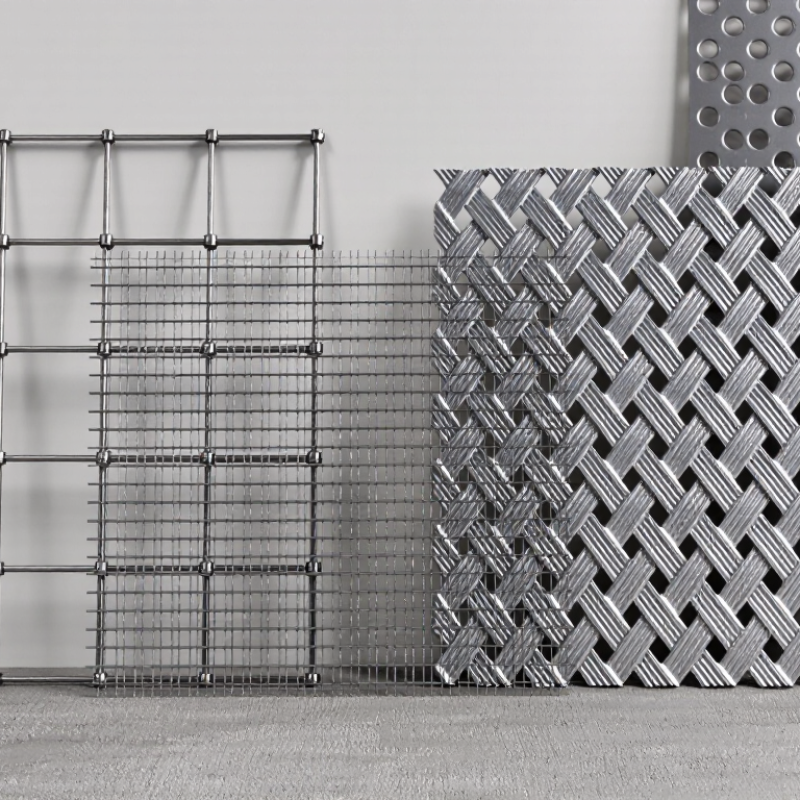
Choosing the best mesh panels in 2026 depends less on a single “top” product and more on the job each panel must do. A welded wire panel has rigid intersections and suits partitions, storage, and many protective enclosures. Woven mesh offers flexible, closely spaced openings for screening or filtration. Expanded metal creates a continuous, cut-and-stretched pattern that can provide airflow and grip without separate wire crossings. Perforated panels are another option, though their punched holes make them different from woven or welded mesh.

Small details matter. A panel beside a damp loading bay needs different corrosion protection from one used indoors. A shelf panel must handle its expected load, while a ventilation screen needs openings that balance airflow and debris control. Check opening size, wire or strand thickness, material, finish, edge treatment, and mounting method. For demanding installations, confirm product specifications with the manufacturer or a qualified installer. A photograph alone cannot prove strength.

This guide compares common mesh panels by material, construction, durability, visibility, and typical use. It also explains the trade-offs among stainless steel, galvanized steel, aluminum, and coated options. Some choices look nearly identical online. They may not perform alike. No ranking can replace measurements from the actual site, and “heavy-duty” is not a useful specification by itself. The right choice is the one that meets the real load, environment, and maintenance needs—with room to question assumptions before ordering.
What Are the Best Types of Mesh Panels in 2026?

What Mesh Panels Are and How They Function

What Are the Best Types of Mesh Panels in 2026?

What Mesh Panels Are and How They Function

A mesh panel is a sheet of intersecting wires or strands, joined by weaving or welding. The gaps between them let air, water, light, or selected particles pass through while the material provides a barrier or support. Think of a garden screen: sunlight comes through, but the panel still blocks larger debris. Performance depends on aperture size, wire thickness, material, and how firmly the edges are mounted. Small openings can improve screening, but may restrict airflow or clog faster. It’s a trade-off.

Mesh opening size alone does not prove filtration performance. ASHRAE Standard 52.2 evaluates air-cleaner efficiency across three particle-size groups: 0.3–1, 1–3, and 3–10 micrometres. That distinction matters: a panel that stops visible dust may not capture fine particles. For sizing, ASTM E11-24 provides standardized sieve-opening specifications, helping users describe openings consistently. These references serve different purposes, though; a sieve specification is not a guarantee of real-world panel performance. Check the intended use, operating conditions, and test method. A neat drawing can still miss what happens after months of dust, moisture, or vibration. That part deserves a closer look.

Which Materials Are Used to Make Mesh Panels

Mesh panels are made from metals, polymers, or glass-fiber composites. The right choice depends on exposure, load, opening size, and maintenance needs. Stainless steel is often selected for wet areas or outdoor installations because it resists corrosion. It also handles repeated contact well. However, grade and finish matter; stainless steel is not immune to staining in every environment. A small test sample can reveal more than a catalogue description.

Galvanized steel offers useful strength at a lower cost, with a zinc coating helping limit rust. Scratches or cut edges may expose the steel beneath, so inspect those areas during installation. Aluminum is lighter and easier to handle on site, but it can bend more readily under impact. For screening rather than heavy-duty protection, polymer mesh or fiberglass mesh may suit the job. They resist moisture and avoid rust, though heat, sunlight, and abrasion can shorten their service life. Lightweight, but not indestructible.

Copper and brass mesh are chosen for appearance or specific functional needs, but they can tarnish and usually cost more. Before selecting a panel, compare wire diameter, aperture size, coating, and frame compatibility. A fine opening may block debris yet collect dust quickly. That trade-off is easy to underestimate. Review the actual site conditions, and reassess the choice if cleaning access or exposure changes.

What Are the Best Types of Mesh Panels in 2026? — Which Materials Are Used to Make Mesh Panels

The best mesh panel material depends on the required strength, exposure conditions, weight, visibility, and maintenance needs.

Material Common panel forms Key characteristics Often suitable for Points to consider
Stainless steel Woven wire, welded wire, perforated sheet Good corrosion resistance and strength; austenitic grades such as 304 and 316 are widely used. Food-processing areas, marine-adjacent settings, filtration, guards, and architectural screens Usually costs more than carbon steel; grade selection should reflect the environment. Grade 316 generally offers better resistance to chlorides than grade 304.
Galvanized carbon steel Welded wire panels, woven mesh, expanded metal Strong and widely available; a zinc coating helps protect the steel from corrosion. Fencing, storage cages, machine guards, and general-purpose enclosures Coating type and thickness affect service life. Cut edges and damaged coating may be more vulnerable to corrosion.
Uncoated carbon steel Welded or woven wire mesh, perforated plate High strength and easy to fabricate; often selected where a coating or indoor use is suitable. Industrial screens, reinforcement, and indoor equipment guarding Can rust when exposed to moisture; protective finishing or planned maintenance may be needed.
Aluminum Woven mesh, expanded metal, perforated sheet Lightweight and naturally protected by a surface oxide layer; generally easy to handle and form. Ventilation panels, lightweight screens, enclosures, and architectural applications Typically less rigid than steel at comparable dimensions; avoid unsuitable contact with dissimilar metals in corrosive conditions.
Copper or brass Woven wire mesh, decorative screening Conductive and workable, with distinctive finishes; copper develops a patina over time. Decorative panels, specialty screens, and selected electrical or filtration uses Generally softer and more costly than steel; appearance can change with exposure, and dissimilar-metal contact should be assessed.
Fiberglass Woven insect-screen mesh; coated fiberglass mesh Lightweight, non-metallic, and resistant to electrical conductivity; commonly used where flexible screening is needed. Window and door insect screens, and some building reinforcement applications Not a substitute for heavy-duty metal guarding; performance depends on mesh construction, coating, and exposure conditions.
Polyethylene or polypropylene Extruded plastic mesh, molded grid panels Lightweight and resistant to many forms of moisture-related corrosion; available in flexible or rigid mesh formats. Garden protection, temporary barriers, lightweight screening, and selected drainage or packaging uses Load capacity, heat tolerance, and resistance to sunlight vary by polymer and formulation; check the product specification for outdoor use.

Selection tip: Match the mesh opening, wire or strand diameter, panel thickness, coating, and support structure to the intended load and operating environment.

What Are the Main Types of Mesh Panels in 2026?

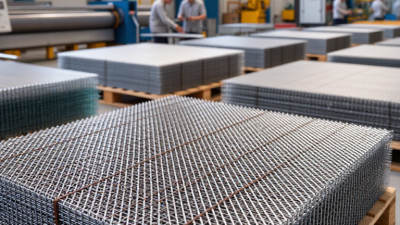
Mesh panels in 2026 generally fall into five groups: welded wire, woven wire, expanded metal, perforated sheet, and nonmetallic mesh. Welded panels have rigid, intersecting wires, making them practical for equipment guards, partitions, and storage cages. Woven mesh bends more easily and offers finer openings for screens and filtration. Check the aperture size, wire thickness, and edge finish; small differences affect visibility, airflow, and snagging.

Expanded metal is slit and stretched from one sheet, leaving diamond-shaped openings without separate wire intersections. It suits walkways and guards where grip and ventilation matter. Perforated panels use punched holes, often in regular rows, and can control light or airflow. Fiberglass and polymer meshes resist corrosion in damp settings, but heat and impact limits vary by product. Details matter.

For market context, worldsteel’s October 2024 Short Range Outlook forecast global steel demand at 1.75 billion tonnes in 2024 and 1.77 billion tonnes in 2025. That figure describes steel demand, not mesh-panel sales, so it should not be treated as a direct ranking of panel types. For a real installation, compare the manufacturer’s load data with the opening size and support spacing. A panel that looks sturdy may still flex too much.

How Mesh Panel Types Differ in Strength, Visibility, and Durability

Mesh panels can look similar from a distance, but their construction changes how they perform. Welded wire panels hold their shape well because the crossing wires are fused. They suit barriers that need consistent spacing and moderate visibility. Thicker wire and smaller openings usually improve rigidity, though they add weight and can make the view feel crowded. Check the welds, too. A weak joint may matter more than a heavy-looking frame.

Woven wire panels bend more readily. That flexibility can help where a panel must follow uneven ground, but it may allow more movement under pressure. Expanded metal, cut and stretched from a solid sheet, has no separate wire intersections to loosen. Its raised strands can make it sturdy, but the pattern may block more of the view. Perforated panels offer cleaner, regular openings. They can feel less transparent than open wire, especially when holes are small.

Durability depends on more than mesh type. Coating quality, edge protection, panel thickness, and exposure to moisture all matter. In a damp location, inspect cut edges and joints for early corrosion. For a clear sightline, wider openings often help, but they may reduce resistance to bending. There is no perfect panel. I would compare samples at eye level and check how they flex by hand; a quick glance can be misleading.

How to Choose the Right Mesh Panel for Each Application

In 2026, the best mesh panel depends on what it must do, not just how it looks. Welded wire panels hold their shape well and suit enclosures, shelving, and machine guards. Woven mesh offers smaller, more flexible openings for screening and filtration. Expanded metal provides a rigid surface with open paths for air and light, while perforated panels offer more controlled hole patterns. Small gaps matter.

Start with the load, opening size, and environment. A panel supporting tools needs suitable wire thickness and secure mounting; a ventilation screen needs enough open area without letting unwanted debris through. For damp or outdoor locations, check the base metal and protective finish, not only the panel’s appearance. Sharp edges and exposed cut ends can also affect safe handling and service life.

Fit matters too. Measure the frame, including corners and fastening points, before ordering. A common mistake is choosing the smallest openings without checking airflow, visibility, or cleaning needs. In dusty spaces, fine mesh may clog sooner than expected. There is no perfect panel for every job; test a sample when the conditions are uncertain, and confirm load limits with the supplier’s technical documentation.

Skip to content